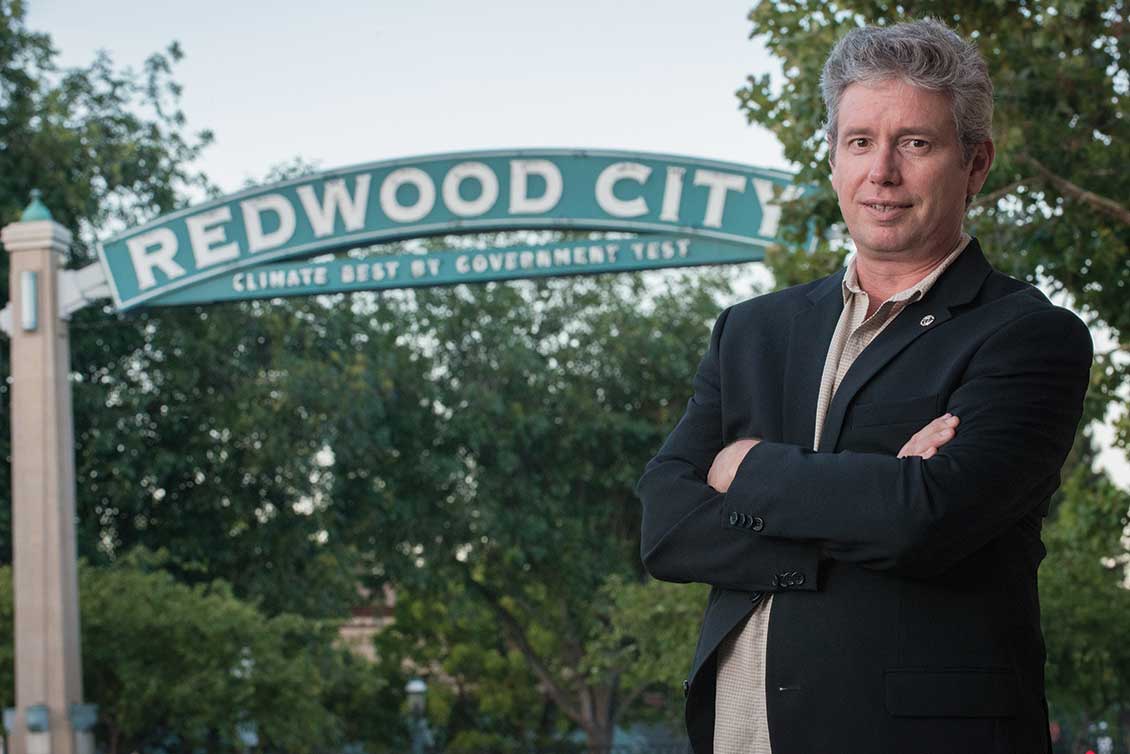


In early June, in the days after President Barack Obama announced plans to reduce carbon emissions from power plants by 30 percent by 2030, USGBC California chair Dennis Murphy noticed that much of the news coverage surrounding the announcement focused on the location of the speech.
Instead of outlining his executive order from behind a podium or in front of a smokestack, Obama delivered his address from Children’s National Medical Center in Washington, D.C., where the president said he was visiting with children who had asthma and other breathing problems. Obama linked their illnesses to air pollution and said that the country needed to reduce emissions, not for the sake of the environment, but “for the sake of all our kids.” Instead of reciting statistics about climate change, he talked about creating solar energy jobs that “cannot be shipped overseas.” And rather than issue warnings about rising thermostat readings and shrinking ice caps, the president said the new emissions standards would prevent 2,100 heart attacks during the first year of implementation.
Dennis Murphy listened to the news as pundits like Democratic strategist Chris Lehane talked about how Obama’s address represented a pivot in the national conversation about the environment. The president could win over voters, Lehane argued, if he succeeded in framing the climate debate in terms of “kitchen table” concerns like energy bills and kids’ health.
The argument had a familiar ring to Murphy. “It was stuff that we’ve been talking about for years,” he says. “It’s important to understand climate change, but it’s complicated, there’s a lot of nuance—weather isn’t climate.” It’s easier, Murphy says, for most people to relate to the issue when they’ve experienced the impacts firsthand. “Last year in Dallas, they had 30 days in a row over 100 degrees,” he says. “Just imagine somebody’s 85-year-old grandma living alone in an apartment and basically burning up.”
A transplant from New Jersey who retains the self-described “zeal of the convert,” Murphy is unapologetically boastful about California’s environmental record, and so it’s no surprise that he gives the state a bit of credit for the president’s new political strategy on environmental issues. Innovation, Murphy is fond of saying, is like the wind, blowing from the West to the East—starting in California and then making its way across the rest of the country.
While green advocates in a number of other states might dispute that notion, there’s no denying the Golden State’s long history of leadership on environmental issues. In 1884, a state judge outlawed the dumping of gold-mining rubble into waterways, a decision that predated the federal Rivers and Harbors Act by 15 years. In 1959, the state developed its own air quality standards, and when the Federal Air Quality Act was passed in 1967, California received a waiver allowing it to enforce tighter emissions regulations than called for by the law. The state is home to the country’s first carpool lanes, and passed the first law requiring smog checks for cars.
Even the U.S. Green Building Council itself was founded in San Francisco. The organization is now headquartered in Washington, D.C., but—like the wind in Murphy’s metaphor—it originated out West.
Advocacy in Action
In 2010, when opponents of California’s landmark Global Warming Solutions Act of 2006 tried to suspend the law, a new-on-the-scene group was there to help fight to protect the legislation: USGBC California. Murphy helped start the statewide group in 2009, giving the California’s eight individual USGBC chapters an umbrella organization that could advocate for their shared values in precisely moments like this one. The 2006 climate law created a state cap-and-trade system for carbon emissions, and although supporters conceded that California’s actions would have only a very minor impact on a worldwide problem, the legislation was designed to help mitigate the state’s outsized contribution to that problem (then-Governor Arnold Schwarzenegger said in 2006 that the state was the twelfth-largest emitter of carbon worldwide). Proponents also hoped that the law would continue the state’s tradition of leadership, showing people in other parts of the country that meaningful carbon regulations did not have to signal a death knell for industry.
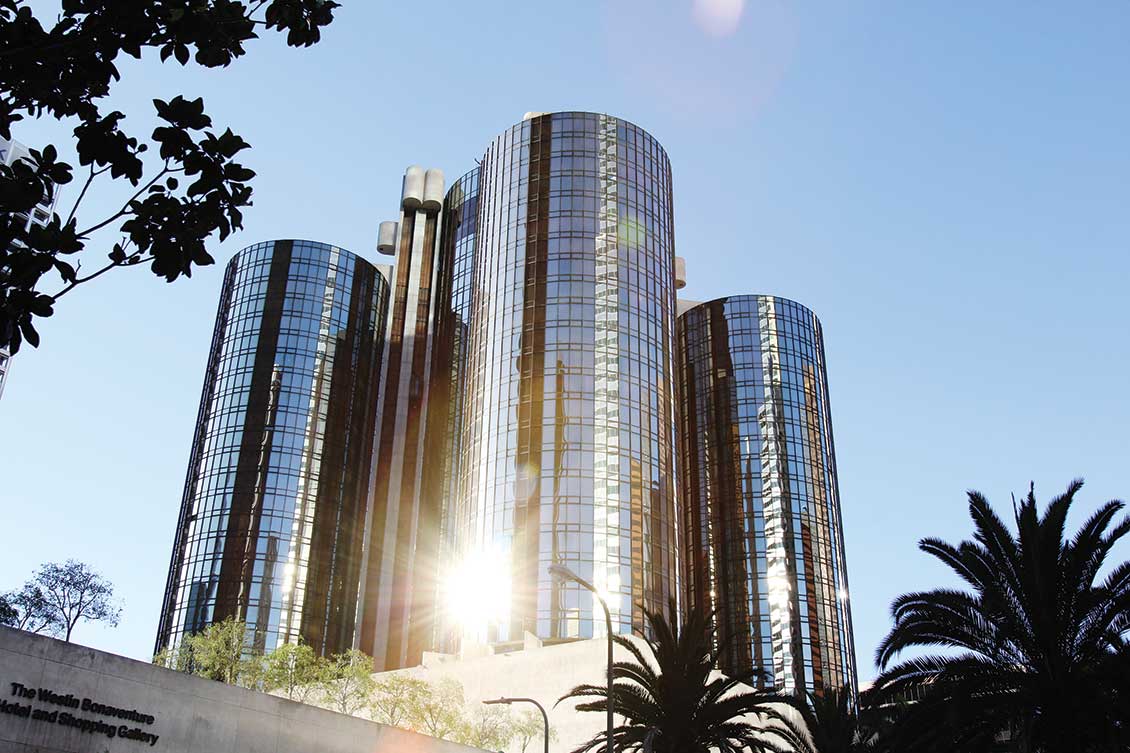
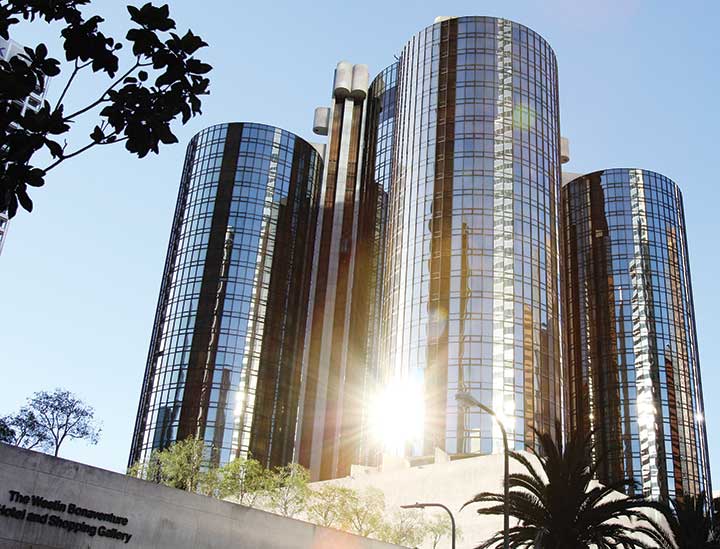 LEED Silver property Westin Bonaventure Hotel & Suites in downtown Los Angeles.
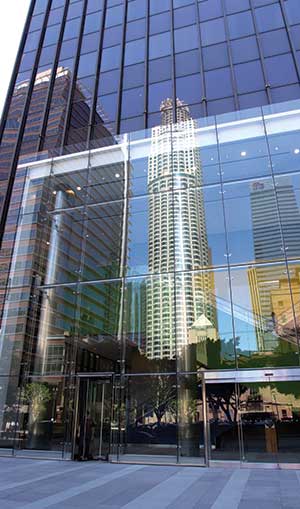
 Dominique Smith with Nicos Katsellis and Michelle Saquilayan at the office of USGBC’s Los Angeles Chapter.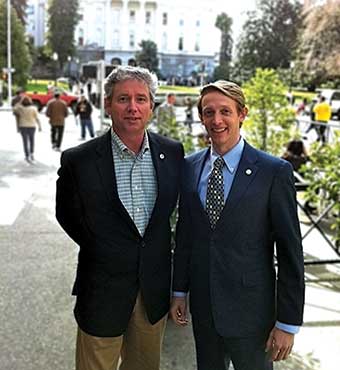
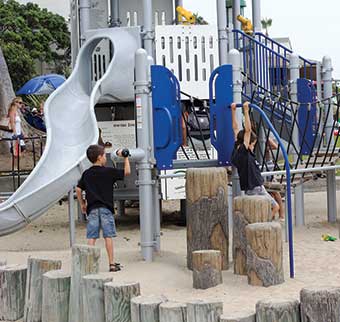
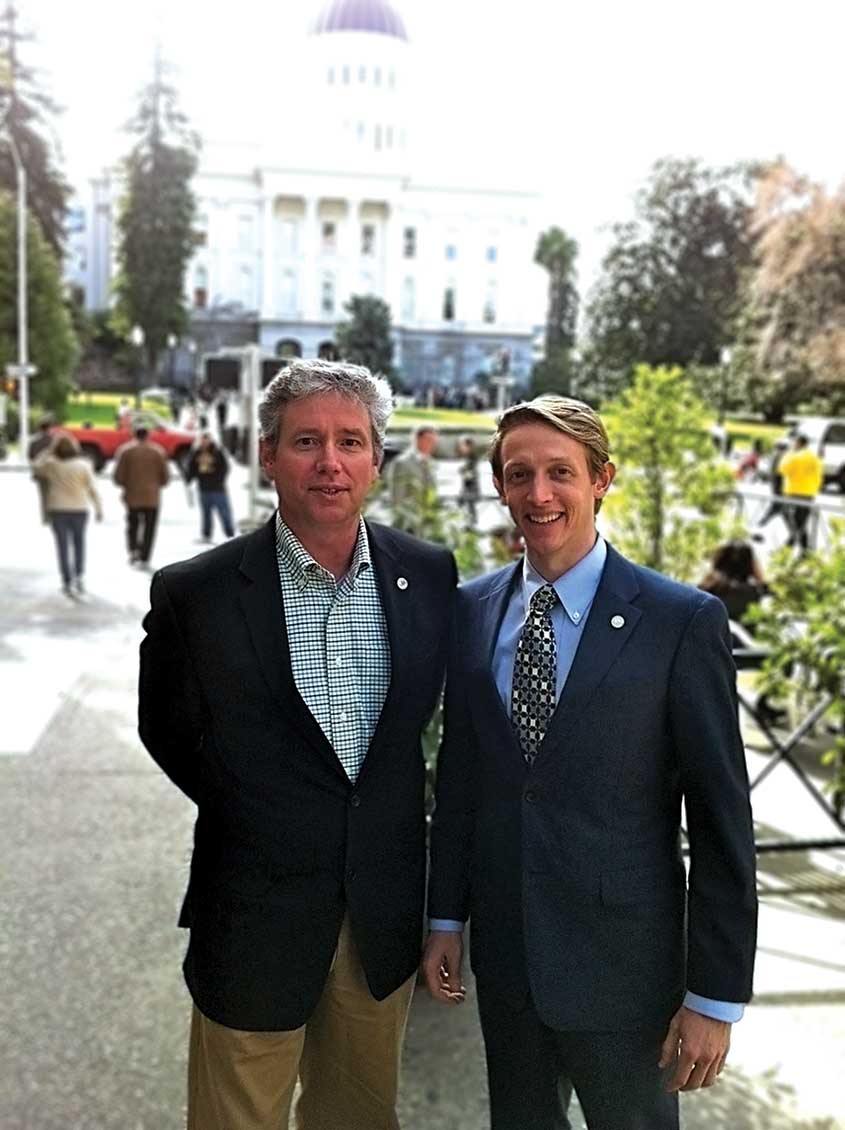
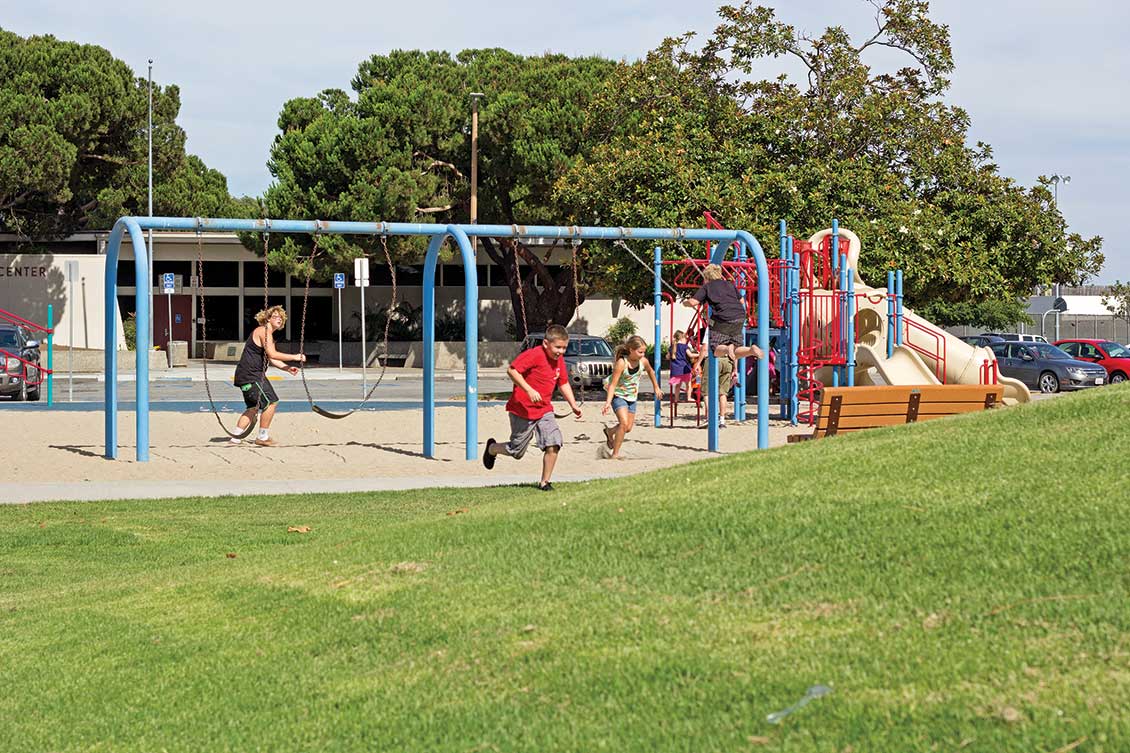
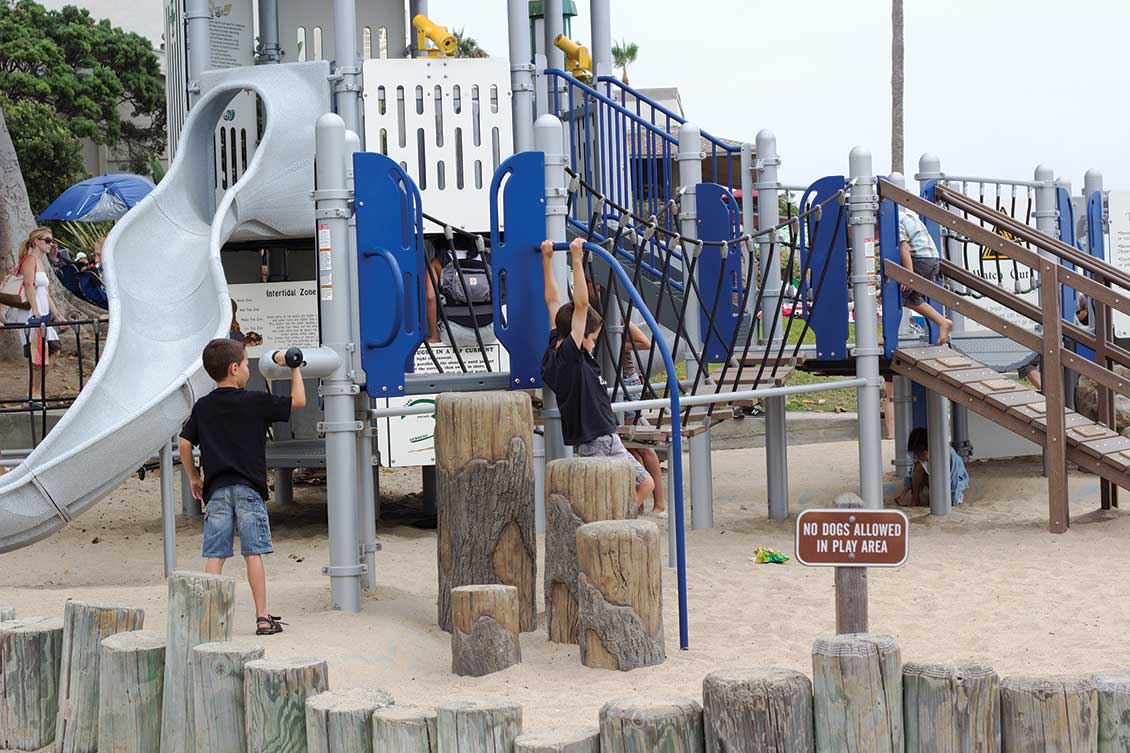
 (top) Dennis Murphy and Jeremy Sigmon, USGBC Director of Technical Policy, in Sacramento, California; (middle) kids at a sand playground in Laguna Beach; (bottom) young boys on skateboards in downtown Los Angeles.