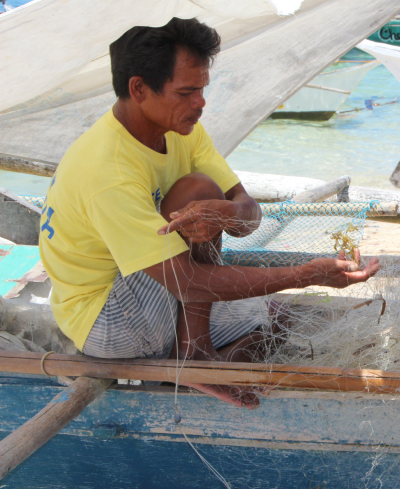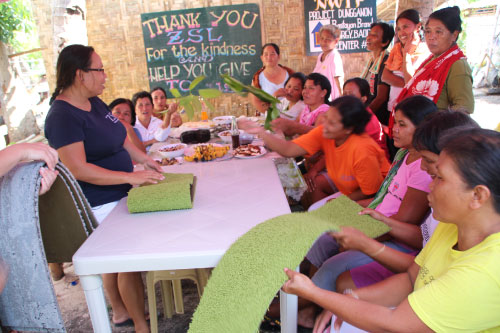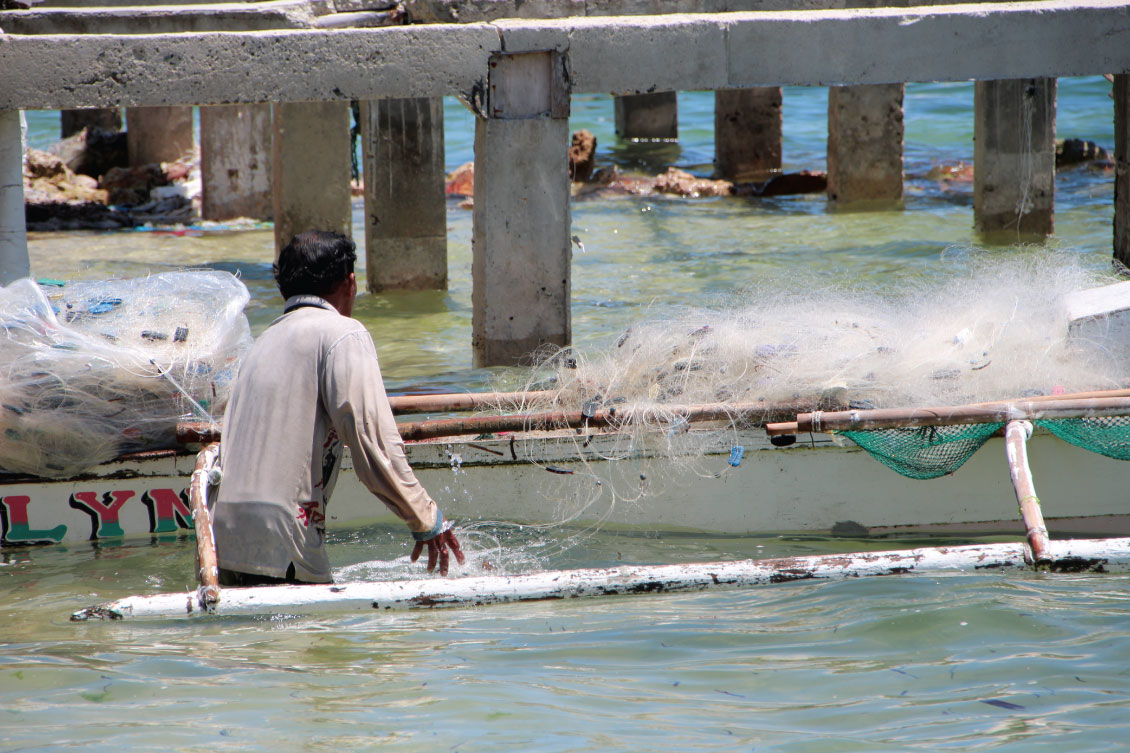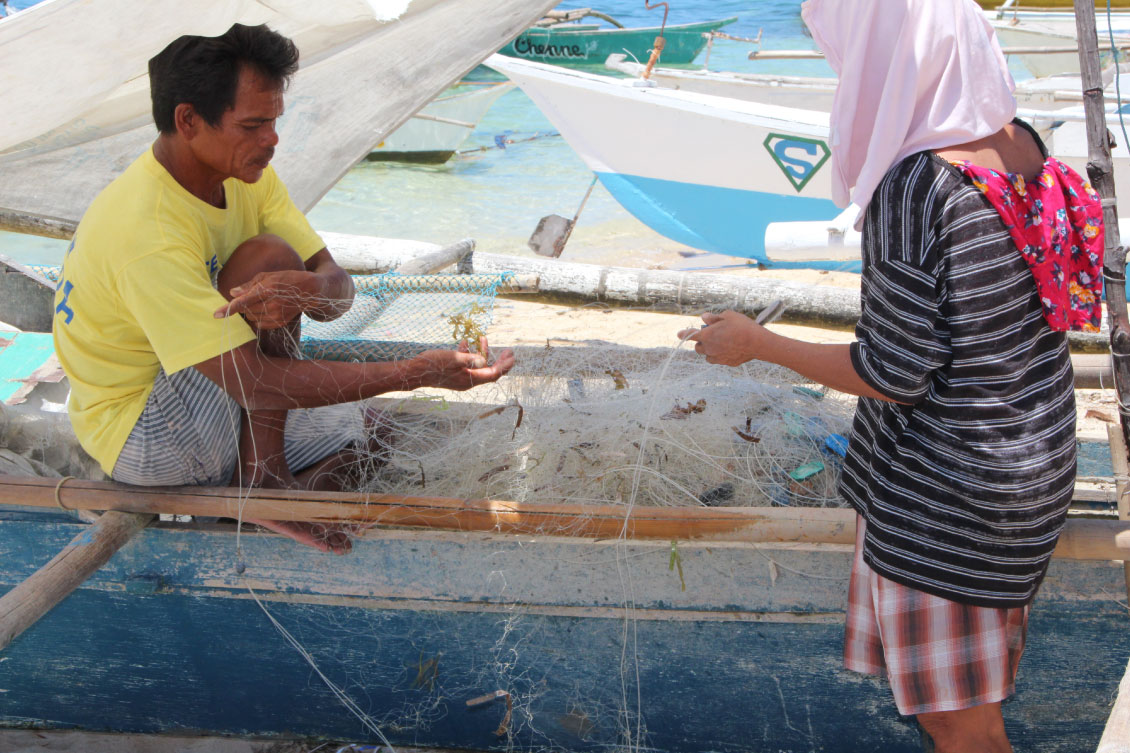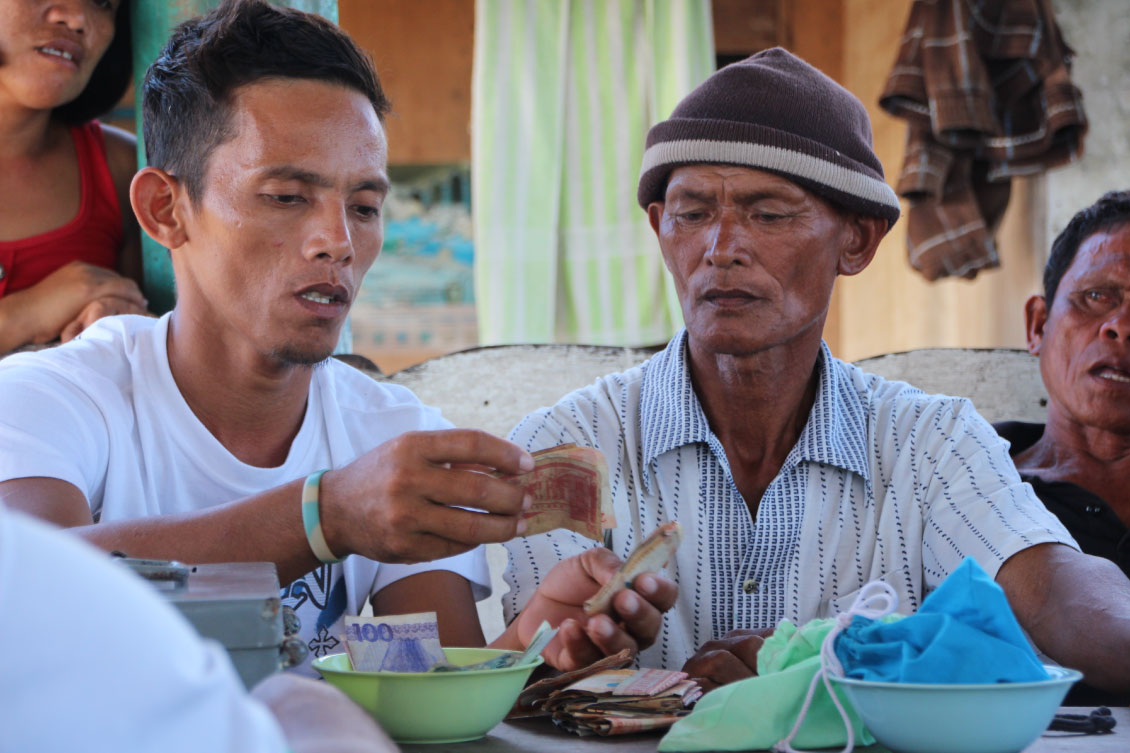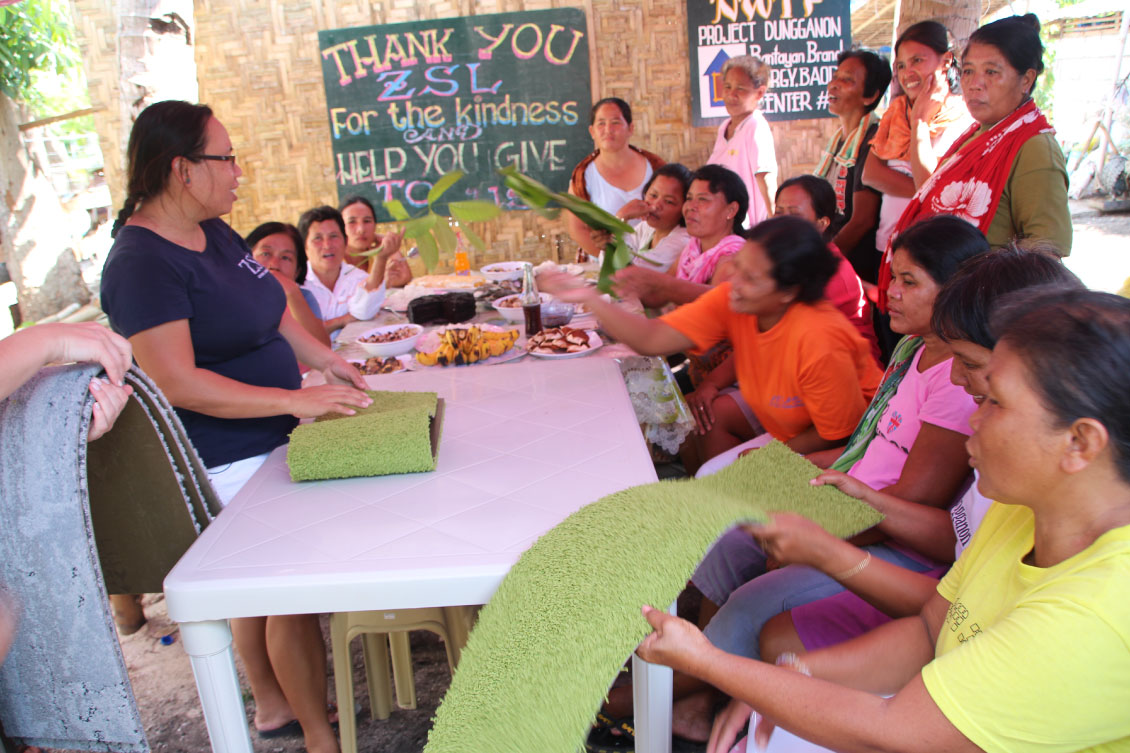


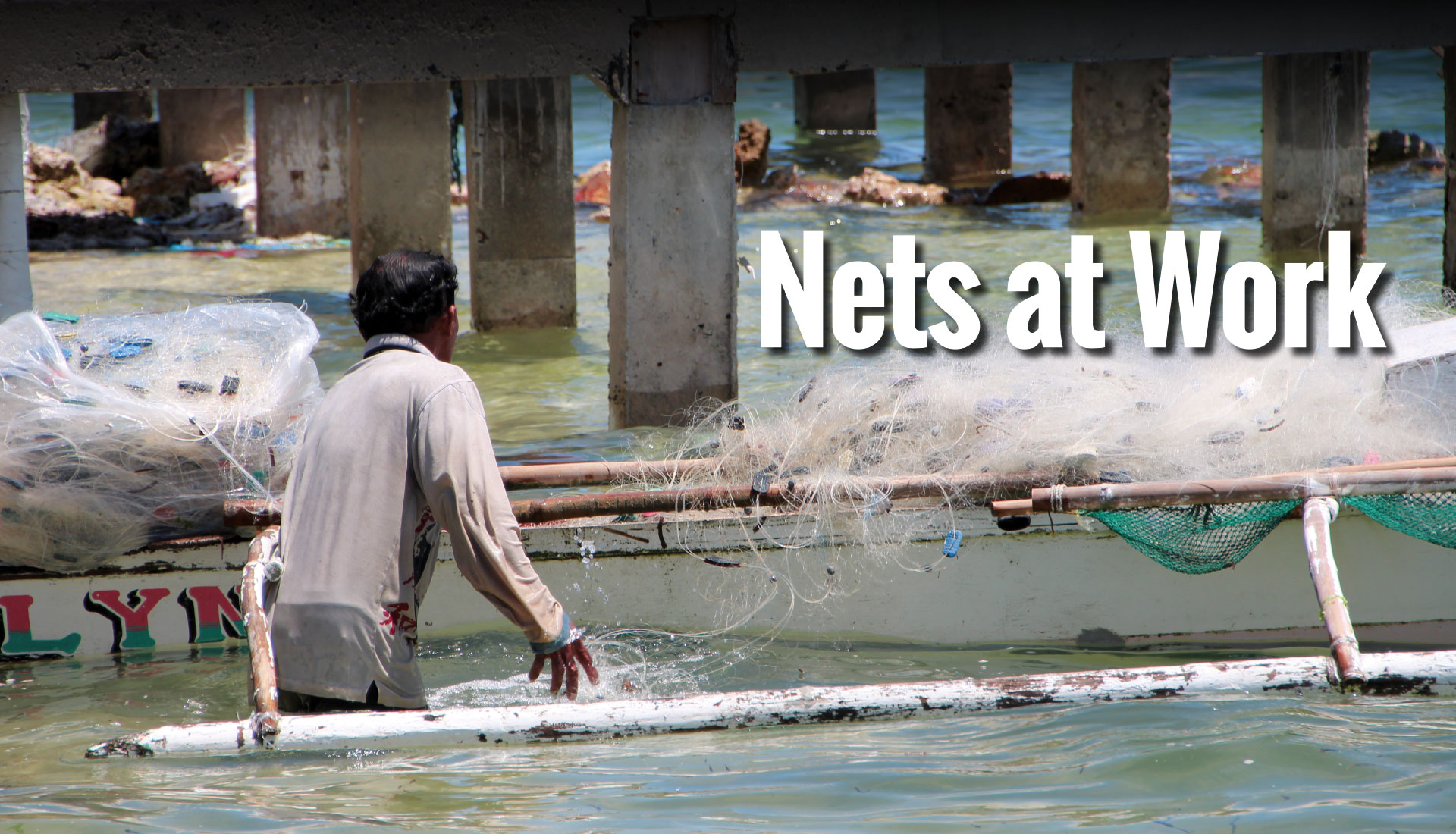
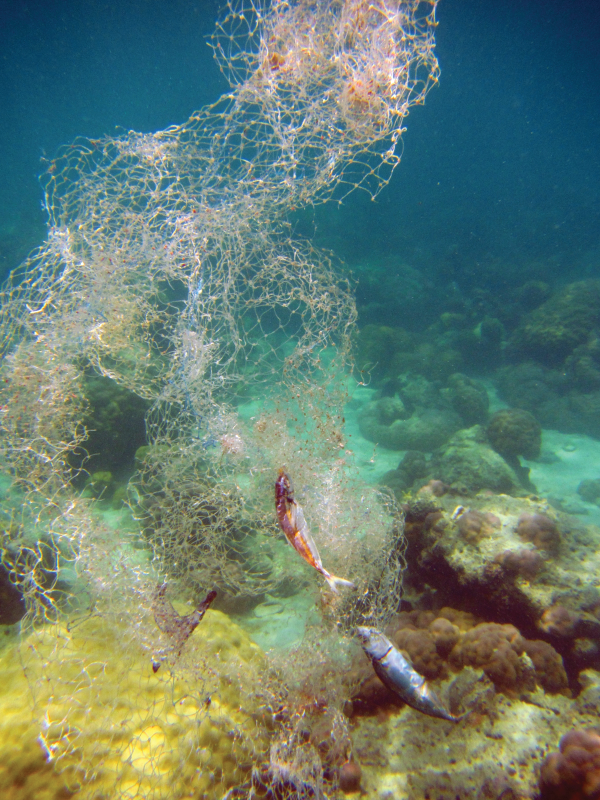
Net-Works is proactive in cleaning up waters polluted with discarded fishing nets. Its first pilot project took place in the Philippines.
All photos: Interface
Since 1996, Interface—a global manufacturer of commercial carpet tiles—has employed innovation-based green strategies for the making of its products. Today, it is a business leader in environmental sustainability. Developing and manufacturing products with a small carbon footprint and high level of recycled content is part and parcel of Interface’s mission. In addition to its efforts to reduce waste, it also works to connect with and benefit people on all levels of the supply chain.
“We wanted our products to have a social voice as well as an environmental one,” says vice president and chief innovation officer, Nigel Stansfield. In 2007, as a first step toward that goal, they developed a social business model in India and worked with local nongovernmental organizations (NGOs) and villages to tap into traditional weaving skills. FairWorks was launched, but ultimately was so far removed from the company’s core product line that it failed commercially. “Rather than scrap our efforts,” notes Stansfield, “we chose to see [it] as an opportunity—a successful failure we could learn from.”
Meanwhile, Aquafil, one of Interface’s yarn suppliers, was looking at ways to recycle waste polyamide 6 (“nylon”) and turn it into usable material for the carpet and textile industry. One of the waste streams of nylon they identified was fishing nets; specifically, used commercial fishing nets from industrial fishing regions. “We asked ourselves if we could create an inclusive business model, in the vein of FairWorks, and incentivize net collection in developing communities [to] connect some of the poorest people in the world to a global supply chain,” says Stansfield.
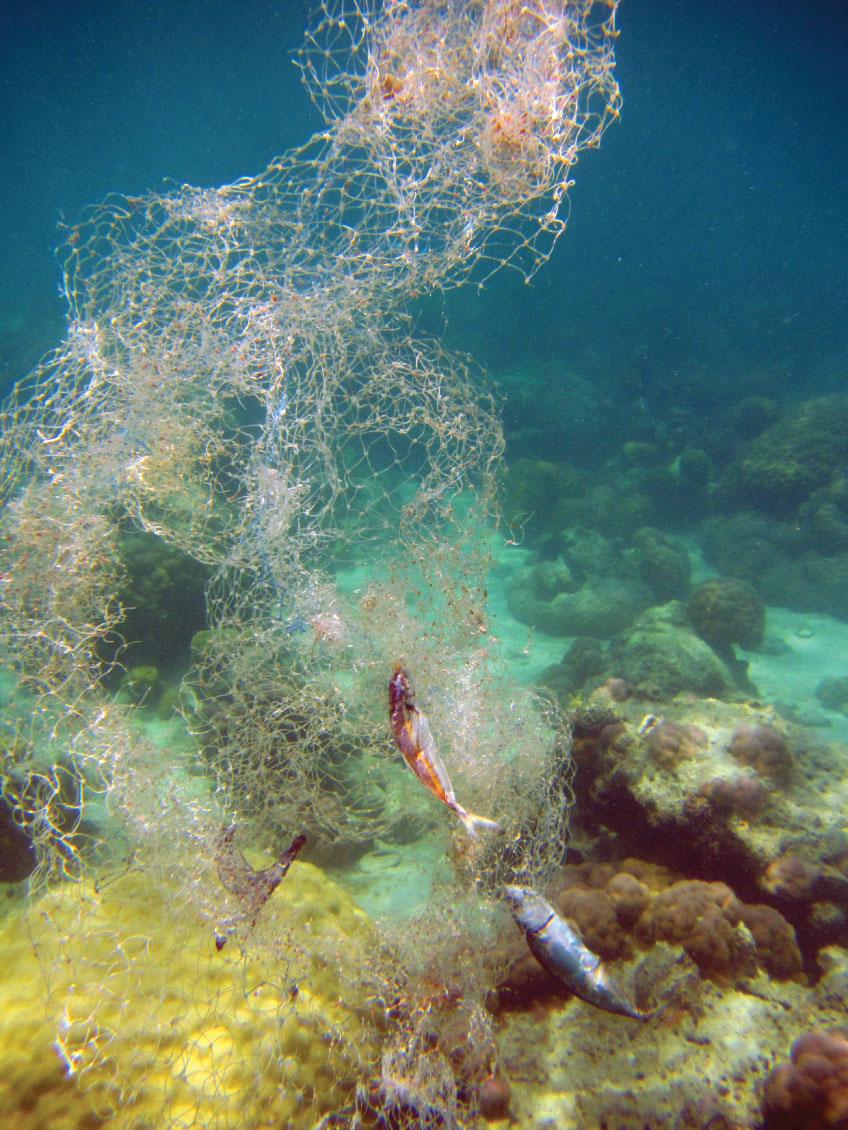
Enter Net-Works. Born of the desire to be more proactive in social sustainability as an organization, the project mobilizes fishing communities in the central Philippines to collect discarded fishing nets from the coastlines and waters. The Philippines were chosen for the pilot program, in part, because “the opportunity and extent of waste nets was known to be enormous,” according to Stansfield. With no sustainable waste channels, innumerable unusable nets were being discarded directly into the seas and along the shore, destroying the marine and coastal ecosystems. These waste nets take hundreds of years to break down and, in the meantime, negatively impact both the local communities and the environment.