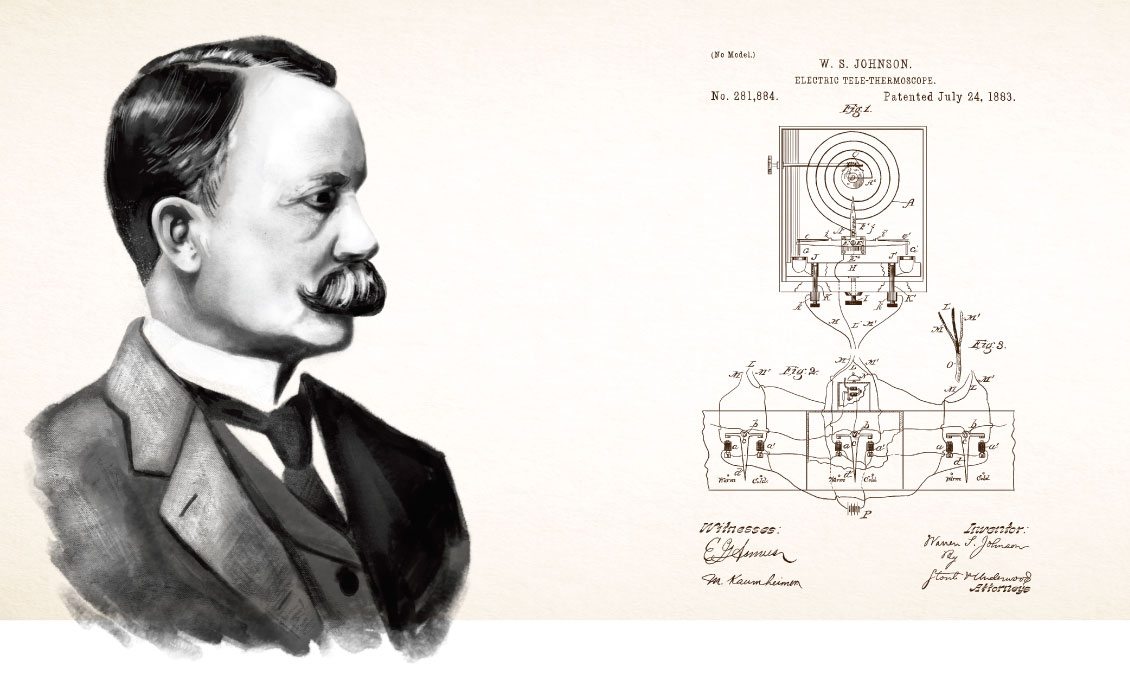
Cover: In 1895 Warren Johnson patented a pneumatic thermostat that was the first application for regulating heating systems, thus launching an industry focused on energy efficiency. Illustration by Tristan Chace. Above: Clay Nesler is the vice president of corporate sustainability at Johnson Controls and a 32-year employee of the company.




Two industry giants take broad steps to continue on their sustainable journey.
WRITTEN BY Alison Gregor

The journey toward sustainable building and environmental stewardship is not just an individual one, but a collective one. And each company has its own unique story about the path to green building and environmental consciousness: when it started and why, how far the company has come, and how long the journey may end up being. Here’s a glimpse of the “path to green” taken by two companies as seen through the eyes of their sustainability aficionados.
The path to sustainability at Johnson Controls, a global technology and industrial business, has been less of an odyssey than a commitment to stay true to the company’s roots.
In the 1880s, professor Warren S. Johnson, the company’s founder and namesake, invented and patented the electric room thermostat. His system of temperature regulation not only catalyzed development of the building control industry, but also created a means of saving energy and money in buildings. The idea of building efficiency was born, and so was the building efficiency business at Johnson Controls, the company’s longest-running business unit.
“When did we start considering environmental aspects?” muses Clay Nesler, the vice president of corporate sustainability and a 32-year employee of Johnson Controls. “Every time we made a building control system smarter; for instance, when we added a piece of hardware or software to adjust temperatures so we could save energy at night. Those are things we started introducing into our products a long time ago.”
Johnson Controls, which has its headquarters in Milwaukee, Wisconsin, has about 170,000 employees based in about 1,300 locations globally, many of whom create products designed to run buildings more efficiently, including heating, ventilation, and air-conditioning systems. A Fortune 500 company, Johnson Controls has developed, acquired, and divested other businesses
over the decades and now has two other units besides building efficiency: power solutions and automotive experience. The company produces such products as batteries for traditional and hybrid electric vehicles as well as automotive seats and other interior components.
Nesler, a co-inventor on 12 patents and a mechanical engineer, says that building efficiency for the sake of comfort and customer savings, and building efficiency for the sake of the environment are not mutually exclusive goals, though it has been in more recent decades that Johnson Controls has evolved its company ethic toward sustainability and environmental stewardship.
Energy efficiency as an environmental ethic “started after the oil embargo in the mid-1970s,” Nesler says. “That’s when there was a very strong shift from making buildings more comfortable to concern about actually conserving energy. And that’s when there was a big boost in investment in automated controls for buildings and more efficient equipment.”
Over the decades, Johnson Controls has been involved in more than a thousand energy efficiency projects, which, combined, have reduced carbon emissions by roughly 21 million metric tons since 2000.
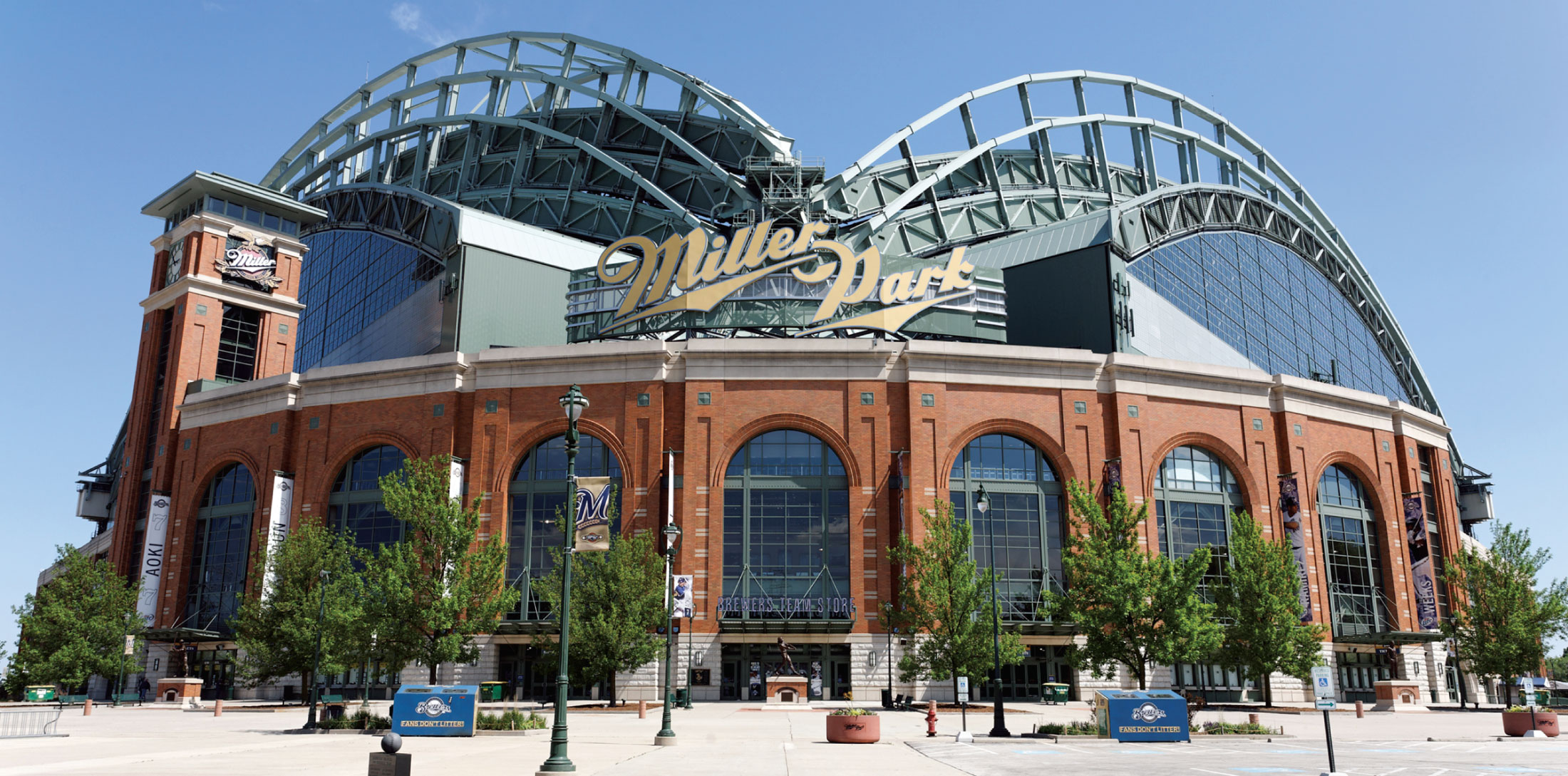
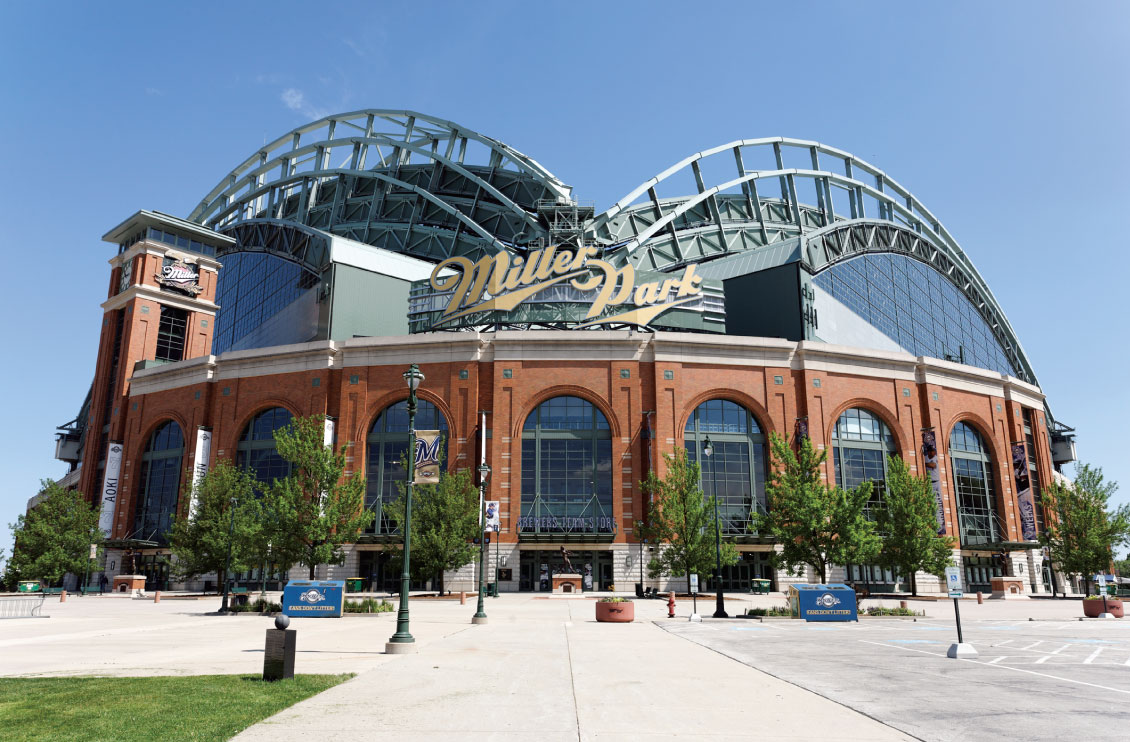
Johnson Controls has handled high profile energy saving projects such as Miller Park in Wisconsin.
The push toward building efficiency led quite naturally to an involvement in the development of sustainability in the building and construction industry.
“We were involved in the development of LEED [Leadership in Energy and Environmental Design] from the very first day,” Nesler says. “We were one of the first members of the U.S. Green Building Council and had an employee very active on the board.”
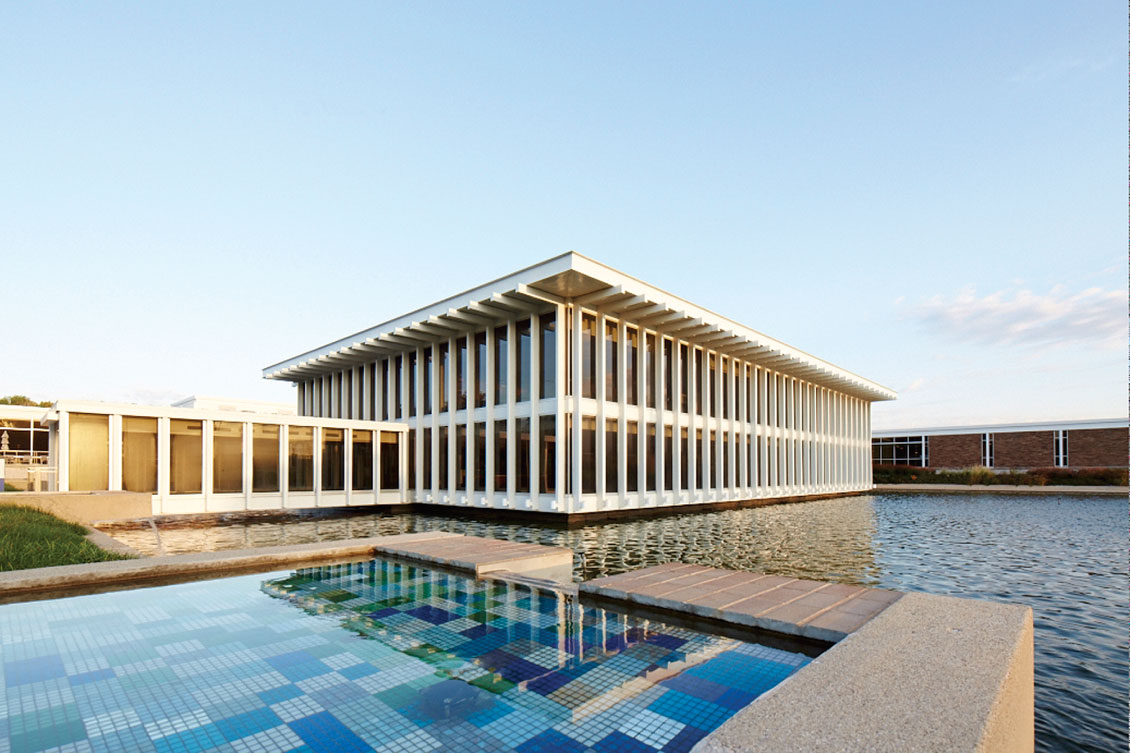
In fact, the company’s Brengel Technology Center in Milwaukee was part of the original pilot program for LEED for New Construction and was certified LEED Silver in 2001. The 130,000-square-foot center was the first building to be recertified from Silver to Gold in 2004 in the LEED for Existing Buildings (LEED EB) pilot program.
“We now have a standard that any new facilities be LEED-certified anywhere in the world,” Nesler says. “That applies to manufacturing facilities, office buildings, and any new construction or major renovation project.”
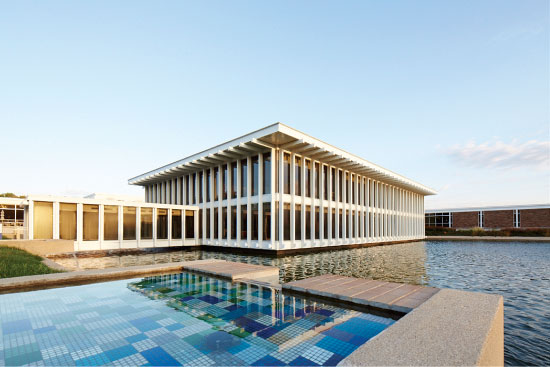
In 2010, Johnson Controls received LEED Platinum certification for four buildings on its expansive site in Glendale, Wisconsin.
In 2010, the company received LEED Platinum certification for four buildings on its 33-acre corporate campus in Glendale, Wisconsin, which represented the largest concentration of Platinum buildings ever awarded on a single corporate site. The campus energy usage was reduced by 21 percent despite doubling the amount of space by adding 160,000 square feet.
That same year, Johnson Controls also launched the Institute for Building Efficiency (IBE), which studies technologies, policies and practices related to high-performance buildings and energy systems. Last year, Johnson Controls, in partnership with a global research organization called the World Resources Institute (WRI), introduced a Building Efficiency Initiative meant to expand the scope of the IBE’s work to a global level.
“That’s basically how we’re taking our commitment to efficient and sustainable buildings and globalizing it,” Nesler says. “With WRI, we’re hoping to accelerate investment in energy-efficient buildings around
the world.”
Johnson Controls has now certified more than 2 million square feet of its own buildings to LEED and more than 20 million square feet for its customers, Nesler says. The company at one time had the largest number of employees certified as LEED APs and LEED Green Associates in the world, a number that currently stands at 995.
Molly Powell, a solutions program manager at Johnson Controls, is one of them, with a LEED AP Operations + Maintenance credential. Powell, who studied conservation and environmental studies at university, said a particularly rewarding project for her was the LEED certification in 2012 of Miller Park, the baseball stadium of the Milwaukee Brewers. The third Major League Baseball stadium ever to be LEED certified, Miller Park was particularly complicated to certify due to its retractable roof, said Powell, who managed the project.
“It was a lot of calculations that had to be done, and a lot of engineering work” to meet the special energy and ventilation requirements, she says. “I think Johnson Controls really demonstrated our leadership and commitment to energy efficiency and green building practices through this project right in our own backyard.”
Like Miller Park, other energy efficiency projects handled by Johnson Controls have been growing in scope and complexity in recent decades. For instance, in late 2013, the company was awarded a 20-year contract by the Hawaii Department of Transportation to reduce energy usage by about 49 percent at 12 Hawaiian airports for a total savings of $518 million. Energy cost savings will fund the entire project over the contract term, instead of taxpayers.
“It’s the largest project of its kind that we know of,” says Nesler, detailing the replacement of 75,000 light fixtures, upgrades to HVAC equipment and controls and the installation of 8,100 solar photovoltaic panels. “It’s a great example of the scale to which energy efficiency and renewable energy can be taken through energy savings performance contracting.”
When it comes to environmental stewardship, Johnson Controls continues to lead through example, Nesler says. The company has reported its sustainability data since 2002 and follows the Global Reporting Initiative G4 guidelines, with additional reporting to the United Nations Global Compact Communication of Progress and the Carbon Disclosure Project.
For the past couple of years, the company has been asking more than 200 of its major suppliers to set sustainability goals and report progress to the Carbon Disclosure Project supply chain program. Johnson Controls is also providing training to help them do this and has expanded the program to include smaller suppliers.
“We wanted to take the best practices that we have developed and applied across our own facilities and take them to our small- and medium-enterprise suppliers who may be lacking the necessary resources or expertise,” Nesler says. “It helps them reduce their energy use and costs while making them more sustainable and competitive, and it’s been very well received. So we hope to expand this program over time and be able to help many more of our suppliers around the world become more sustainable.”
The idea that developing a building to LEED standards is synonymous with developing a high-quality building of value for investors was an idea that began evolving in the mid-2000s.
—Elizabeth J. Heider

Elizabeth J. Heider is the chief sustainability officer at Skanska USA, an operating unit of Skanska.
Many of the world’s builders have taken steps down the path to sustainability, though few are as large or have gone as far down that path as Skanska, the multinational construction group based in Sweden.
With about 58,000 employees globally and about $21 billion in annual revenue, Skanska has been involved in environmental management since the mid-1990s, and in 1998 published its first companywide environmental policy. It’s an environmental record that served the company well when sustainable building came to the forefront in the United States in the late 1990s, says Elizabeth J. Heider, the chief sustainability officer at Skanska USA, an operating unit of Skanska.
Skanska USA joined the U.S. Green Building Council in 2000, the year that the LEED green building certification system was unveiled, Heider says. It was also around that time that the federal government was beginning to embrace green building and assess its potential impact on the government’s portfolio.
“Skanska had a really fortuitous brand at that time—and even now—because we’re a Swedish-held company,” Heider says. “Our federal clients sort of looked at that and said, ‘Well, you’re a Swedish company, so of course you have to be greener than the average builder.’”
That perception of Skanska, which was not unfounded, probably gave the company a bit of a boost early on at a time when builders in the United States in general were still feeling their way in the field of sustainable building, Heider says. “We were able, I think, to pick up projects earlier than some others, so that allowed us to really break into the market early,” she says.
Heider’s own path to sustainable building also began early and with the federal government: In 1996, as a consultant, she conducted a green cost study done for the U.S. General Services Administration and, in that way, began growing intimately familiar with the business argument for sustainable building.
“There was a very strong value argument for building in a much more sustainable way,” Heider says. “The value argument for sustainability has been a big part of my career at Skanska.”
In the early part of this century, Skanska’s institutional clients, universities and the federal government, were exploring that same rationale for building sustainably, “embracing the notion that they needed to start building in a more sustainable way because they were going to hold their projects for a long period of time,” Heider says.
The idea that developing a building to LEED standards is synonymous with developing a high-quality building of value for investors was an idea that began evolving in the mid-2000s as well, she says.
“Oftentimes, our projects are sold to pension funds and other long-term investors, because they know they’ll be a good quality, and the LEED mark is something that is now recognized as a standard of quality, so it’s something we’ve used to communicate the value of the projects that we develop,” Heider says.
Heider has played a role in helping the larger company at Skanska understand the business argument for green building. In building out the company’s headquarter offices in the Empire State Building, a project begun in 2008, there was initially internal hesitation about the costs of trying to achieve LEED Platinum certification, Heider says.
“There was a group of us that said, ‘We need to change that discussion from cost to value—what will the value be for us?’” she says. “We have to take a longer-term view on not only the initial costs but the operating performance.”
After demonstrating to the company that the cost of achieving LEED Platinum, about $250,000, would be saved during the life of the 15-year lease, Heider and her group got the go-ahead. And it was well worth it, she says.
“As it turned out, we recouped the additional investment that it cost us to get to LEED Platinum in the first five years of the lease,” Heider says. “Over the life of the lease, we’ve saved half a million dollars in energy costs.”
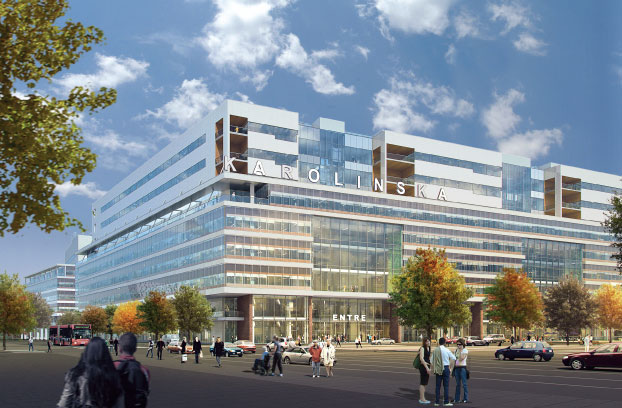
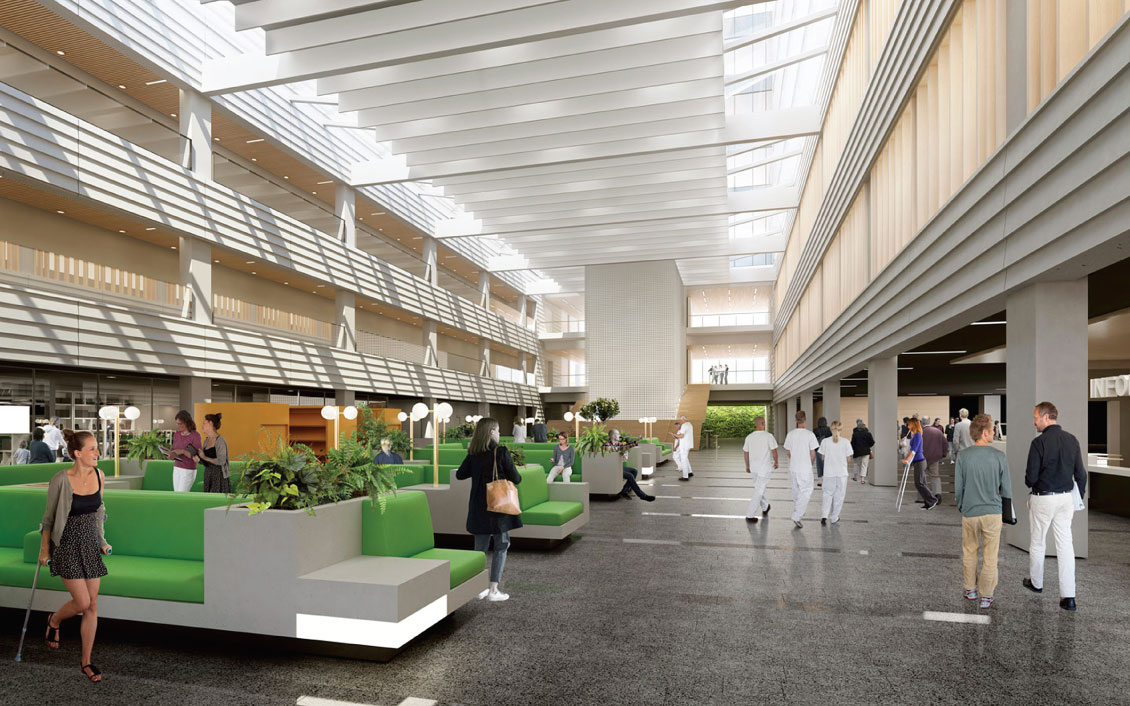
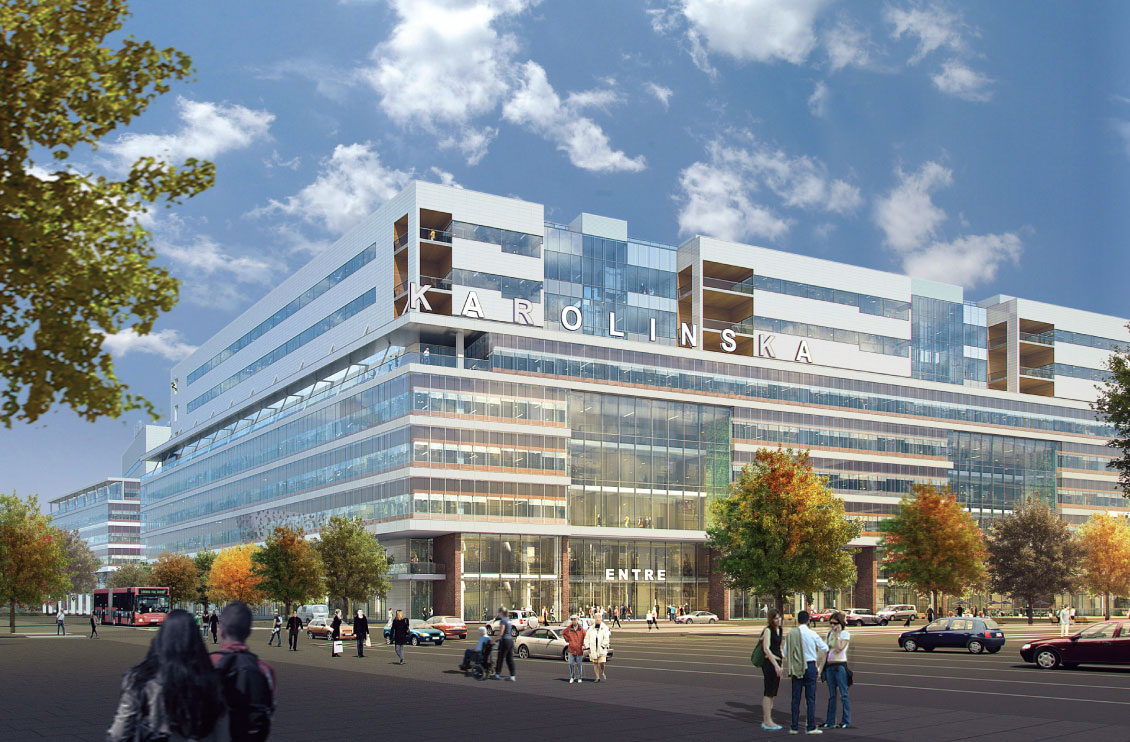
Above: The new hospital in Stockholm will be the world’s largest public/private partnership hospital. This Photo: Investors pushed for green building certification for the new university hospital in Stockholm, which Skanska is constructing.
(Another fringe benefit that Skanska most likely received in its offices from achieving LEED Platinum, in which 16 of the 44 points achieved had to do with environmental air quality, is that sick leave went down by 15 to 18 percent during the first two years of occupancy, Heider says.)
By 2009, Skanska had embraced the concept of LEED so thoroughly that the company’s global chief executive at the time, Johan Karlström, made a commitment that every project developed by Skanska globally would be developed to LEED Gold or better, Heider says.
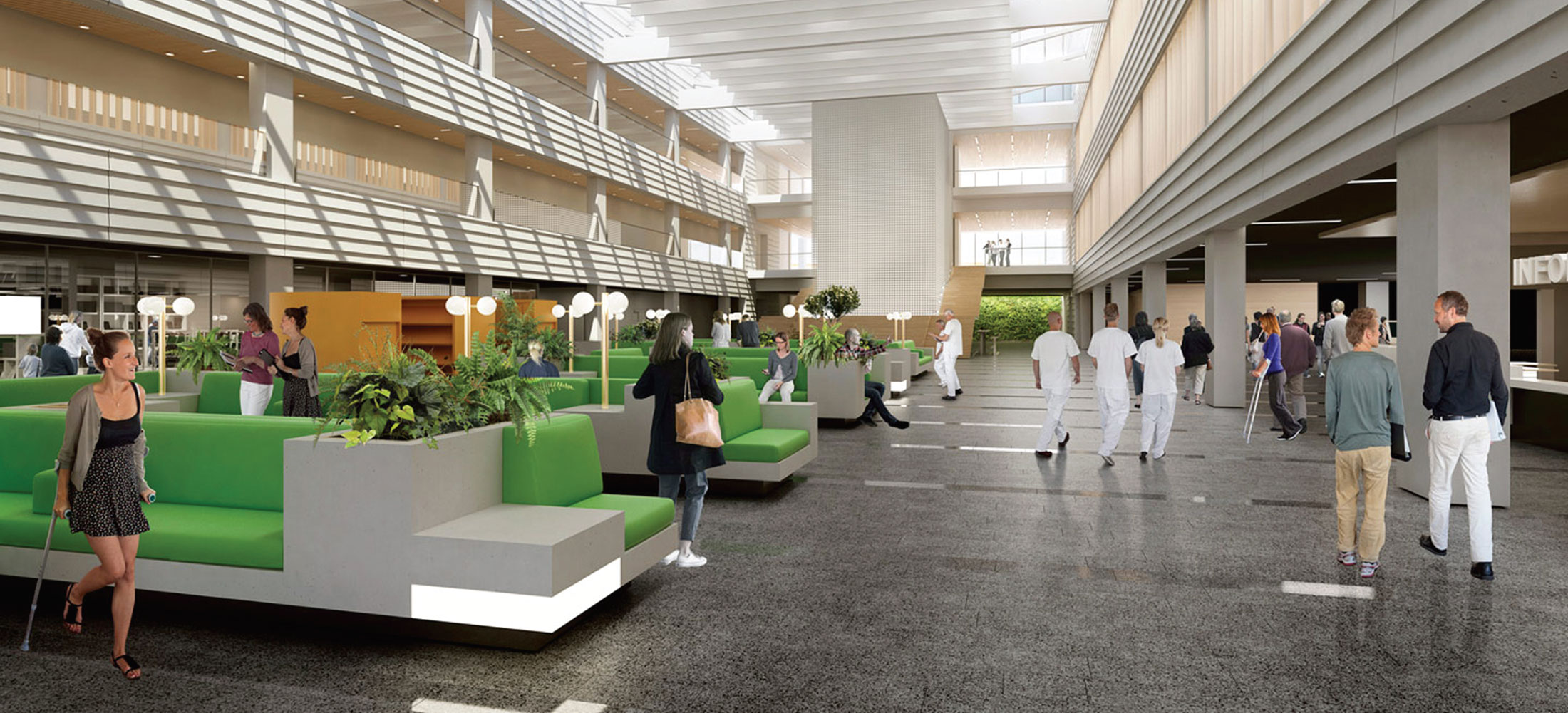
For instance, Skanska is constructing a university hospital in Stockholm’s suburbs, called the New Karolinska Solna, and as the world’s largest public-private partnership hospital, it will achieve multiple green building certifications because investors require it. However, it will also be one of the first university hospitals in the world to be LEED certified.
Skanska “certainly was on the leading edge in terms of helping to inform the international strategy [regarding LEED], which wasn’t that well-baked at the time,” says Heider, who joined the U.S. Green Building Council board of directors in 2008 and served as its chairperson in 2012.
Skanska USA now has 182 projects that have achieved or are seeking LEED certification. Its commercial development unit has about a dozen projects in various phases, all LEED Gold or better, for a total of about 12.5 million square feet of space. In this country, about 455 Skanska employees are accredited as LEED APs, Heider says.
However, the company has by no means reached the end of the path to sustainable building, Heider says.
“The opportunity to do more has become even more challenging,” she explains. “We’ve managed to wring out a lot of the low-hanging fruit, and now we’re looking at, how do we really transform the supply chain to deliver more environmentally responsible materials to market, and how do we drive this even deeper into the process of building so that we also bring along the subcontractors with us?”
The area of building performance, which is substantially affected by the human occupants of a building, is another area that still needs research, Heider says. Building data collected and analyzed in digital format, often called building information modeling or virtual building, should help in that realm as we continue quantifying more and more data.
“We haven’t yet closed the loop on building performance,” Heider says. “So many of the projects developed in the United States, most of them in fact, and certainly the large ones going through LEED certification, are one-off. Very seldom do you have a whole field of the same building that’s being built, so how do we know how these buildings are actually performing?”
Heider says that Skanska will continue to work with the U. S. Green Building Council to answer the questions she’s raised as the green building industry evolves. “Skanska’s provided me with really fertile ground to pursue not only how we build in a way that is better, but also is more sustainable,” she says.