“We felt it was necessary to get cities sort-of on the record in support of the agreement,” Martin says, “and show the rest of the world that it’s not just the president versus Congress, but that there are already lots of other entities that can work toward these goals and are already achieving them.”
“We wanted to highlight the fact that some of the largest, most economically successful cities across the country and across the world are actually the ones that are taking the most aggressive [environmental] action,” Martin adds. “We wanted to push back on the notion that we have to choose between our economic success and averting climate change.”
George Heartwell, who made the trip to Paris as mayor of Grand Rapids, Michigan, but retired from the position at the end of 2015, previously attended the United Nations’ 2013 climate change conference in Warsaw, Poland. He walked away from that event disappointed that the agreement stemming from the conference didn’t include language about the role of cities. “I wanted to be back in Paris because this was going to be the one where we finally got standing,” he says. “When you come [several hundred] strong, and you’ve got access to your diplomats—far better access than we had in Warsaw—you feel at least that your voice is being heard. It was important for us to say that cities play a key role in this, and if we’re going to achieve these goals, it’s going to be because cities have moved the needle on energy efficiency, public transportation, and building design.”
Throughout the conference, U.S. Department of Energy officials regularly briefed the city leaders on the negotiations, giving them a window into how the talks were proceeding. The mayors also participated in workshops, meetings, and information sessions throughout the conference, including sessions where several U.S. mayors talked about what they were doing to make their cities more resilient in the face of climate change.
“It was an opportunity to meet with leaders who are instituting these programs in their cities, and compare what one city was doing differently from another,” says Mary Casillas Salas, mayor of Chula Vista, California.
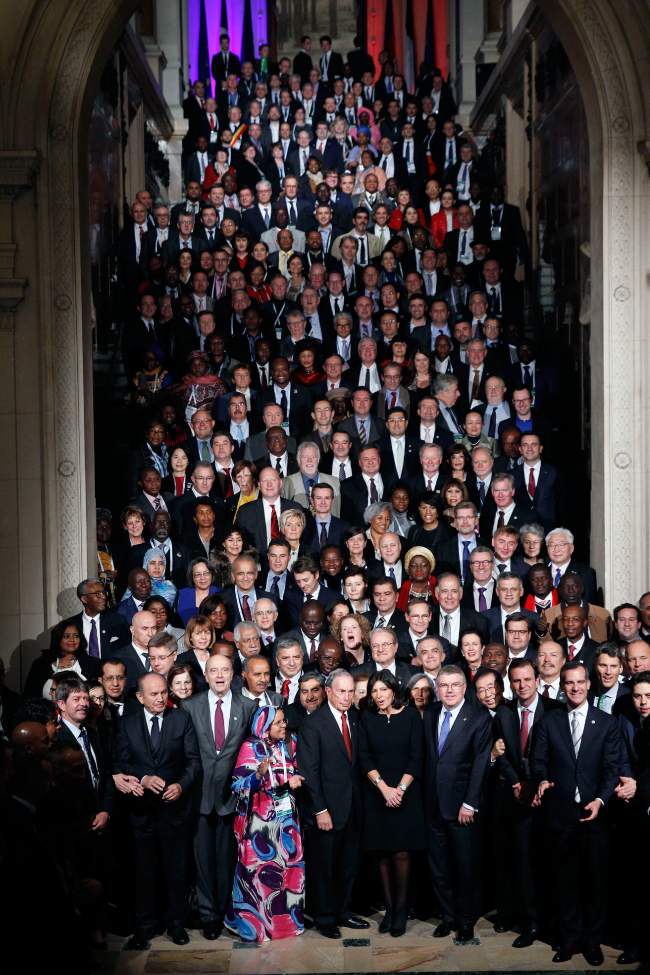
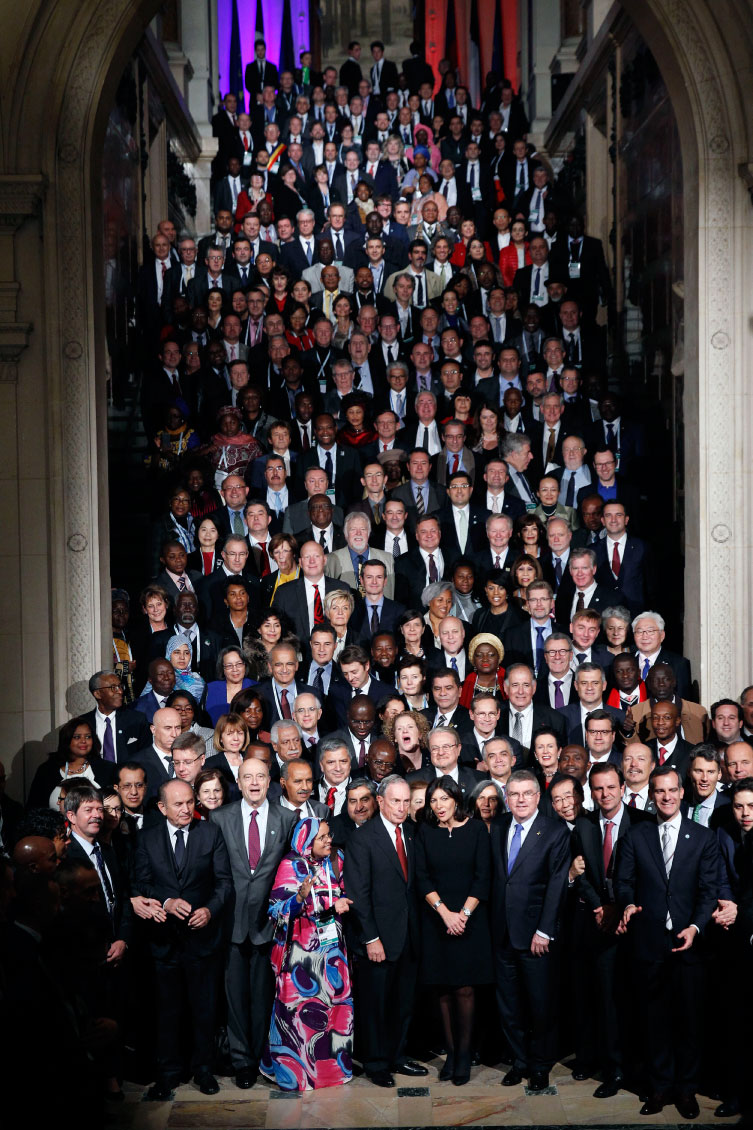
A highlight of the trip came during the Climate Summit for Local Leaders, when more than 400 city leaders from around the world descended on Paris City Hall. The event, cohosted by Paris Mayor Anne Hidalgo and former New York City Mayor Michael Bloomberg, was billed as the largest-ever global meeting of local leaders to discuss climate change, and featured an all-star lineup of speakers including Al Gore, Elon Musk, Robert Redford, and Leonardo DiCaprio.
“There was an overall sense of optimism, separate from the treaty,” says Peduto. “It was a powerful feeling, sitting in a City Hall with hundreds of mayors from every continent on earth. Not only do we have a common interest in tackling this issue, but also the commitment to do it.”
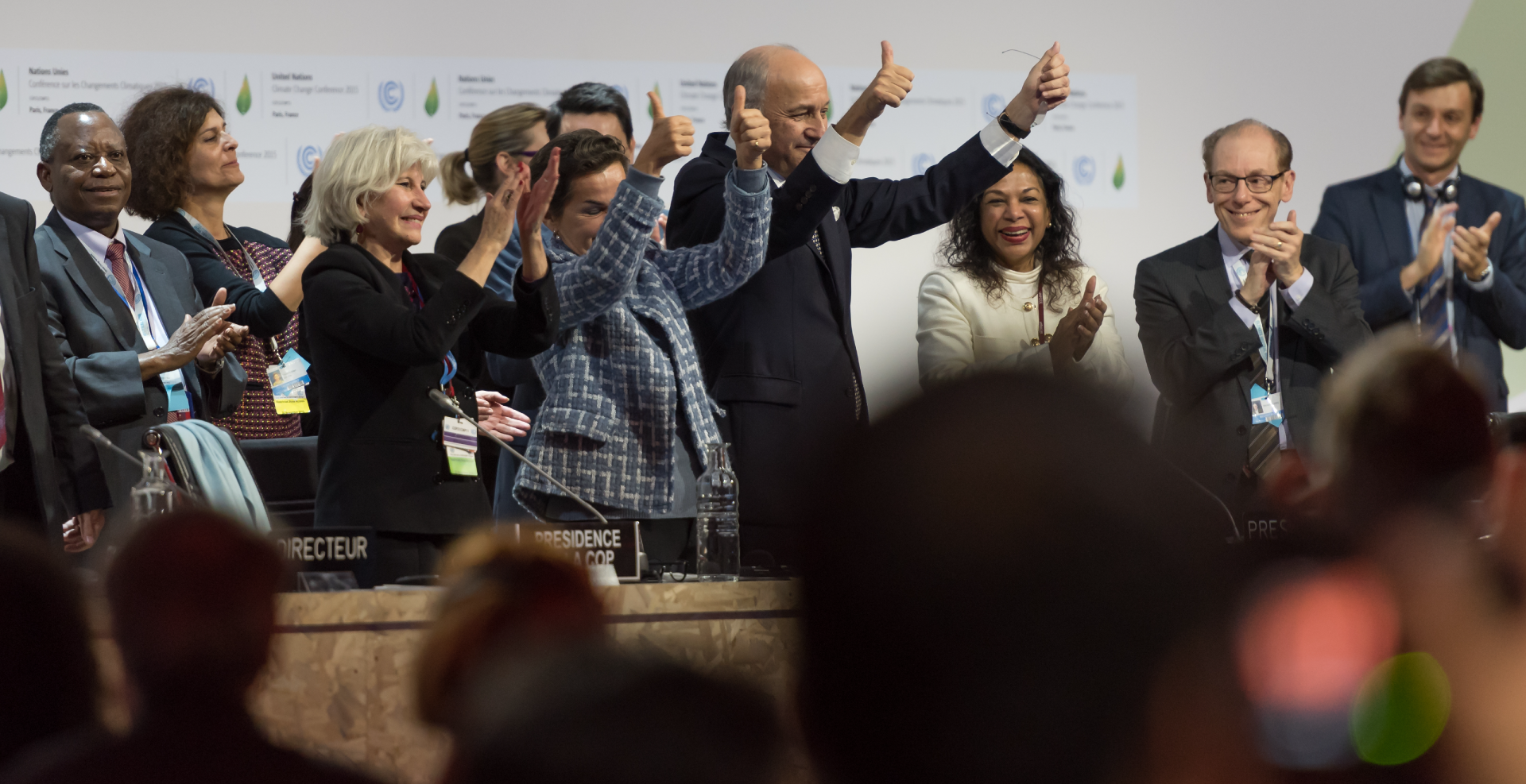
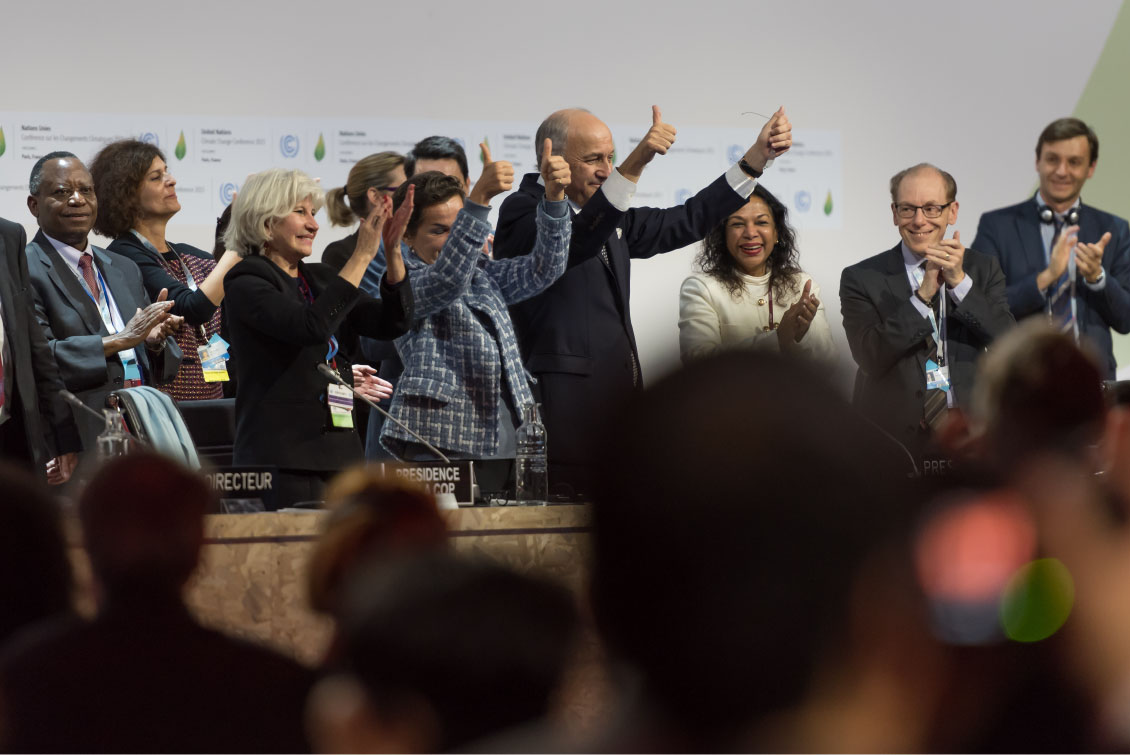
Ultimately, the conference resulted in the Paris Agreement, a landmark treaty lauded by French Foreign Minister (and head of the conference) Laurent Fabius as “ambitious and balanced” and a “historic turning point.” The accord is the first to require action on climate change from even developing countries, and represents an agreement by nearly 200 countries to voluntarily commit to greenhouse gas reduction targets. The agreement also requires countries to reconvene every five years, beginning in 2020, to update their plans with more ambitious emission cuts.
Additionally, the agreement includes language directly addressing the role of cities, encouraging municipalities and other “nonparty stakeholders” to address and respond to climate change by scaling up efforts to reduce emissions and build resilience.
“It was a recognition that cities and urban centers will play a key role in achieving the goals of the agreement,” says Heartwell. “You’ve got half the people in the world living in cities, and that percentage is growing every year. The greatest impacts that can be made are going to be made in cities.”
“Cities are where it’s happening,” says Jeri Muoio, mayor of West Palm Beach, Florida. “We are taking [climate change] on, when at the national level they’re too busy fighting with each other. Being mayor is one of the coolest jobs you can have in politics, because you can actually get things done.”
“Cities are where it’s at,” echoes Chula Vista’s Salas. “You can implement things a lot easier on a micro level than you can on a macro level.”
This is not just bluster. The Paris Agreement does not go into full effect until 2020, and while individual nations are ratifying the accord through their own governmental processes, many of the carbon-curbing initiatives that help the countries meet their goals will come at the subnational level. It’s a responsibility that city leaders are taking seriously.
“For me the big takeaway [from the conference] was not new information as much as it was inspiration,” says Heartwell. “It’s the sense that Grand Rapids is not alone out there, and there are cities around the world that are ready to do what it takes to achieve the goals of the Paris accord.”
Kevin Taylor, senior specialist for local engagement at the World Wildlife Fund and an organizer of the local leaders group, argues that cities are uniquely positioned to enact change on a number of levels—not only through direct action, but also by helping to create a market for sustainable materials, and by exerting influence on state and national governments.
“Cities are a major customer for things like electricity, things like paper products, furniture,” says Taylor. “When they set a new [sustainable] direction for what they’re going to choose to value—one type of system or provider over another—that’s certainly at a scale that makes a dent. They have influence in both directions: down to the individual level, as well as up to the national governments.”
In West Palm Beach, city officials have committed to turning the city’s fleet of vehicles over to non-fossil-fuel models by 2025, have installed LED lights throughout the city, and have made electric car charging stations available for public use. The city has also set targets around reduced emissions for city facilities and operations (including an overall 37 percent reduction in greenhouse gas emissions by 2035 from a 2008 base), and is providing free trees to residents and businesses.