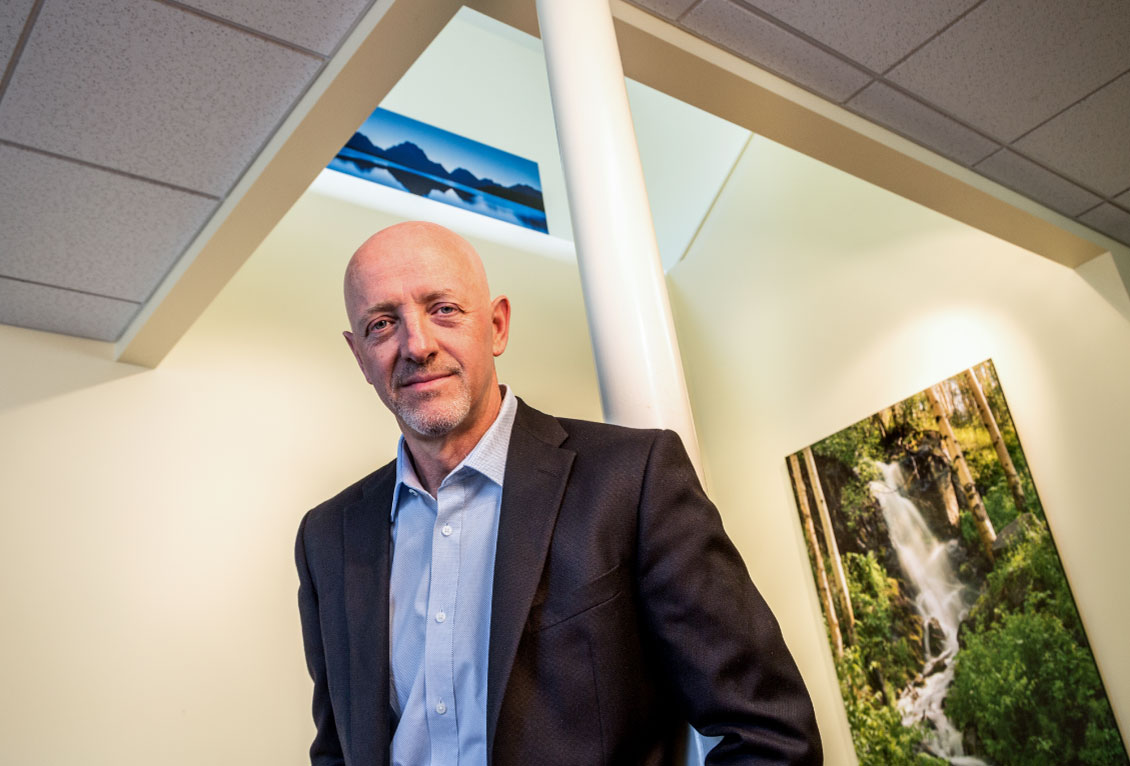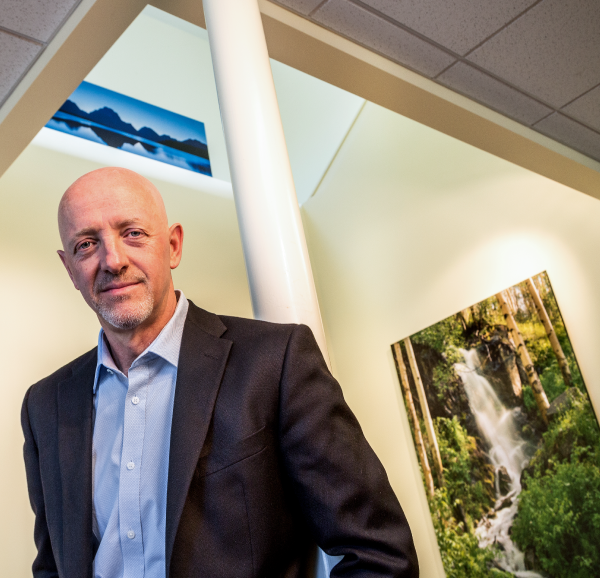
Iain Campbell is a managing director at Rocky Mountain Institute, where he leads the Buildings practice.
“We have been working to develop a program for rapid scaling of energy retrofits in commercial buildings,” explains Campbell. “I think we do a really good job in the energy efficiency of new buildings, and I think there is an element of that which is driven by codes and standards.” He notes how energy retrofits of existing commercial buildings significantly lag behind new construction—capital constraints are usually given as the reason for that. (The threshold for return on investment is typically not much more than three years.) He is quick, however, to credit the USGBC’s LEED certification with helping to drive down the cost of green building, which increases scalability. “The cost has come down to be almost a negligible increase over and above building to code,” he says, adding that building green is not only environmentally responsible, but also fiscally responsible because of the impact on the building’s future value.
Campbell sees deep energy retrofits typically integrated into major renovation projects or as he puts it: “as part of a capital refresh or repositioning of a building.” He feels the supply side of the market has yet to come up with a good solution for a stand-alone energy retrofit that is meaningful and persists over time. “We believe a big part of that is due to the retrofit process, which has been designed to deliver single building retrofits that are custom by nature.”
RMI has identified 452 possible energy-conserving measures that can be deployed in a large commercial building. What is important is to determine how a building’s characteristics match up with those possibilities. If energy retrofits are to be scalable in any significant way, Campbell and his team believe they need to be industrialized, what they call “mass customization.” He explains it as an approach that takes “specific high-value energy-conserving measures that are relevant to many buildings and [pre-engineered]…for a portfolio of buildings.” In other words, it identifies which measures are applicable for the majority, if not all, of the buildings at hand. Campbell notes that this mass customization model has been used in many industries with huge success because it is cost efficient.
They have identified four core measures: LED lighting, HVAC optimization, variable speed motor retrofits, and a real-time measurement platform that ensures consistency and sustainability of measures deployed over time. This bundle of measures—intended for buildings of over 250,000 square feet—results in an average 23 percent energy savings (without replacing major pieces of capital equipment). The Chicago retrofit is the model for the application of this bundle.
In the end, RMI plans to provide “a package of configurable, ready-to-deploy efficiency measures and technologies that will make buildings immediately smarter, more energy efficient, and more interactive with the electricity grid,” according to Campbell. Beyond energy savings, they are structuring the model to take advantage of utility incentives, the 179D tax credit, and local financing programs such as PACE. “The concept is: Wherever this model is deployed, it is able to leverage the financial enablers that are already in place in that local environment, whether that’s tax [or] utilities incentives, or financing mechanisms.” Clearly, the idea is in line with finding cross-spectrum applicability and enhanced scalability.
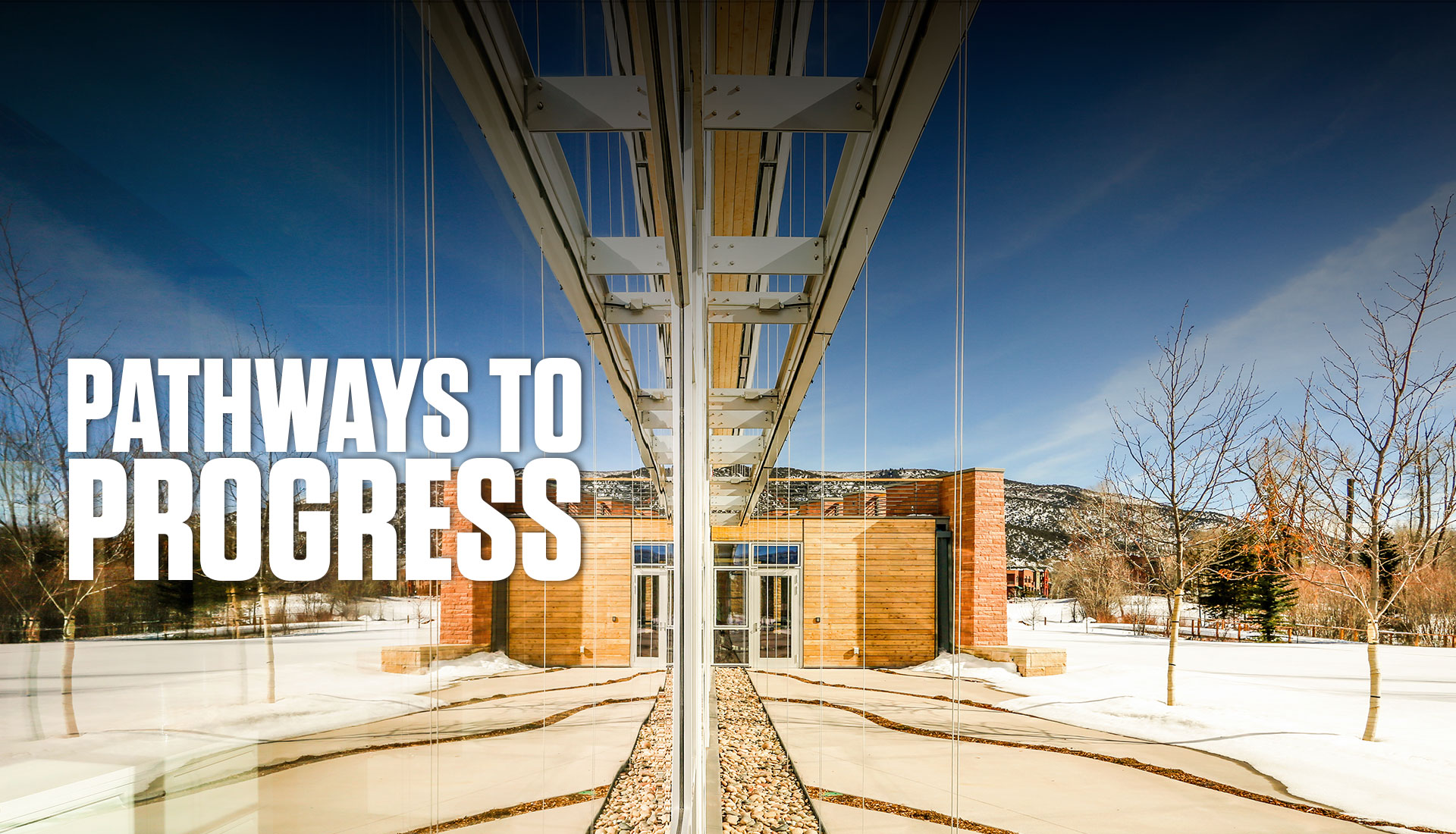
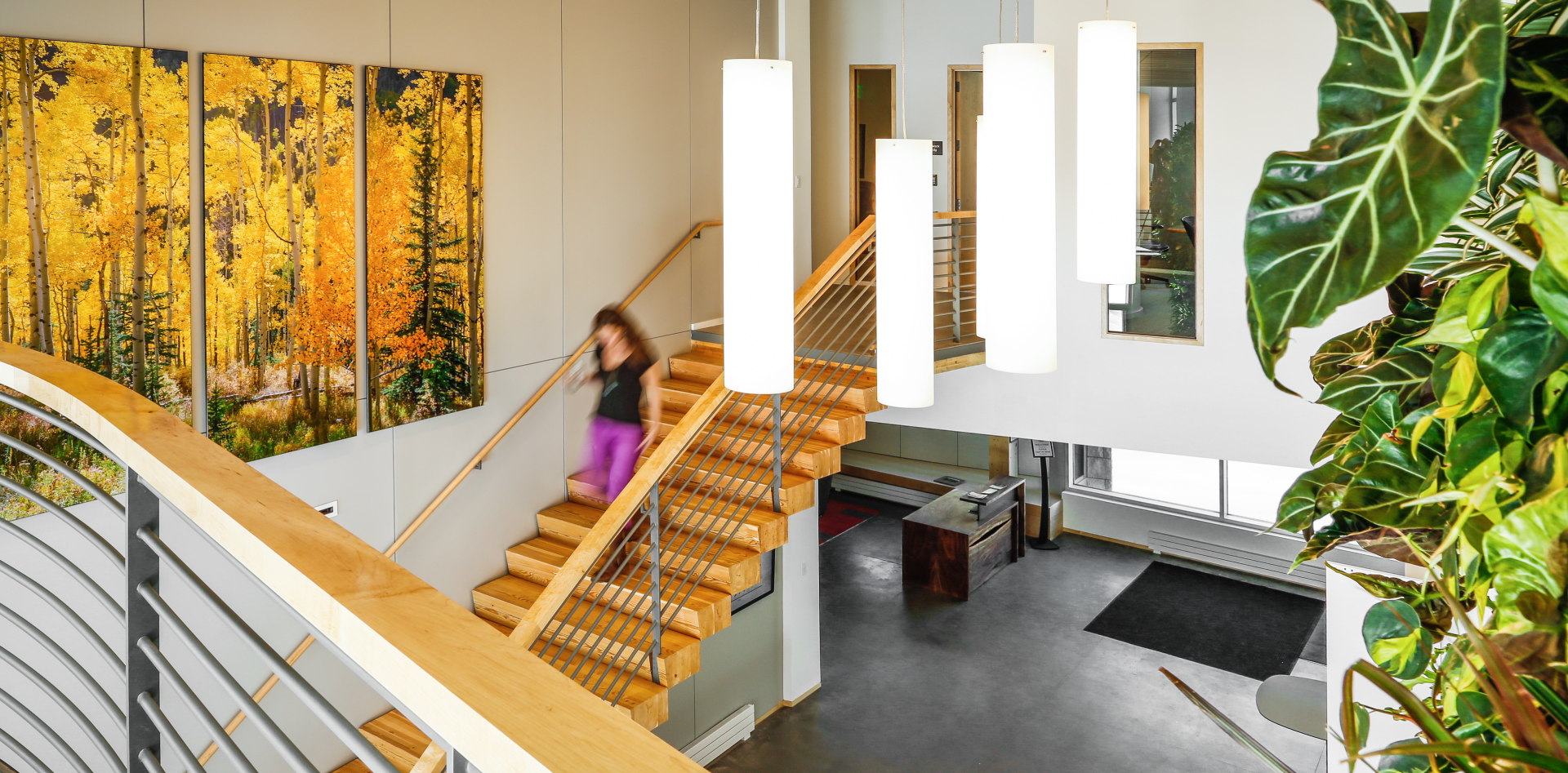
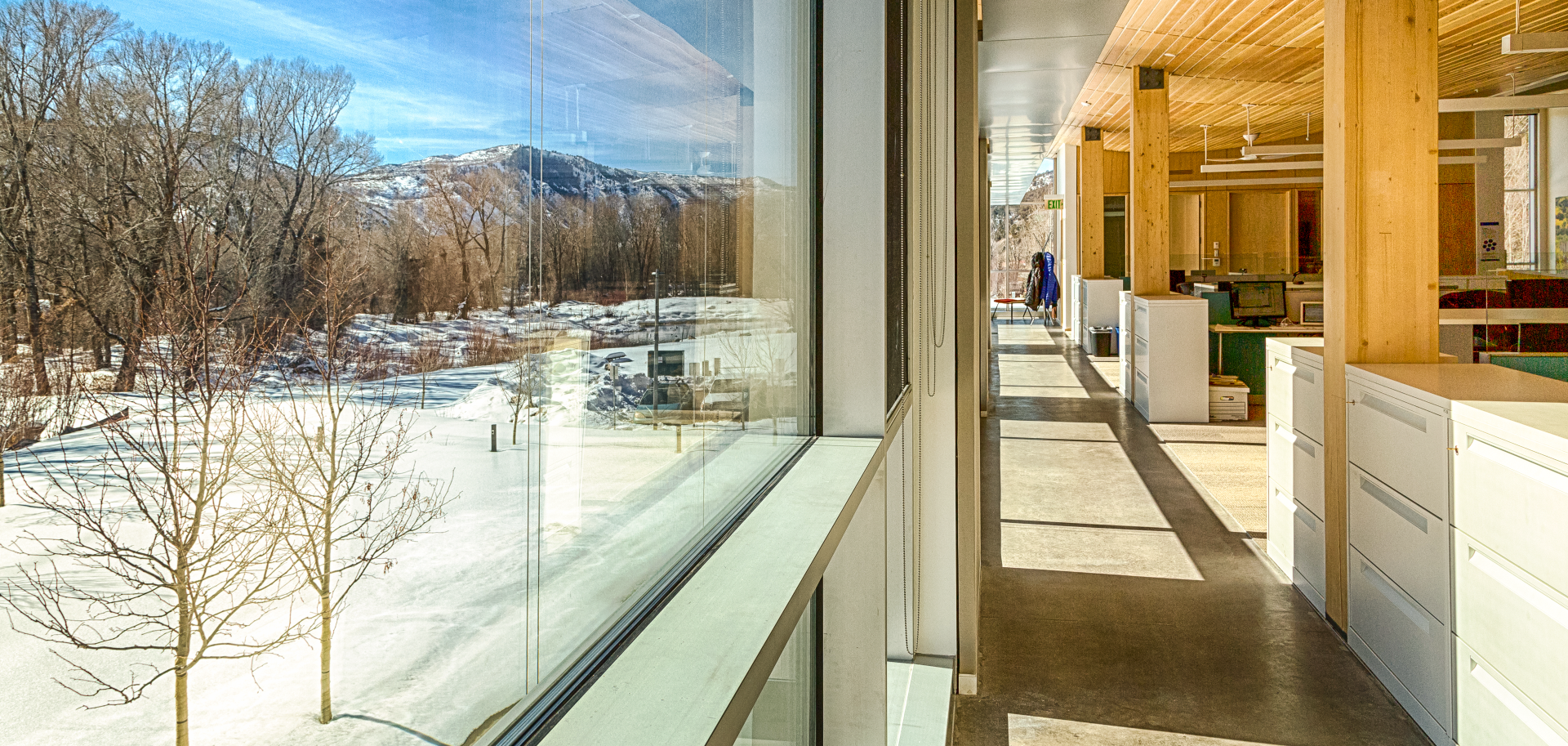
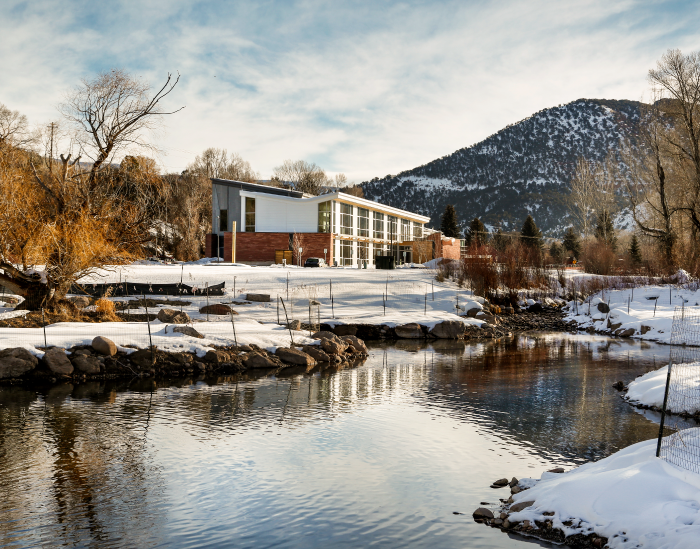
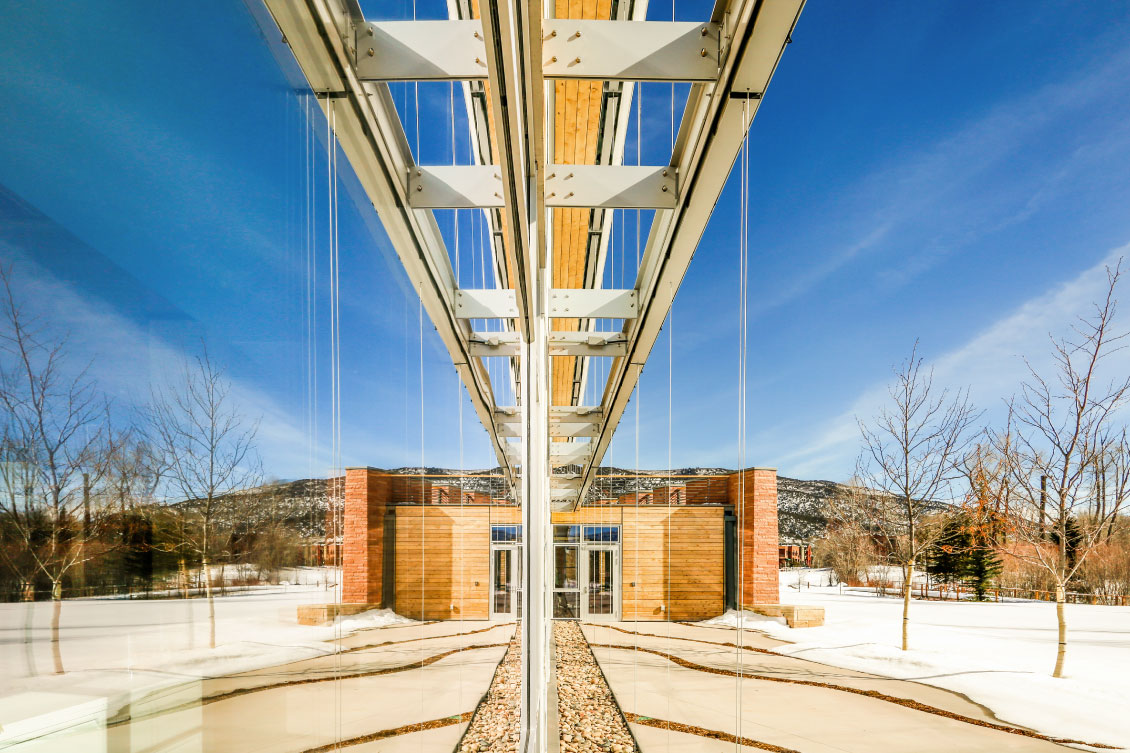
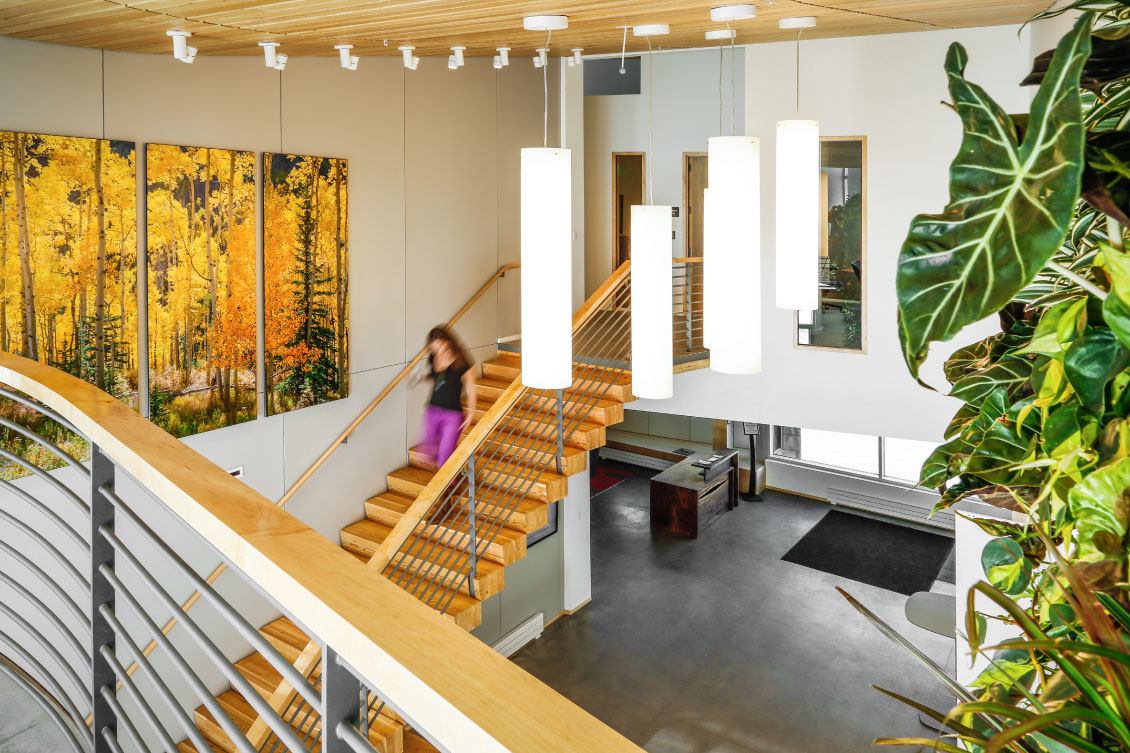
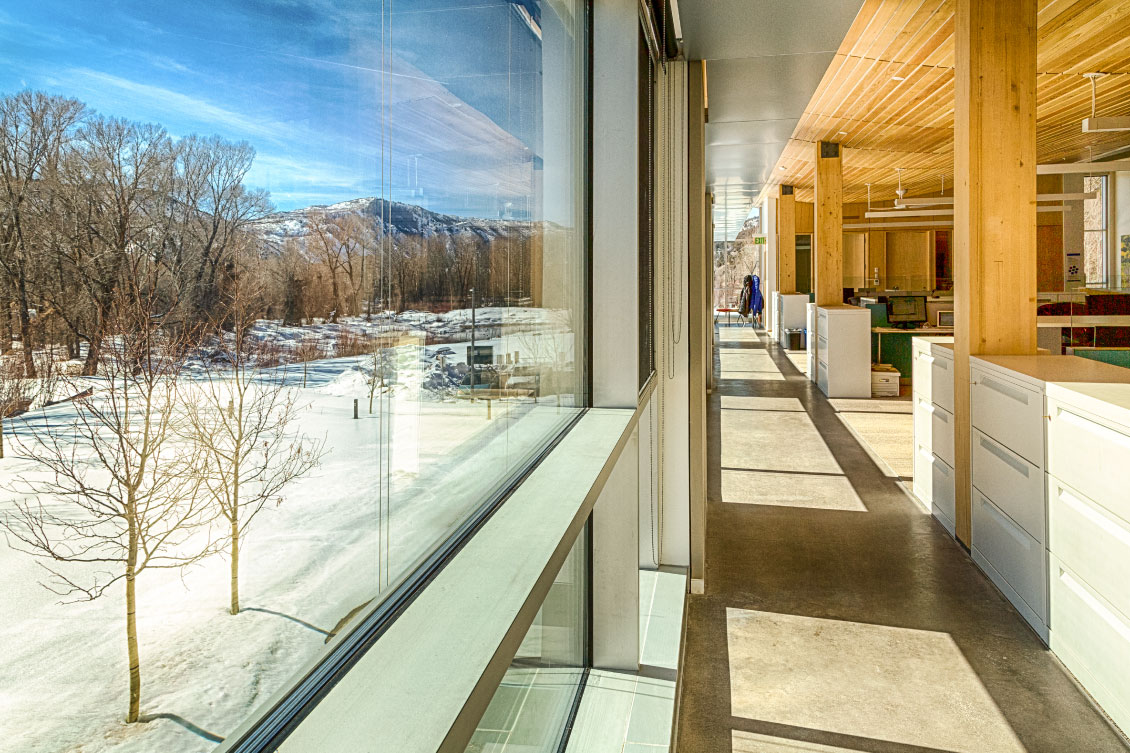
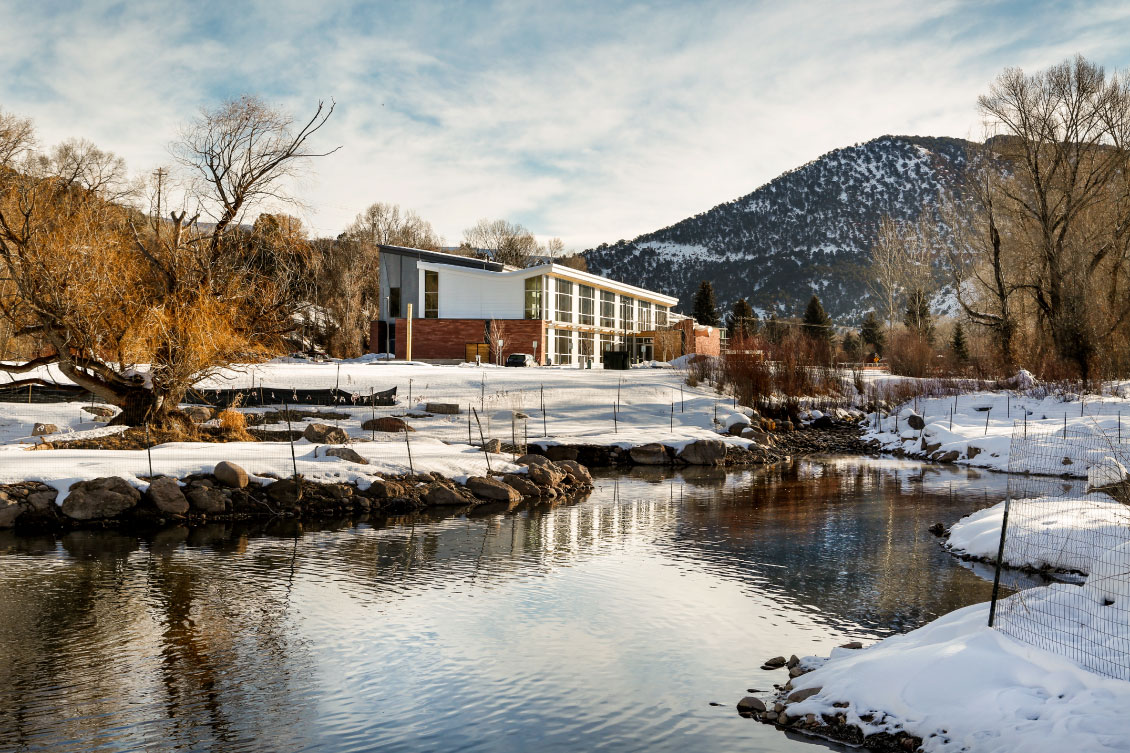
RMI manager Cara Carmichael discusses an equally impressive project: the Innovation Center. Located in Basalt, Colorado, and completed in December 2015, it is a 15,610-sq-ft office building and state-of-the-art convening center, as well as RMI’s new headquarters. “To advance our mission and propel the industry, RMI developed the Innovation Center to demonstrate how deep green buildings are designed, contracted, constructed, and occupied,” explains Carmichael. Having received the Passive House certification and anticipating LEED Platinum certification, they are also pursuing Living Building Challenge certification. “It’s going to be the most efficient building in the coldest climate zone in the United States,” she says.
In their effort to produce a net-zero-energy building, they employed the Integrated Project Delivery (IPD) contracting method, to which Carmichael attributes their success. “It was great because it really aligned our team around the goals and the vision.” She believes that to achieve such aggressive efficiency, an integrated approach is vital. “It essentially put our money where our mouth is in terms of integration and teamwork.”
As a starting point, they explored (and redefined) how occupants experience and engage with their own thermal comfort. The building includes an expanded range of “set points” in terms of temperature (64 to 82 degrees). Carmichael names six factors that affect an individual’s thermal comfort: what one wears, what one does, humidity, temperature, air velocity, and mean radiant temperature—the surface temperature of a space, which has the ability to impact an individual’s comfort level as much as, if not more than, air temperature. “We’ve really made sure that every surface in this building is aligning with our set points.”