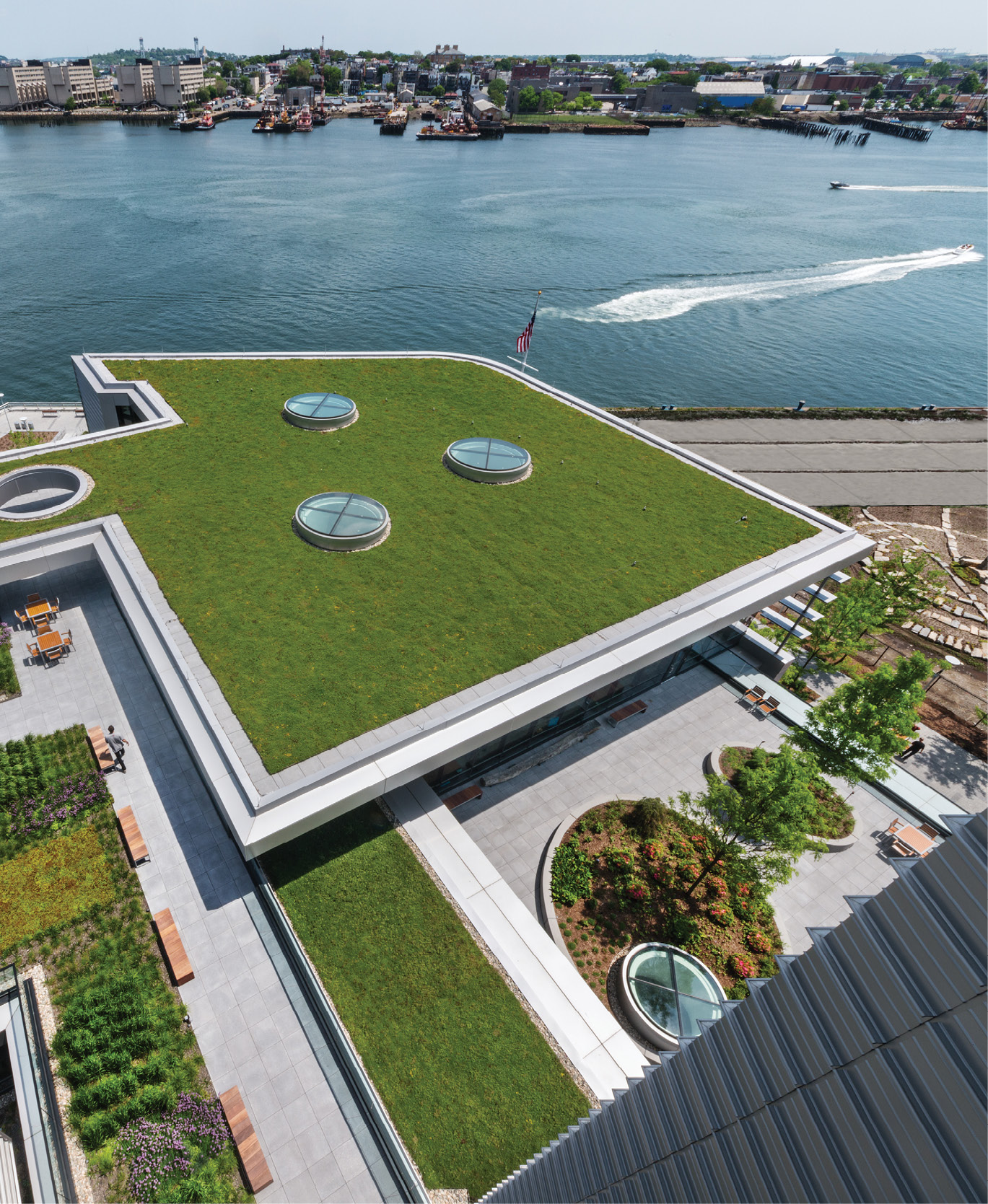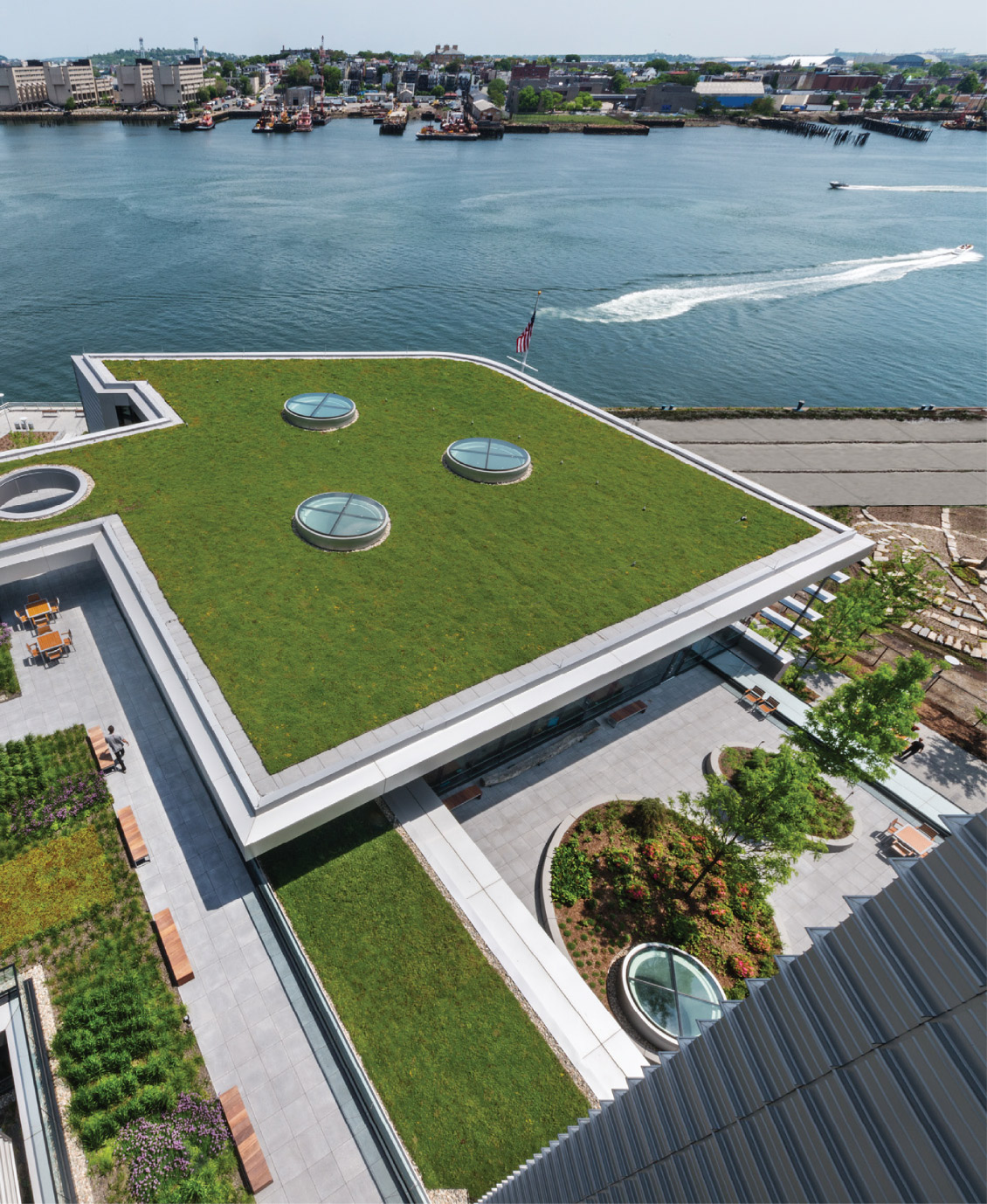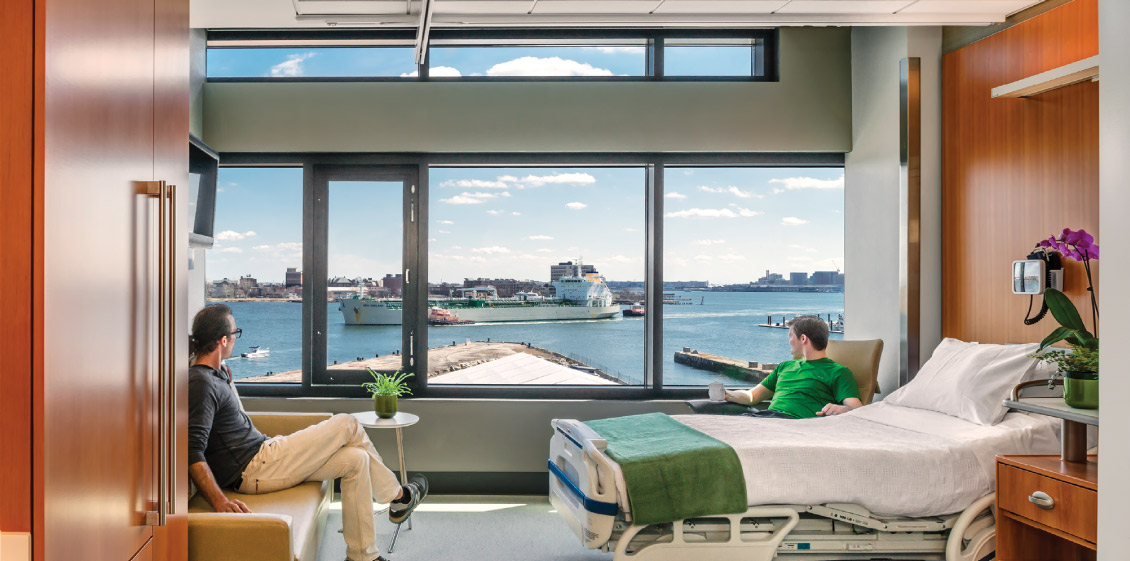



In October 2012, David S. Burson stood in the former Charlestown Navy Yard, at the site of the new Spaulding Rehabilitation Hospital, at high tide during Hurricane Sandy. The water rose to two feet from breaching the site. “It was as high as I’ve ever seen it, but it didn’t come onto our site,” says Burson, a senior project manager at Partners HealthCare, an affiliate of the Spaulding Rehabilitation Network. “However, if Sandy had hit at a different hour, we probably would have seen some water.”

According to a Boston Harbor Association study, had Hurricane Sandy’s storm surge corresponded with high tide in Boston, instead of hitting after it, about 6 percent of the city would have been under water, including the former navy yard. That experience meant that Burson and other planners of Spaulding’s new 132-bed rehabilitation hospital could be immensely relieved that they’d designed a building capable of withstanding the rising sea levels projected over the next century. The 262,000-square-foot hospital, which opened in April 2013, includes a panoply of strategies that fall under the umbrella term of “resilience architecture”—in this case strategies specifically designed to thwart rising sea levels.
While Hurricane Sandy was confirmation that the approach was not only a smart one, but an essential one, the original impetus behind designing Spaulding as a resilient hospital was Hurricane Katrina in 2005 in New Orleans. “The failure of hospitals in Katrina led Partners HealthCare to develop a ‘top 10’ list for resilience features, beginning with setting the base elevation of the building above the current 500-year floodplain,” says Robin Guenther, the global sustainable healthcare leader for Perkins + Will, the architecture firm that designed Spaulding.
The 500-year floodplain maps the hypothetical inundation of Boston during a flooding event of such magnitude that it might hit the city once every 500 years. The ground floor of the Spaulding tower was raised about 2.5 feet above the current 500-year floodplain elevation. “It’s probably fair to expect that someday water will get to the building, given sea level rise projections over the life of the building, and that’s what we tried to prepare for in the design,” Burson says.
Spaulding, which has eight stories and a two-level penthouse, also has an underground parking garage, an obvious candidate for flooding. However, it was designed so that the ramp goes up to grade before descending to parking areas, and unless water breaches the ground floor of the hospital, the parking garage should stay dry, Guenther says.
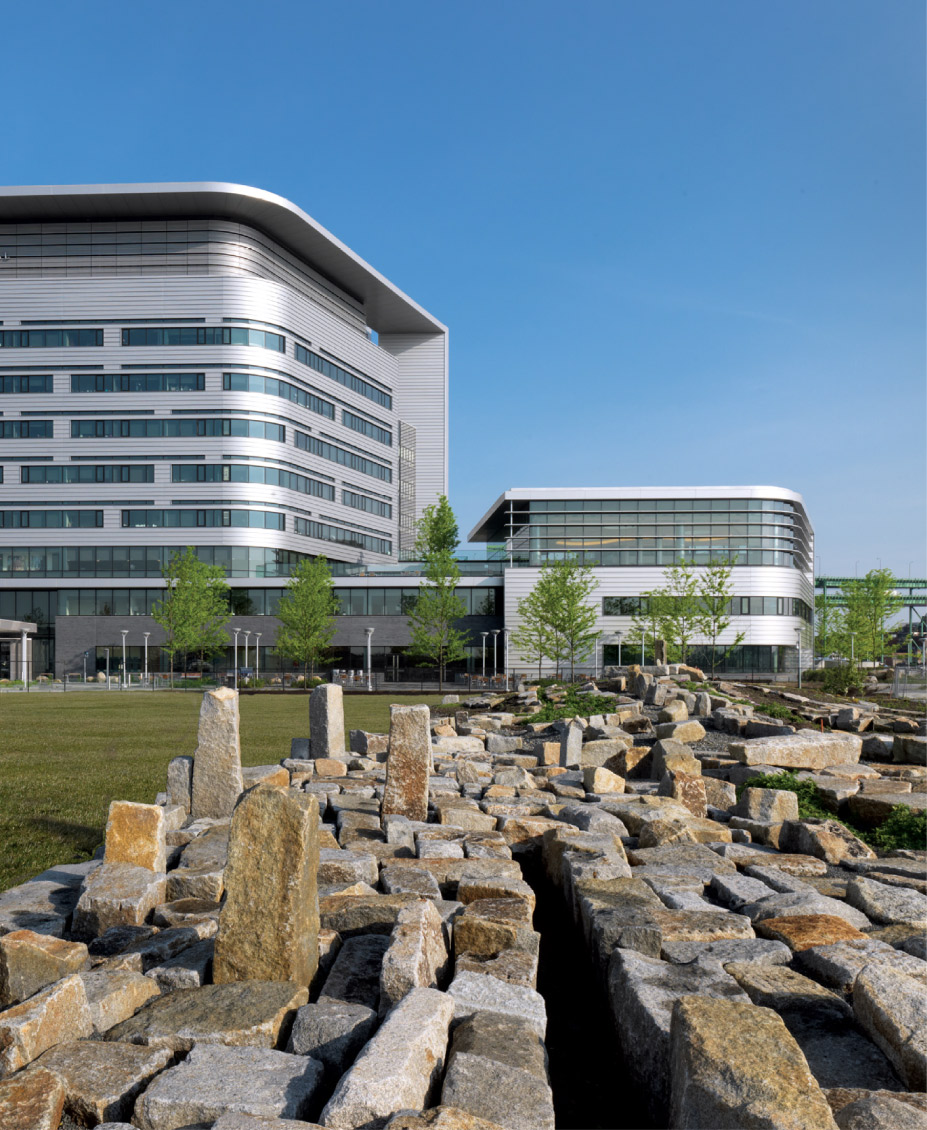
On the hospital site, planners designed berms made of granite seawall blocks and some of the old oak timbers, which were uncovered in preparing the site for construction, Burson says. (Most of the timbers were donated to the restoration of a 19th-century whaling ship at the Mystic Seaport Museum in Connecticut.) The manmade berms create a reef of sorts to help protect the hospital from the sea if it floods. “Those stone walls, in addition to providing a landscape amenity, provide some measure of protection against a storm surge,” Burson says.