After 15 years at work in the field, U. S. Green Building Council’s (USGBC) Leadership in Energy and Environmental Design (LEED) certification has found applications in settings as diverse as the systems it supports. From a super-tall tower in Taiwan to permanent housing for the homeless on Hollywood’s Santa Monica Boulevard to the 26-building university campus of KAUST in Saudi Arabia—LEED ratings of all levels have been achieved on many fronts, both foreign and domestic, and continue building the foundation for future generations.





A worldwide lens on 15 LEED-certified projects built in the last 15 years reveals the rating’s versatility, value, and staying power.
WRITTEN BY Kiley Jacques
WRITTEN BY Kiley Jacques

The opening illustration is a take on Charles Demuth’s I Saw the Figure 5 in Gold. It evokes movement in an urban setting —much like the progress of LEED during the past 15 years.
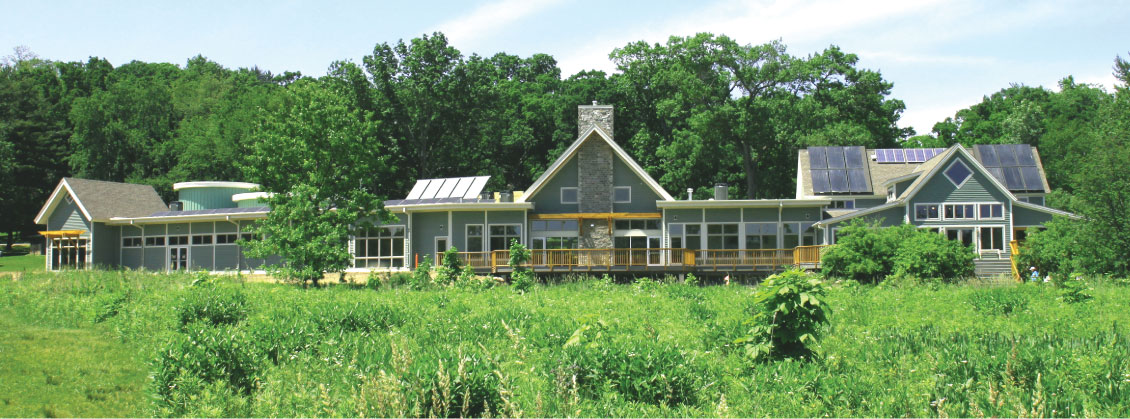
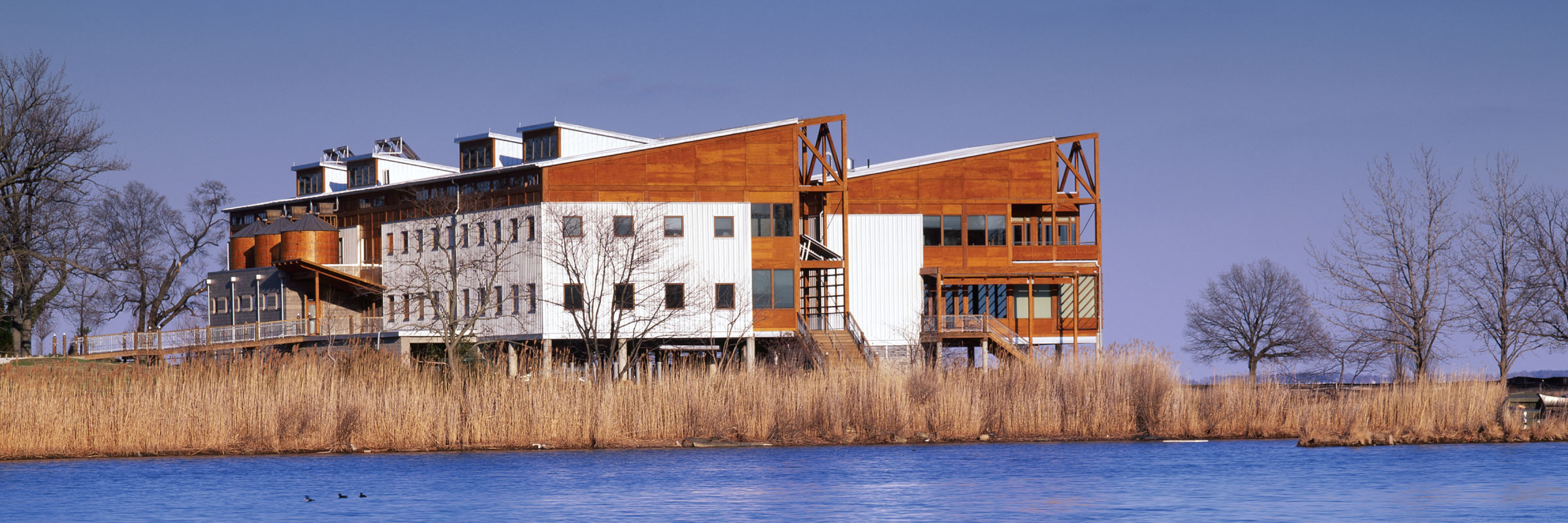
The Philip Merrill Environmental Center
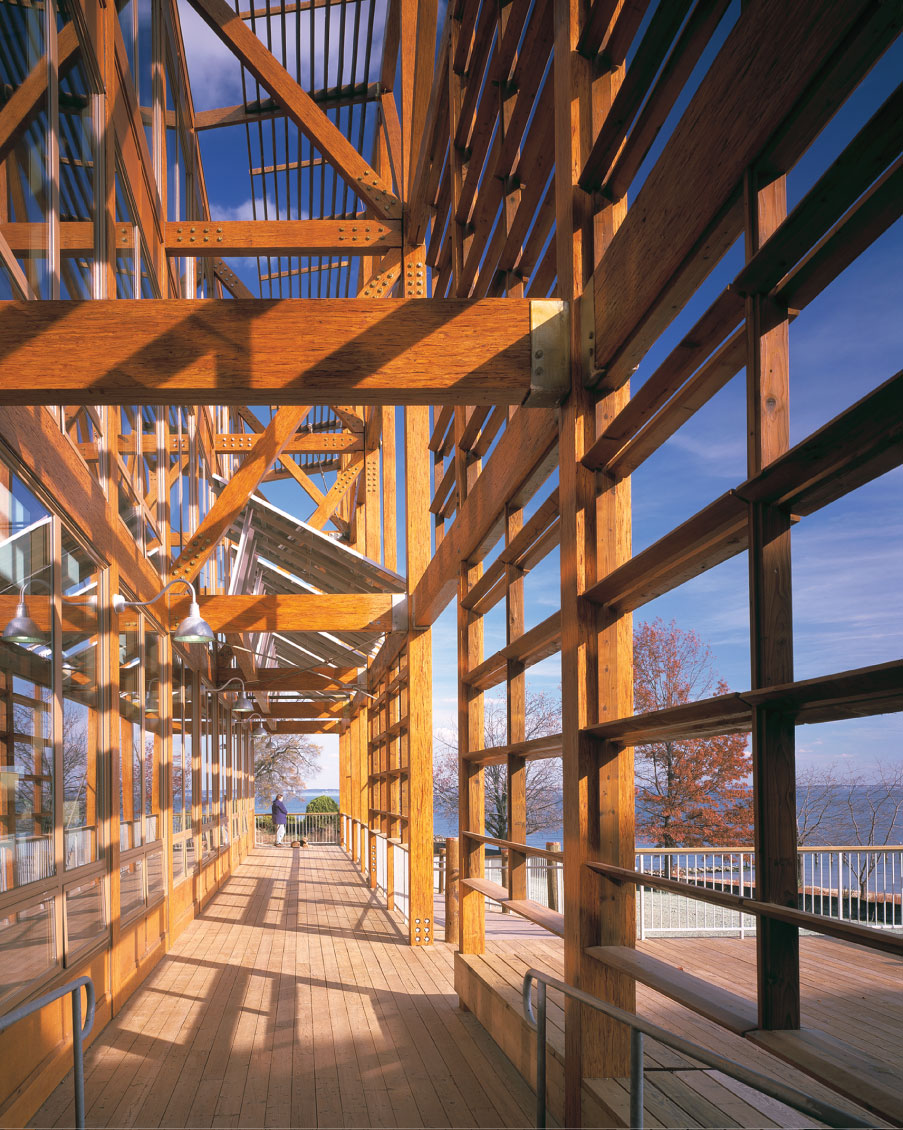
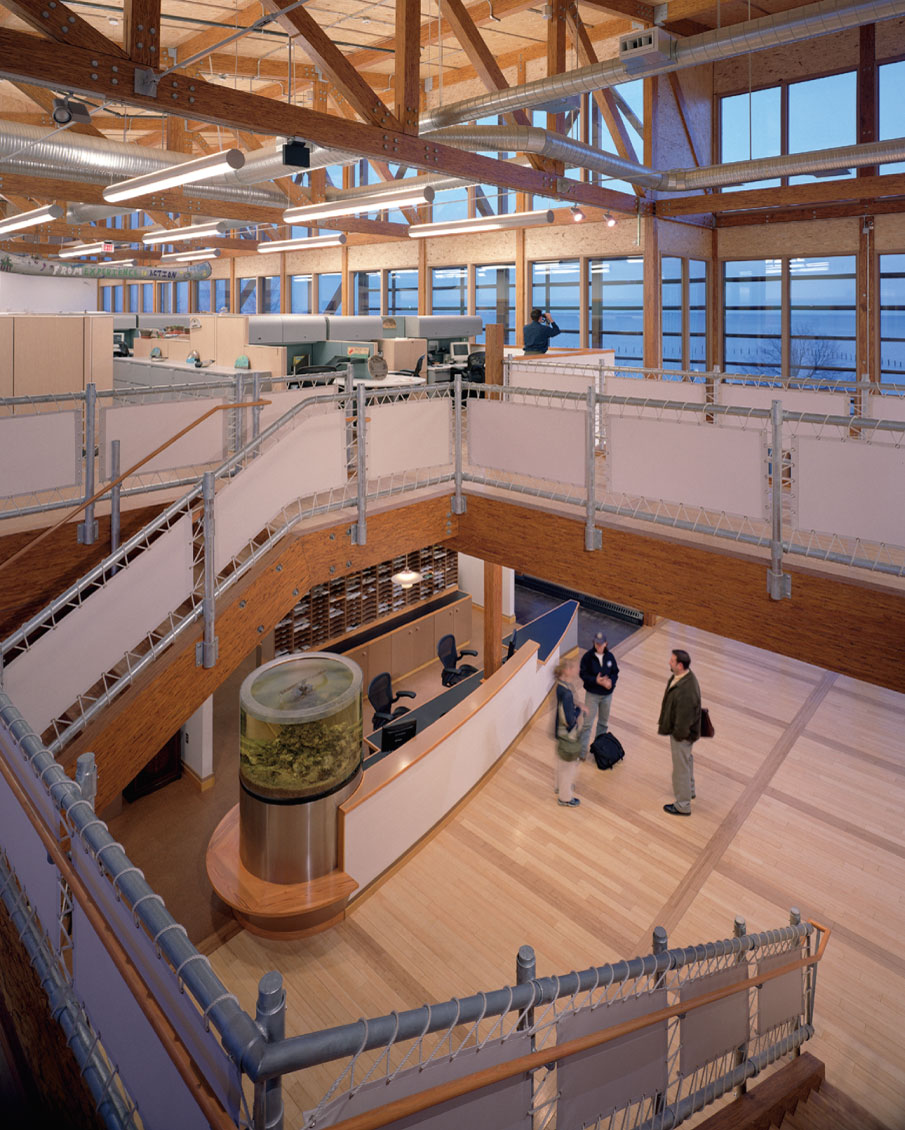
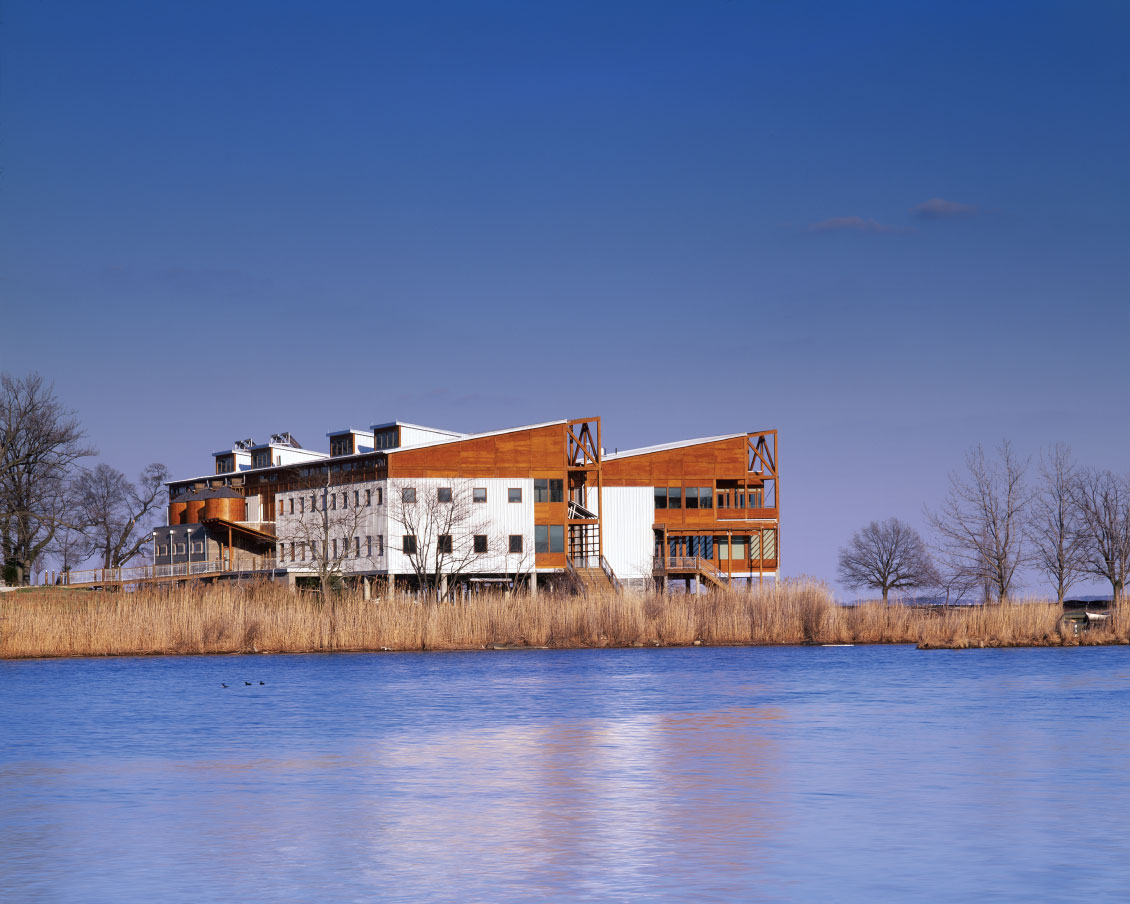
The Philip Merrill Environmental Center, headquarters to the Chesapeake Bay Foundation (CBF)—a 35-year-old non profit organization dedicated to resource restoration and protection and environmental advocacy and education—is the first building in the world to be LEED Platinum certified. In design, construction, and operation, the building reflects the organization’s mission to protect and restore the bay.
It was with deep consideration that they decided to build on this extremely sensitive site—the aim always being to use the building and grounds as teaching tools. Today, a steady stream of visiting school children goes out on the Bay in kayaks and other watercraft to learn about the ecosystem and the importance of protecting it through sustainable design. Beyond informing students, the center serves as an interactive model that educates the greater community by reducing pollution, mitigating environmental impact, and saving money.
“LEED provided a more holistic definition of sustainable design, helping our team to create a new benchmark that embraced a vision of sustainable design that aligned with a vision of how we can build in harmony within our watershed,” says architect Greg Mella of SmithGroupJJR.
Opened in 2001, the 32,000-square-foot center—built atop the foundation of a defunct beach club—has received international acclaim as a model for energy efficiency, high performance, and water conservation. They have also since restored the 30-acre site to its original habitat of natural waterways, meadows, and shoreline.
At the time of its construction, small singular efforts at sustainability on the residential front were being made, but SmithGroupJJR looked at ways to scale those efforts up to serve in a commercial capacity. Imperative to its success, they viewed the project not only in terms of environmental design but also with respect to occupant wellness and health—part of a whole building-systems approach. “When SmithGroupJJR set out to fulfill the Chesapeake Bay Foundation’s goal to create the greenest building possible, there were not a lot of examples of buildings in the United States that approached sustainability holistically,” explains Mella, who, together with his team, became forerunners for the model.
Fifteen years ago, cutting-edge features included: natural air ventilation, galvanized siding made from recycled metal, passive solar power, composting toilets, and a rainwater catchment system, which treats water onsite to be used by employees for hand washing, doing laundry, and irrigating the grounds. “We hadn’t understood the complicated regulatory issues related to using rainwater for hand washing,” notes Mella. “The accomplishment was pioneering not only for its day, but also even today few buildings have stepped over this hurdle.” He adds, “The natural ventilation design of the Merrill Center has influenced many designs that followed, finally breaking the perception that energy-efficient buildings need to be sealed off and isolated from the natural world.” Then, as now, the headquarters uses 10 percent of the potable water and 30 percent of the energy of a conventional office building.
The building continues to serve as a founding example of how LEED works. “It’s not surprising that when CBF and SmithGroupJJR connected with the pilot version of LEED, we pursued and accomplished LEED Platinum—the first project in the world to achieve that target, paving the way for thousands that followed,” says Mella proudly.
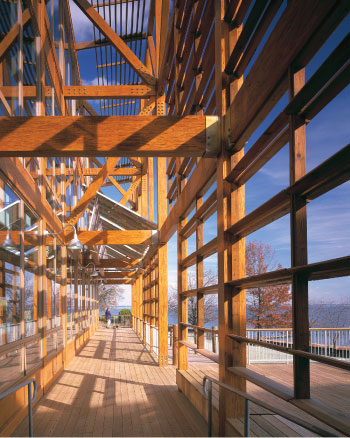
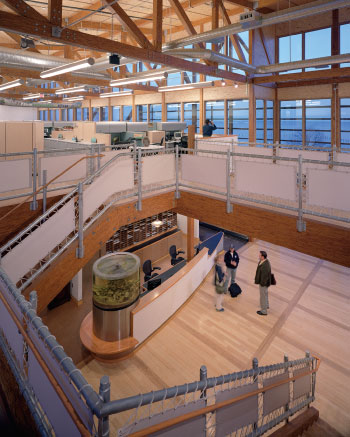
The Philip Merril Center is the first building in world to be
LEED Platinum-certified.
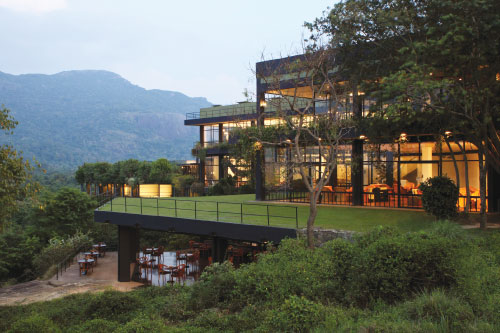
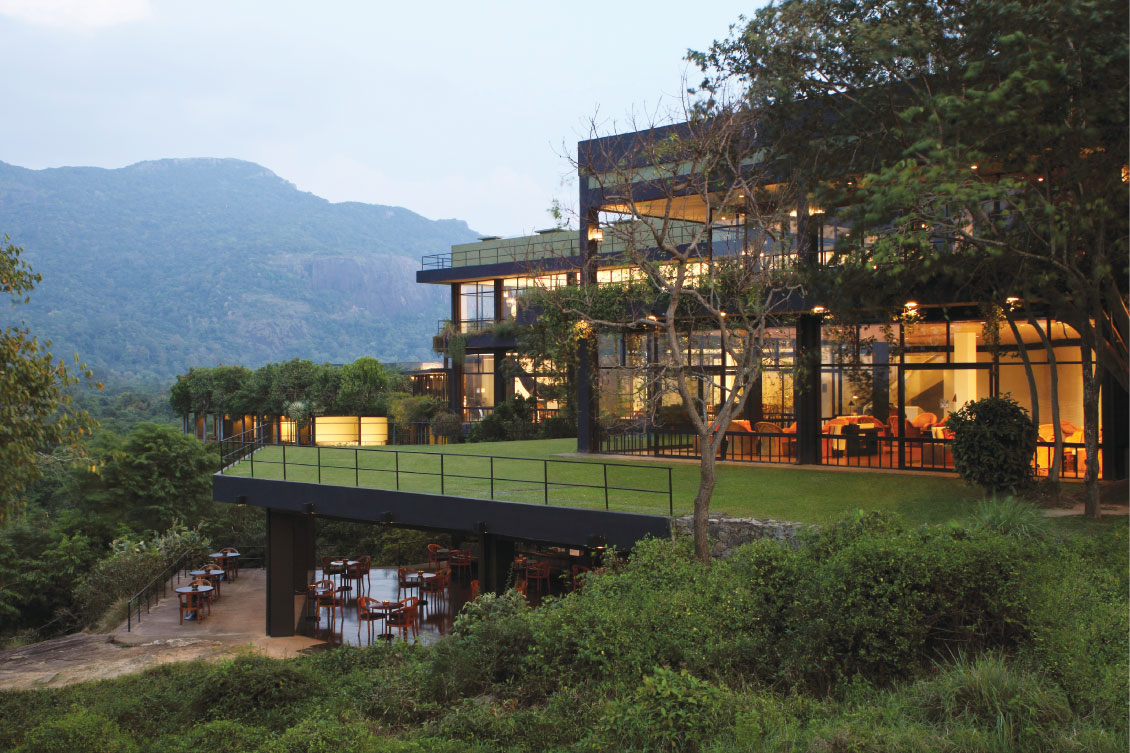
Exterior of hotel, Heritance Kandalama, Sri Lanka. Photo by Samitha Godamanna; courtesy Aitken Spence.
Heritance Kandalama Hotel
The 152-room, five-star Heritance Kandalama Hotel located in Dambulla, Sri Lanka, is the first LEED-certified green building outside of the United States, as well as the first LEED-certified green hotel in the world. In 2000, it was awarded LEED certification as a LEED v1 pilot project. “The certification was certainly groundbreaking for LEED, as the USGBC’s first international project, and for green buildings in Sri Lanka, to earn an international green building recognition,” says LEED Fellow Mario Seneviratne.
Designed by the late architect Geoffrey Bawa, the 253,000-square-foot hotel is located in the historic cultural triangle’s heartland and is flanked by two World Heritage sites—making it an area of tremendous cultural and historical importance.
Erected on stilts to maintain the natural rainwater flow, Heritance Kandalama’s surrounding grounds were restored after construction, and 80 percent of the roofs are planted with native vegetation. “The building was planned around the backdrop of a rock formation to provide a degree of passive cooling, which reduced the overall cooling load,” explains Seneviratne. Additionally, the hotel’s total water and sewer needs are met from resources onsite; all water is recycled and reused, and effluent passes through two treatment plants before irrigating the landscape.
“Green Technologies worked with the hotel owner, Aitken Spence Hotels, to transform this environmentally sound architectural design to a LEED v1-certified building,” explains Seneviratne. The team applied passive design principles, was at all times sensitive to the natural surroundings, and gave the utmost attention to conservation on all fronts—making Heritance Kandalama Hotel a very unique destination.
The University of Santa Barbara’s Bren Hall
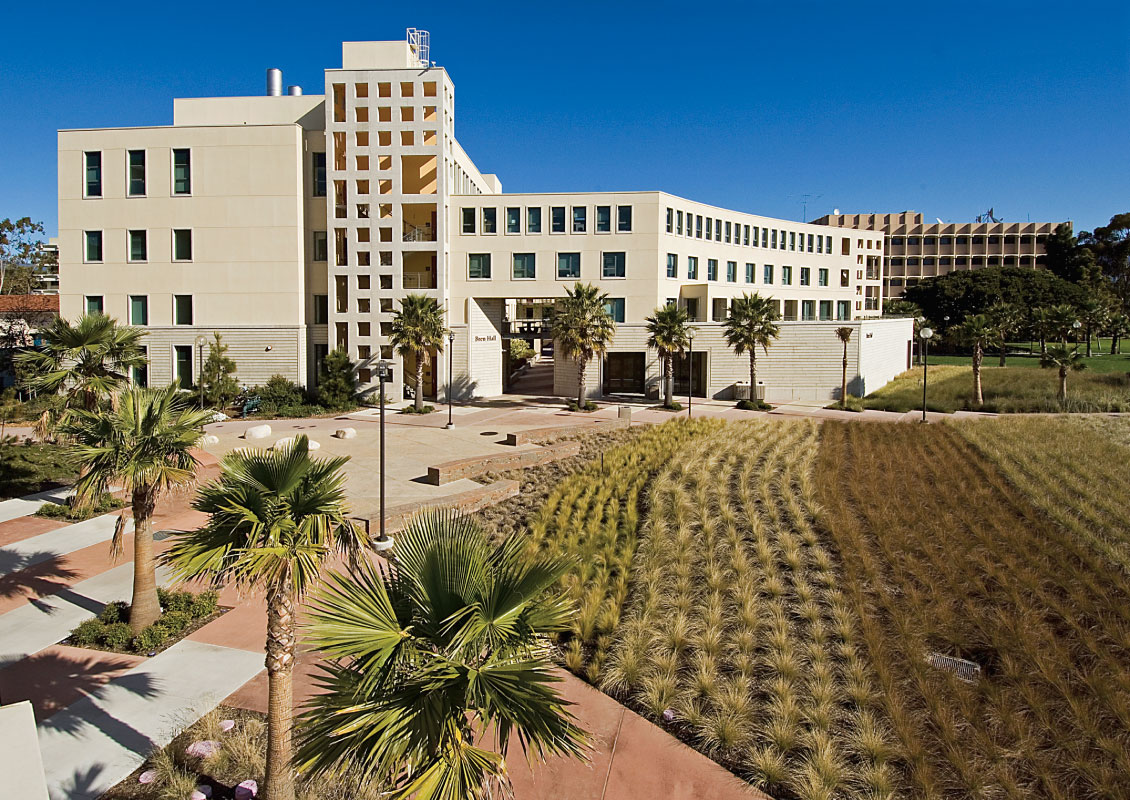
University of Santa Barbara’s Bren Hall achieved LEED Platinum certification in 2002, making it the greenest laboratory building in the country and the first in the University of California system to be LEED certified. It houses the Bren School of Environmental Science & Management and the Environmental Sciences department, and is the nation’s first building to earn two LEED Platinum certifications—one for New Construction and one for Existing Buildings.
The $26 million, 84,672-square-foot building designed by Zimmer Gunsul Frasca Architects stands as a physical manifestation of UC Santa Barbara’s efforts in scientific and academic innovation and leadership, and as a pioneer in low-impact facilities. “It has become a living laboratory for new technologies,” says Development Engineer Sage Davis, who points to the incorporation of 20 percent coal fly ash, a waste product, into the concrete mixture used in the building’s construction, as one example. “This was revolutionary at the time, and now it is practically commonplace.” Another strategy was the new white-roof membrane used to reflect and reduce the heat absorbed into the building, which is now the standard on campus, when applicable.
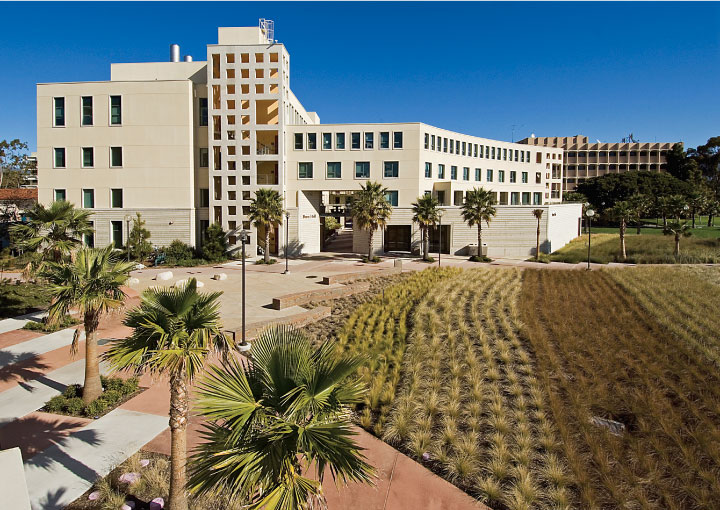
Courtesy of the Bren School of Environmental Science & Management
To maximize energy efficiency in such an energy-intensive laboratory setting, the design team relied on natural ventilation provided by operable windows in ocean-facing offices, which intentionally lack air conditioning units. “A key feature in the office wing is the ample natural lighting, natural ventilation, and beautiful views, which make the offices a very pleasant place to work,” says Davis. Additionally, the office wing has four breezeways and two decks that allow for outdoor collaboration in meeting areas that capitalize on the temperate environment and natural lighting.
To further reduce energy waste, the windows are equipped with sensors that shut heaters off when the windows are opened. High-efficiency lighting fixtures with occupancy and daylight sensors help minimize electricity usage and a rooftop solar photovoltaic system generates approximately 10 percent of the building’s power onsite.
Water conservation is achieved with waterless urinals, low-flow fixtures, and automatic sensors on all toilets and sinks, as well as the use of reclaimed water for irrigating the landscape, which is comprised primarily of drought-tolerant plants. The use of recycled and renewable construction materials, extensive resource use and air quality metering, and low-VOC paints and finishes are also among the ways Bren Hall earned both its credits and its reputation as “the highest standard for sustainable buildings of the future.”
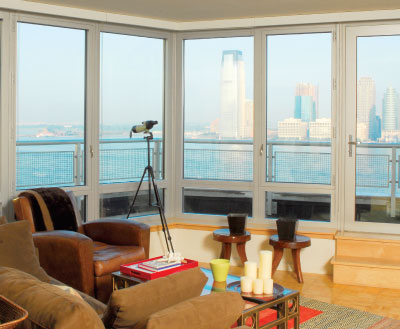
Solaire is the first green high rise apartment building in the world.
The Solaire
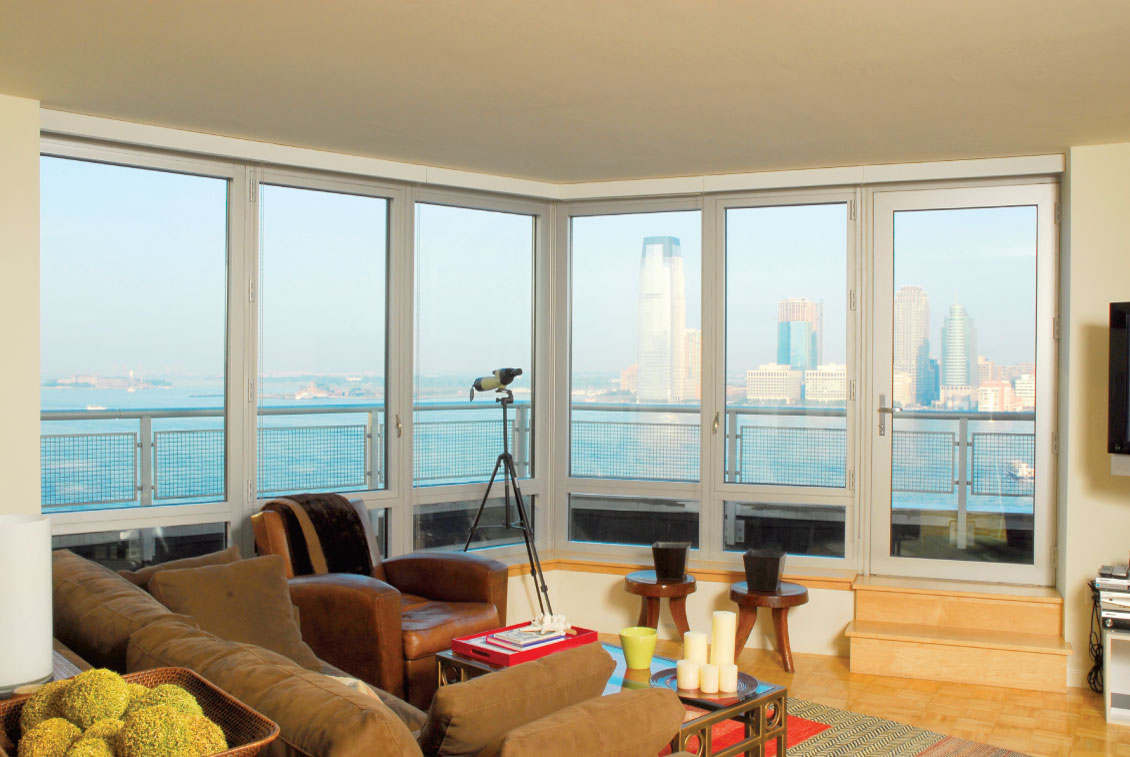
Located just a few blocks from Ground Zero in lower Manhattan’s Battery Park City, the Solaire stands as the world’s first-ever “green” high-rise apartment building, having earned LEED Gold for New Construction and Platinum for Existing Building.
At the time of its opening, the 27-story, 293-unit complex was the most environmentally responsible residential high-rise, worldwide. It uses 35 percent less energy than its conventional counterpart, and at least 40 percent of its materials—many of which are made of recycled content—were manufactured within 500 miles of the site. The building generates about 5 percent of its own electricity through photovoltaic solar panels, and natural gas is used for its air-conditioning and heating systems, which means a reduction in greenhouse emissions as well as utility costs.
As a building occupying waterfront property, water treatment is of special importance; it is cleaned and regenerated onsite, which means a decrease by one-third of potable water compared to similarly sized traditional structures. Each apartment uses separate water lines to flush toilets with treated wastewater piped up from a basement treatment plant, and rainwater collected in a 10,000-gallon cistern irrigates both a park and a rooftop garden.
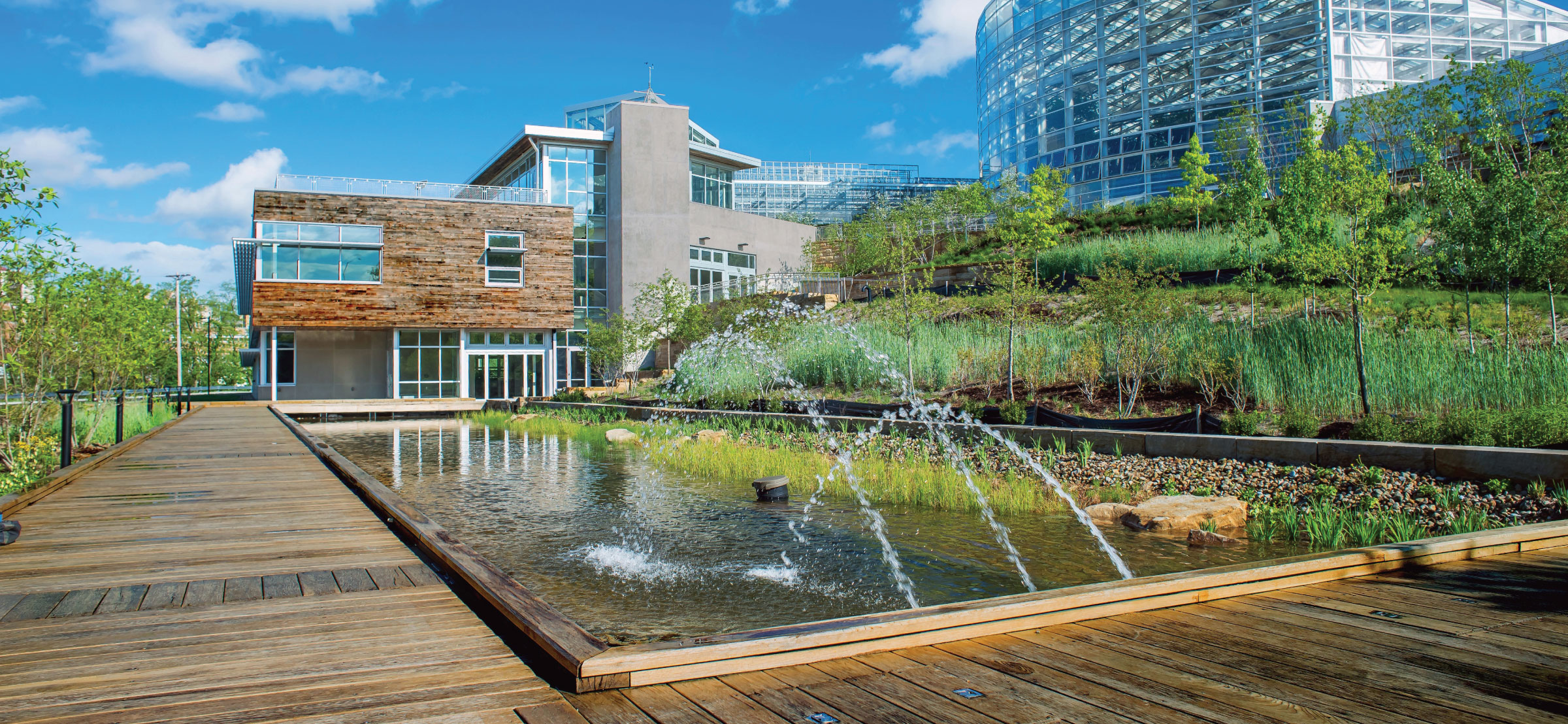
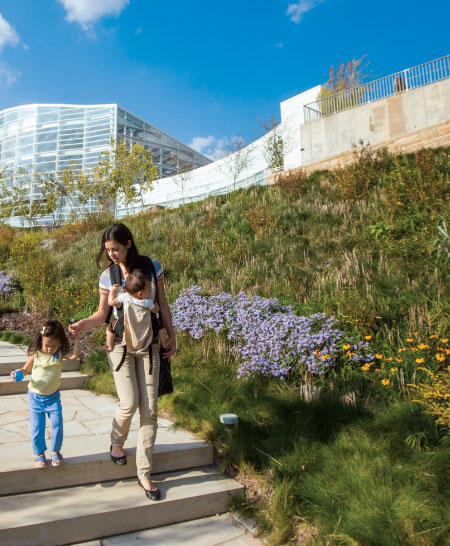
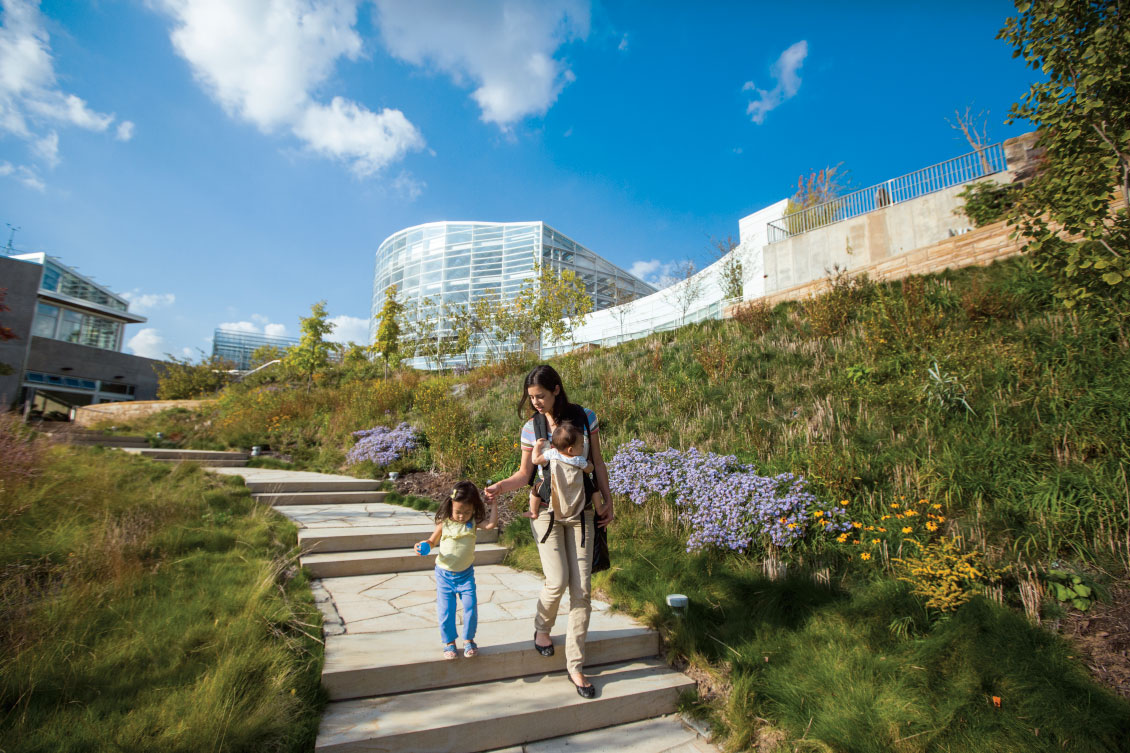
The Phipps Conservatory of Sustainable Landscapes introduces the public to the importance of human-environment interactions.
Phipps Conservatory Center for Sustainable Landscapes
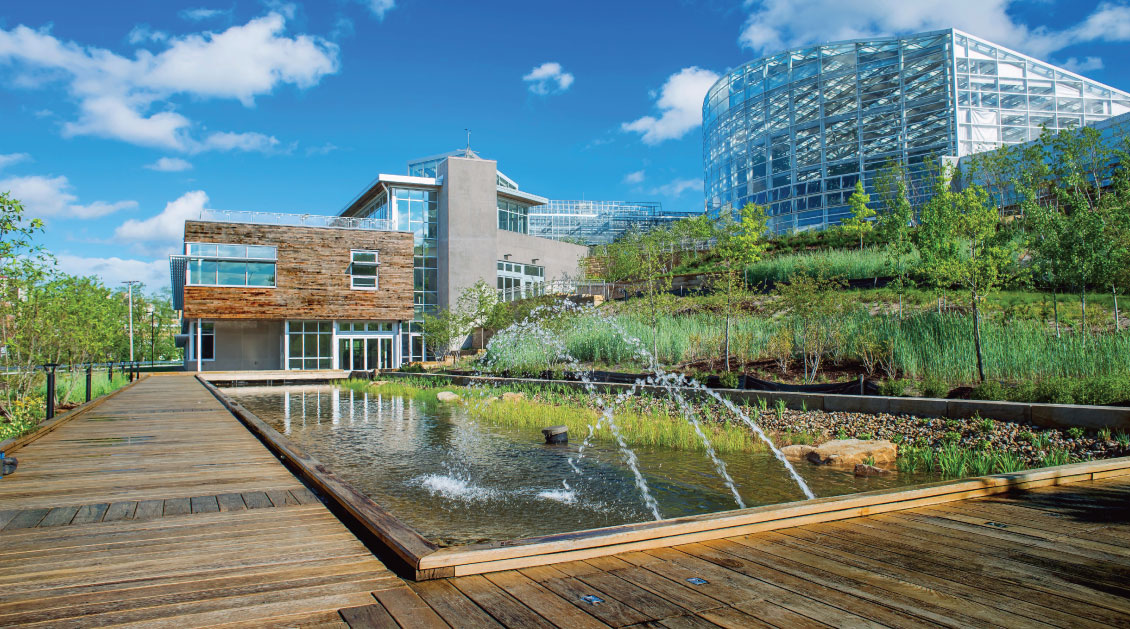
On what was once a paved public works yard, visitors to Phipps Conservatory Center for Sustainable Landscapes (CSL) are now greeted by 1.5 acres of lush green space and biodiverse plantings that provide food, shelter, and nesting areas for wildlife right in the heart of Pittsburgh. For the planners behind CSL, LEED Platinum certification provided a blueprint from which they built a model for sustainability across a broad array of metrics.
Having achieved the highest number of points awarded under version 2.2 of LEED Platinum, they pursued and achieved three additional certifications including the Living Building Challenge, which required the building to demonstrate net-zero energy and water usage over the course of a full operational year. Additionally, the site is the first and only SITES Four-Star Certified project for landscapes and illustrates how the natural landscape is inextricably linked to the building itself. The CSL also achieved the first and only WELL Building Platinum Pilot certification, making it the first and only project to attain all four certifications.
“Together, we see these four standards as diversified, complementary, and mutually reinforcing, a holistic set of standards for green building,” says executive director Richard V. Piacentini. “Because the CSL is part of a public garden experience enjoyed by over 350,000 visitors annually, it is uniquely positioned to introduce the public to the…importance of human-environment interactions and the interconnections between people, plants, health, planet, and beauty.”
Key features include a 4,000-square-foot lagoon fed by roof runoff, an atrium, biophilia-inspired artwork, behind-the-scenes looks at the inner workings of solar panels, wind turbines, and digital building controls. Additionally, a green roof supports more than 150 native plant species from a range of local ecosystems.
The vast majority of the materials and products used in construction came from local sources, including wood from salvaged Pennsylvania barns that constitutes the skin of the building. “These factors are a remarkable testament to the determination, innovation, and spirit to be found locally,” says Piacentini. “It’s our hope that the recognition our region receives for its central role in the project elevates its leadership status in the movement and inspires more buildings like ours.”
Through talks and presentations, docent-led tours, and education programs, the CSL reinforces the importance of human-environment interactions with emphasis on urban green space and gardening, healthy food initiatives, and sustainable building practices. “The creation of educational programs tailored to broad societal spectra enables Phipps to connect themes of sustainable living to choices visitors can incorporate into their lives,” notes Piacentini.
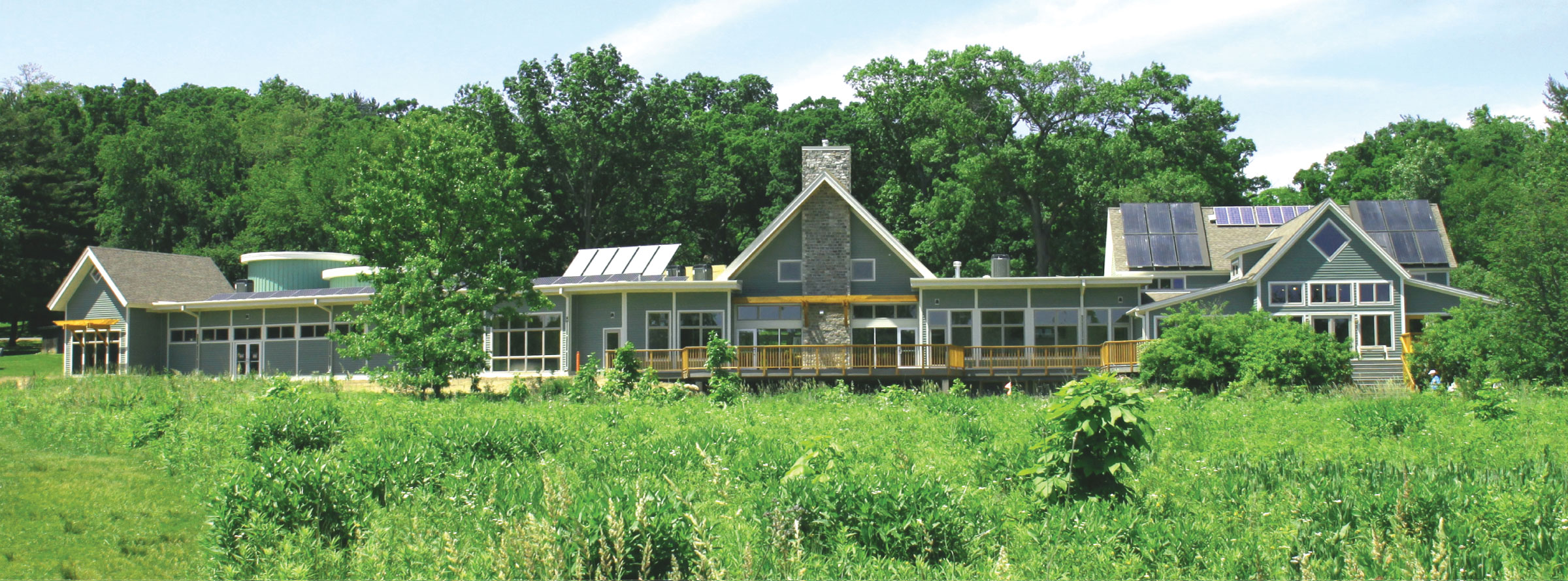
The Leopold Center
The Aldo Leopold Foundation’s headquarters, the Leopold Center, located in rural Fairfield, Wisconsin, is the first LEED Platinum-certified carbon-neutral building to exist. All of its energy needs are met onsite and its annual operations account for no net gain in carbon dioxide emissions. The building uses 70 percent less energy than a typical building of its size, and it produces 10 percent more energy than it consumes yearly.
The means by which that kind of energy savings is achieved include a geothermal radiant floor system—the primary system for heating and cooling the building. Additionally, by separating the fresh air ventilation systems from heating and cooling systems they are able to save two to five times the amount of energy used by a conventional building. Furthermore, a 198 panel roof-mounted solar array meets 110 percent of the building’s energy needs on an annual basis, and insulated roof panels reduce gaps so less heat escapes.
Construction goals for the center included “maximizing the use of materials through innovative engineering,” which led to the truss-formation of joined logs that, if used otherwise, would be considered unsound. Unique to this project is the fact that nearly all of the center’s structural elements were built from pine trees planted by Aldo Leopold and his family between the years 1935 and 1948. Site-harvested wood was used for trusses and beams, as well as siding and finish work, while other locally harvested materials were used for exterior siding, flooring, furniture, and interior paneling. The Leopold Center is the very embodiment of its surroundings.
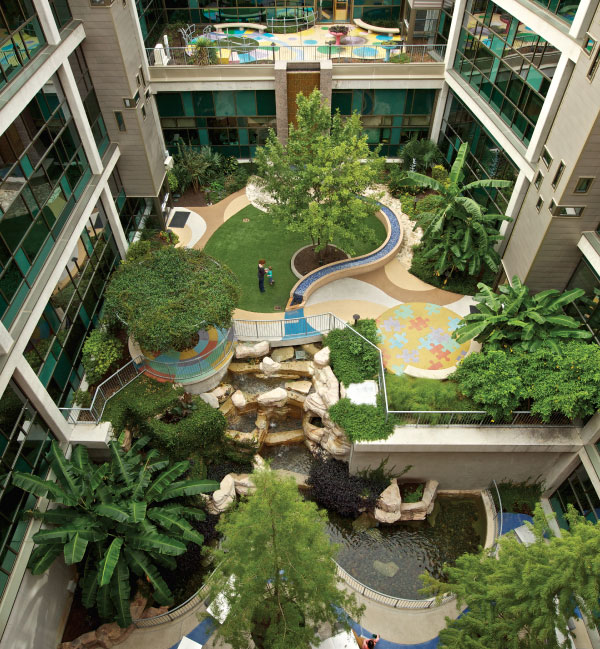
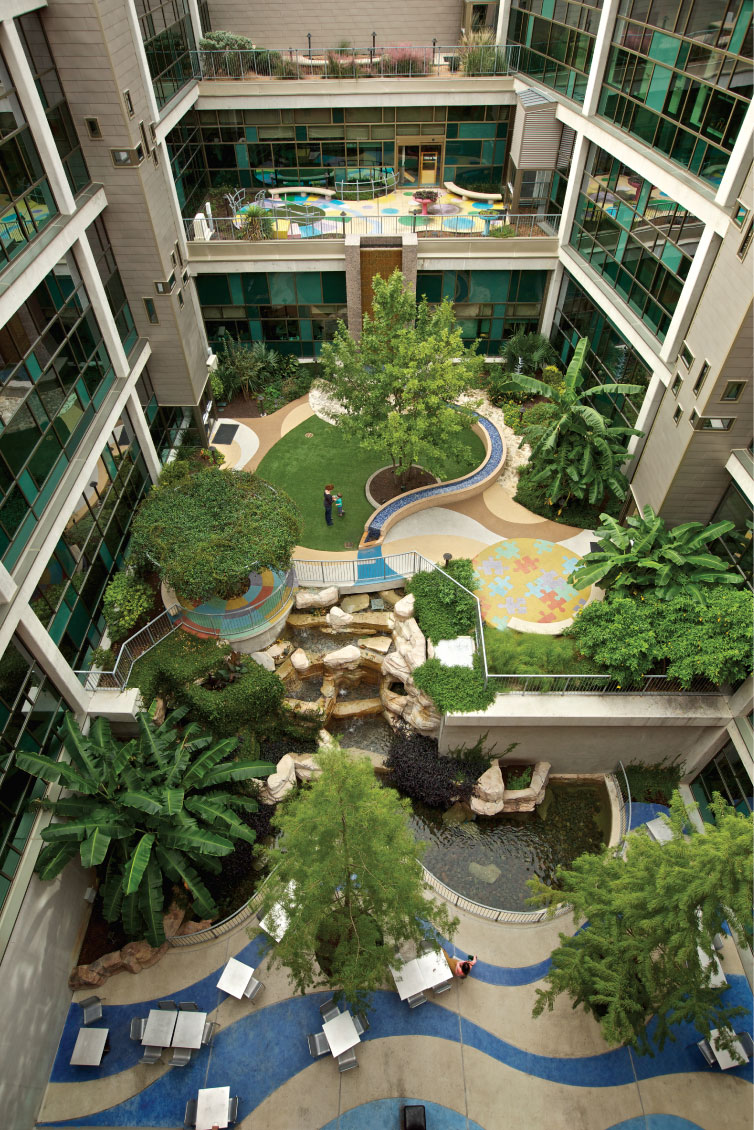
Dell Children’s Hospital, located in central Texas. Photo: Jody Horton Photography
Dell Children’s Hospital
Dell Children’s Hospital, located in central Texas, is the first hospital in the world to be certified LEED Platinum under the LEED for Healthcare (LEED-HC) rating system. It serves as a valuable resource for medical professionals, architects, urban planners, environmentalists, and other officials interested in learning what it takes to turn a hospital into a 32-acre “living” campus.
And what it takes is smart design. Principal among the energy-saving strategies employed at Dell are: independent lighting and temperature controls in each patient room; reflective roof materials and light-colored sidewalks that reflect the hot Texas sun, thereby decreasing the urban “heat island” effect and the amount of energy required for air conditioning; high-efficiency fluorescent lights; air conditioning with automatic on/off switches; and a specialized ventilation system that recovers energy from building exhaust air.
Other features include green roofs, a stormwater pond, and rapidly renewable construction materials. Additionally, 20 percent of the hospital’s land has been devoted to open vegetated space planted with drought-tolerant native species and irrigated with recycled, nonpotable water, which means 1.4 million gallons of water are saved each year. Exterior lighting was designed to minimize light pollution; numerous recycling stations are found all through the campus; and low-VOC carpeting, adhesives, and paints were used for finishes. Furthermore, the hospital encourages the use of alternative transportation by providing bike racks and giving parking priority to hybrid and alternative-fuel vehicles, as well as to employees who carpool.
Visitors (and patients) can find out about this very special environment by reading the 21 signs describing its features located throughout the hospital. The Dell campus is at once a place for healing and learning.
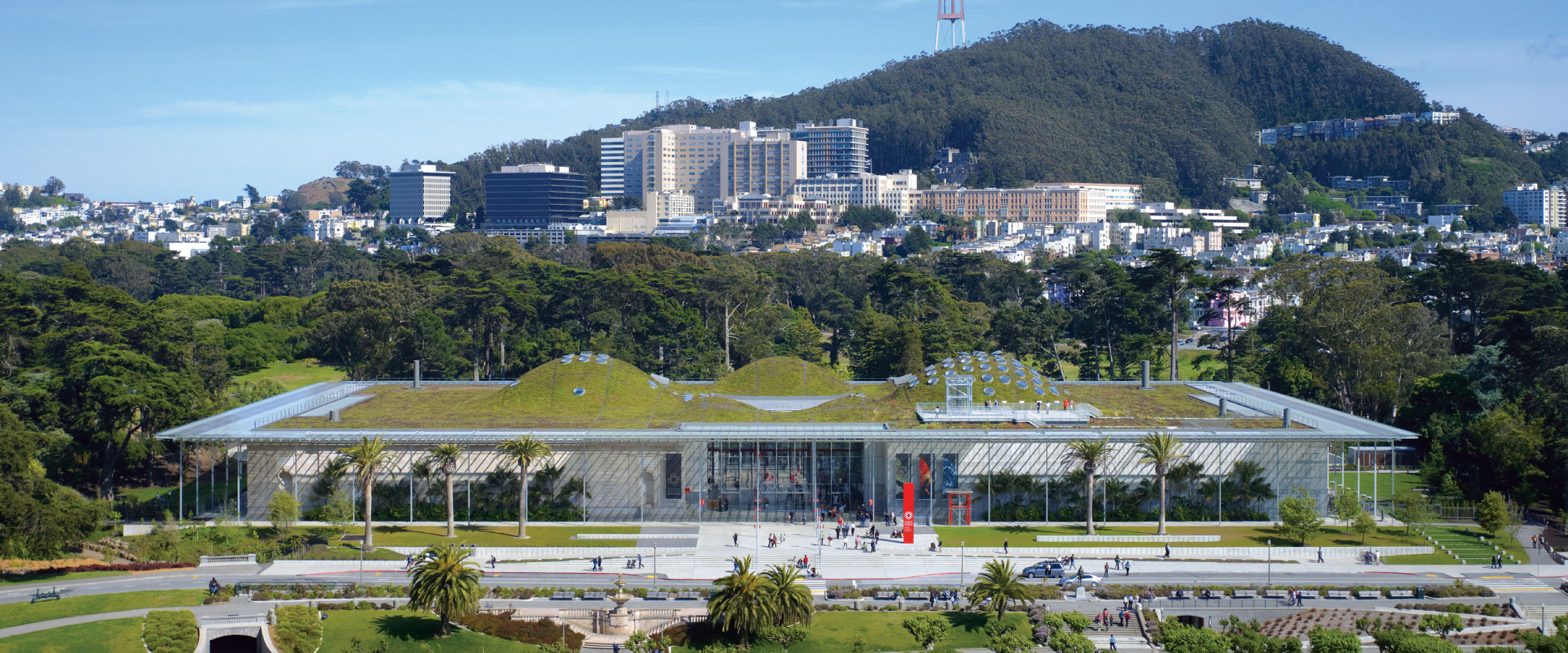
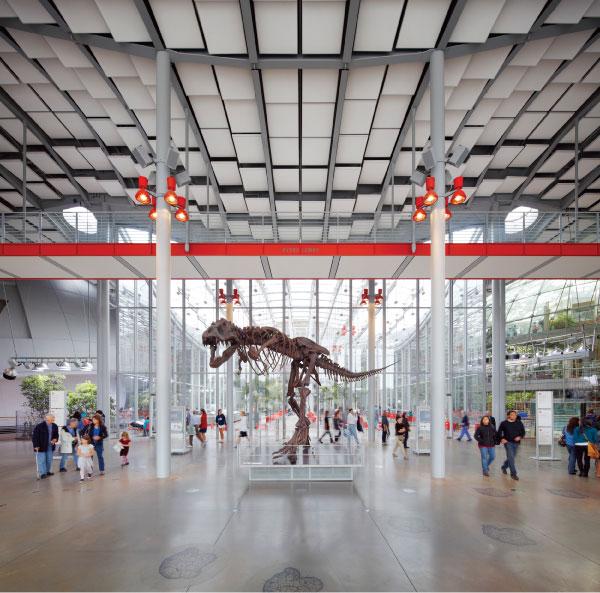
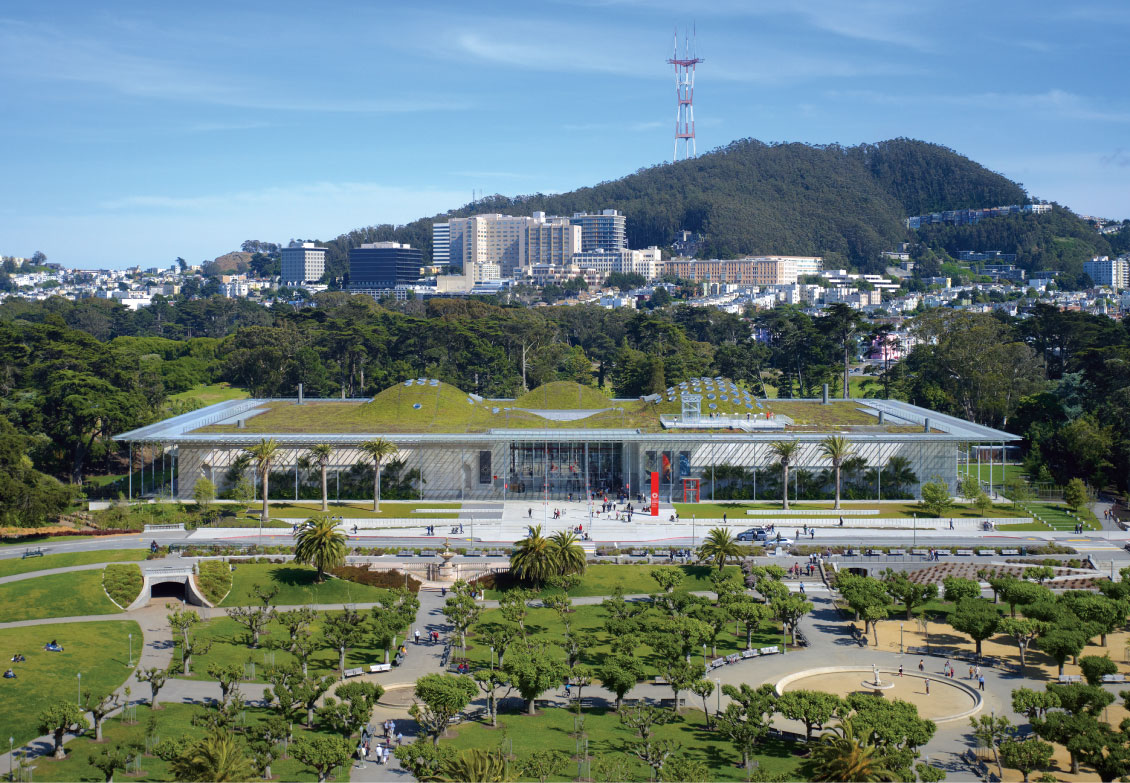
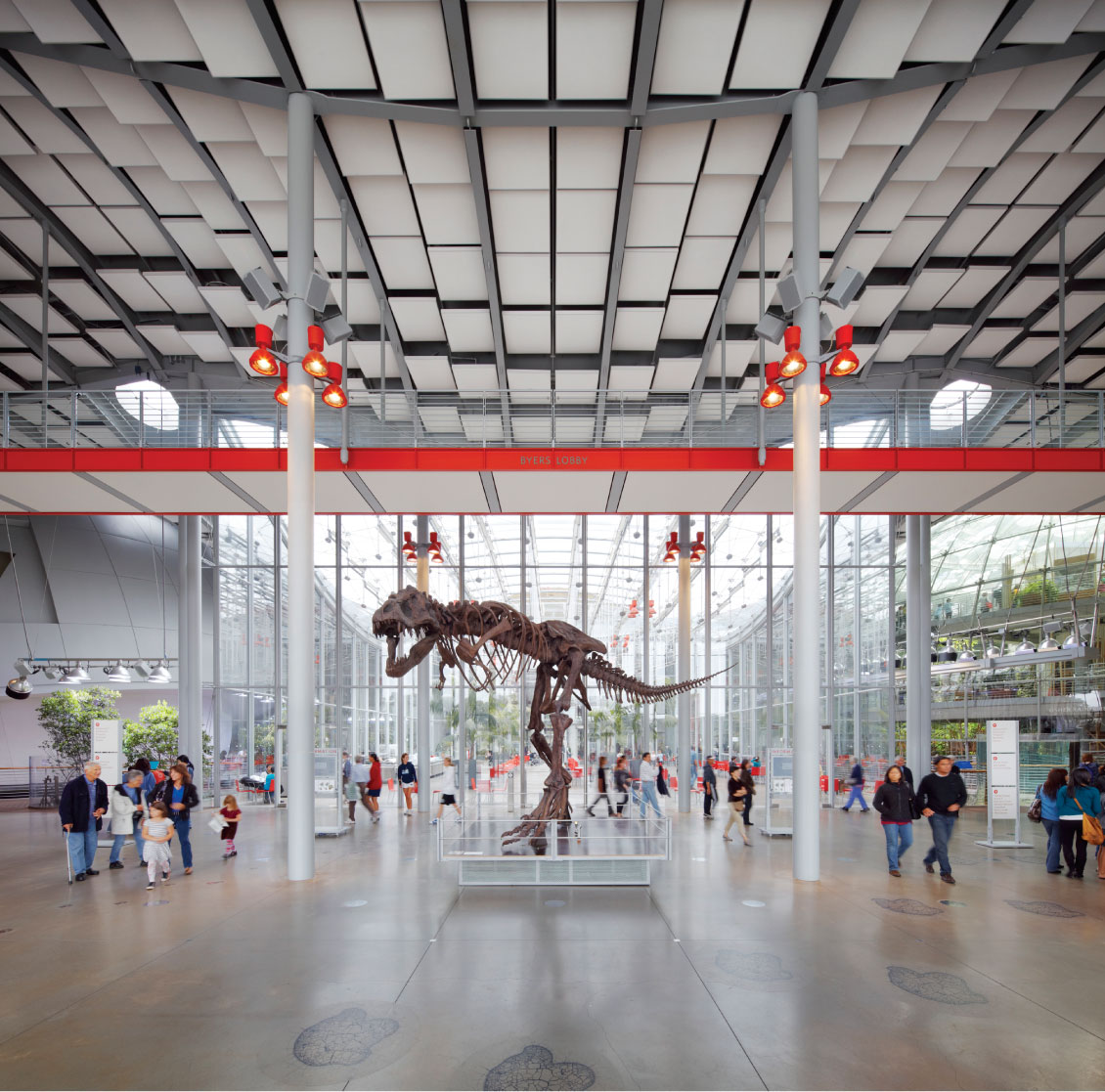
The California Academy of Sciences is the only double LEED double Platinum museum in the world.
The California Academy of Sciences
“As a public science museum and world-class research institution, the California Academy of Sciences is the only building in the world to combine an aquarium, planetarium, natural history museum, and a four-story rainforest under one living roof,” says building systems manager Hershow Al-Barazi. It is also the world’s first Double Platinum museum and the world’s largest Double Platinum building.
Located in San Francisco’s Golden Gate Park, the Renzo Piano–designed Academy received its first LEED Platinum rating under the New Construction category in 2008. In 2011, it was given a second LEED Platinum rating under the Existing Buildings: Operations & Maintenance category. Today, it stands as a prime example of sustainable architecture whose function it is to host a wide variety of programs and exhibits about the history and the future of life on Earth.
“It represents the highest level of environmental performance, and sets an example as a leader in the San Francisco green building community,” says Al-Barazi, who describes the iconic 2.5-acre living roof as being planted with over 1.7 million plants highlighting native plant species. “It creates an important ecological corridor for local species and represents the largest swath of native vegetation in San Francisco.” The entire community makes use of the space, as it is used for public programs, citizen science projects, and research studies by high school and university students.
The Academy hosts over one million visitors each year. “By providing the public with tangible experiences centered around the natural world, we hope to help cultivate an appreciation for life on Earth and inspire environmental stewardship,” says Al-Barazi.
Among the reasons for its Platinum certification is the fact that nearly 100 percent of the building’s electricity comes from clean energy sources including the Hetch Hetchy hydroelectric plant and an onsite solar array. Additionally, water use is 32 percent below the LEED baseline due to the waterless urinals and low-flow faucets, toilets, and showerheads. Between 60 and 65 percent of its waste is diverted from landfills into recycling or composting facilities, and 87 percent of the roof surface is covered in vegetation, which means a reduced “heat island” effect. Furthermore, 100 percent of excess stormwater from the roof drains into an underground chamber, where it percolates back into the water table, preventing runoff from entering the city’s stormwater system.
All told, it is an exceptional example of large-scale sustainability at work in the public sector.
Nationals Park
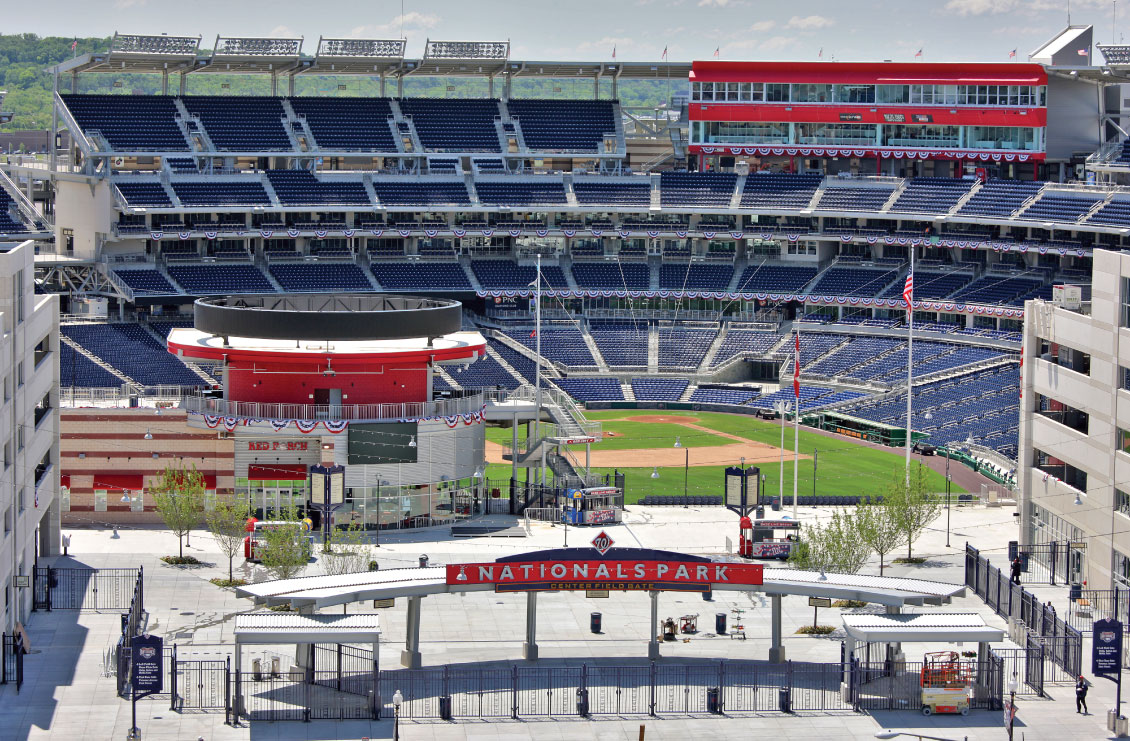
The 1.1 million-square-foot Nationals Park in Washington, D.C., is the work of HOK and Devrouax + Purnell Architects, who conceived the very first major league baseball stadium to earn LEED certification. Because the stadium is located on the bank of the Anacostia River, the team focused on improving the quality of stormwater leaving the site. “Prior to starting construction, the 25-acre ballpark plot was enrolled in a voluntary environmental remediation program, which dramatically transformed the former industrial site,” explains Anica Landreneau of HOK.
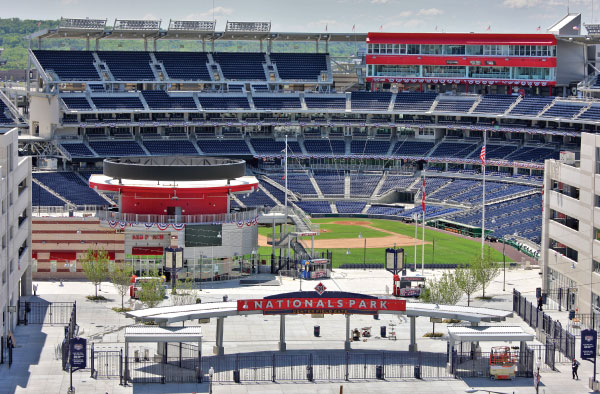
Nationals Park is the first LEED-certified baseball stadium.
Completed in 2008, key features of the stadium include: a 6,300-square-foot green roof; screens for capturing solid material from both rainwater and wash water leaving the seating areas; large sand filters buried under the project for treating stormwater; a sanitary system for filtering wash water; low-flow faucets and dual-flush toilets; air- (versus water-) cooled chillers; and energy-efficient field lighting. Other LEED-aimed strategies include additional insulation, high-performance glazing, overhangs and external shading, and heat-recovery ventilation in the locker rooms. Furthermore, special attention was also given to the treatment of organic debris like peanut shells and hotdog buns, which are unique to this project.
“In all, the ballpark was expected to use 15 percent less energy, by cost, than a comparable conventional ballpark. The project team selected construction materials for their recycled content, regional availability, and low chemical emissions,” notes Landreneau, whose team promises that “efforts to clean local groundwater using this smart system will continue throughout the life of the ballpark, ensuring that it does not pollute the Anacostia watershed or nearby Chesapeake Bay.”
Throughout construction and today, Nationals Park has had a positive impact on the local community. The project has created nearly 1,000 jobs and has served as a catalyst for green development in the Southwest Waterfront community. “The facility proved that sustainable outcomes are possible, even on the most challenging of facilities,” says Landreneau, “as long as you have a team willing to find a way to turn those challenges into opportunities.”
It is especially important to note that since Nationals Park earned its LEED certification, numerous other sports facilities have followed suit.
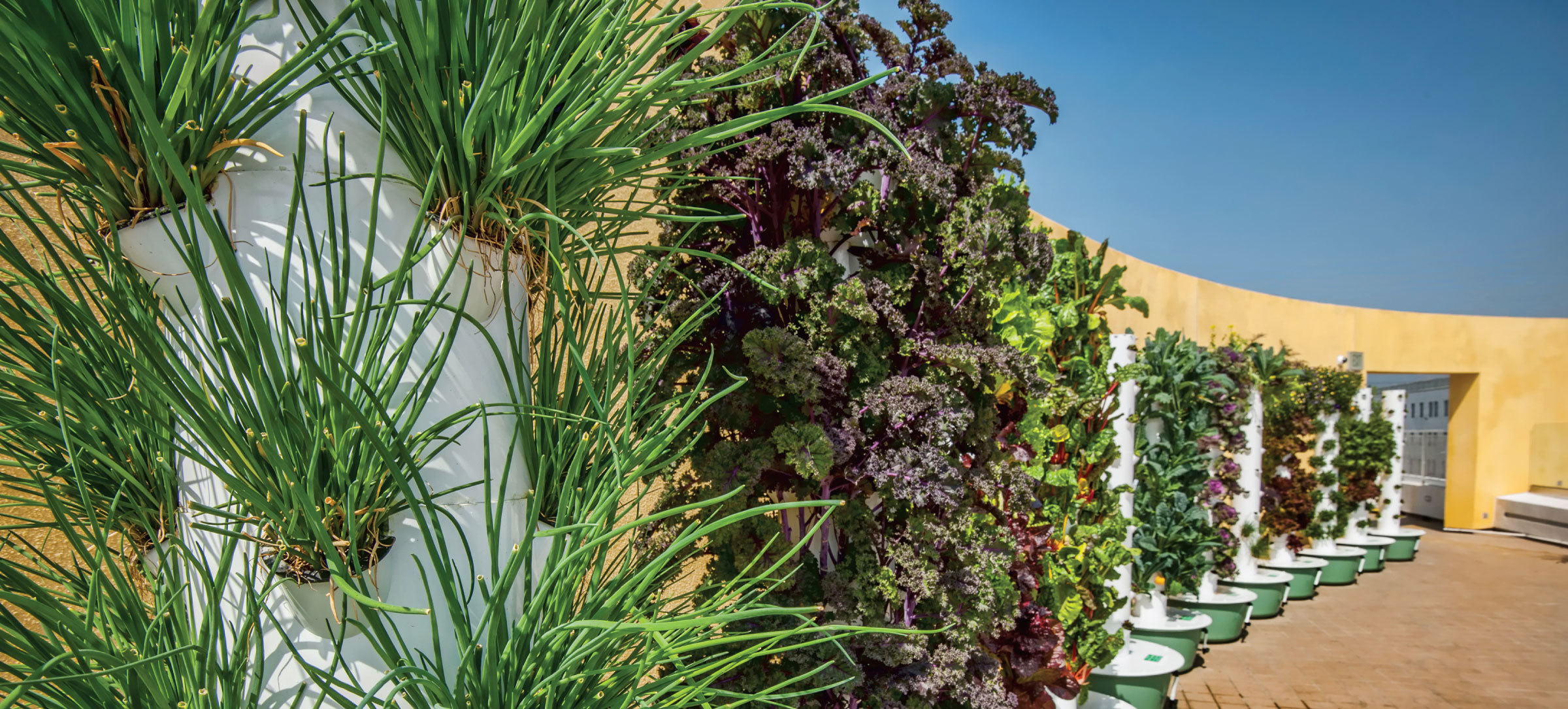
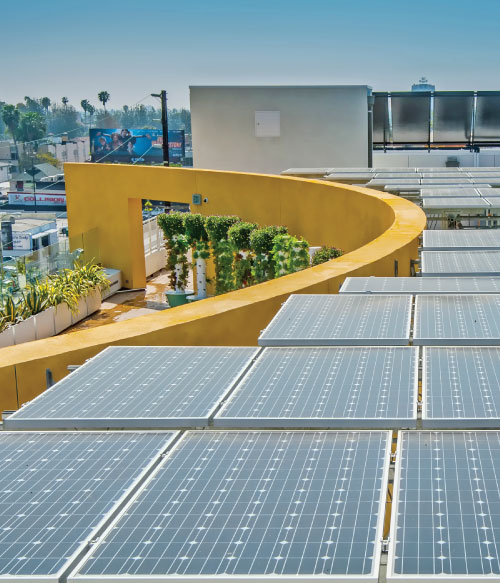
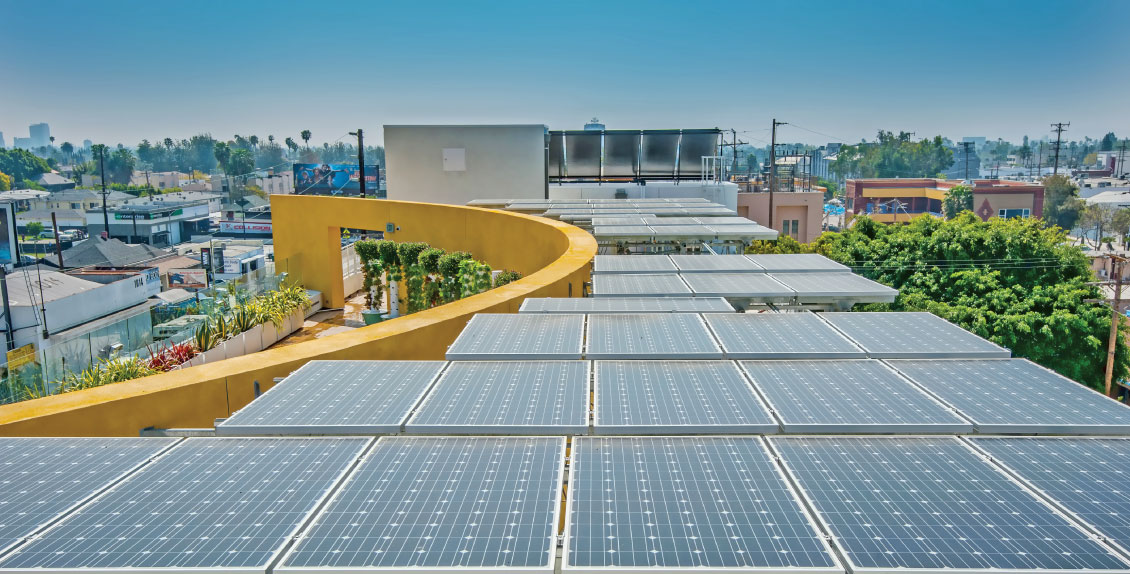
Step Up on Vine’s sustainable features include a cool roof with a 50-kw solar array.Photo: Shangri-La Construction, LP
Step Up on Vine
“Recovery is so difficult if you are homeless,” says Tod Lipka, president and CEO of Step Up on Vine, a nonprofit based in Los Angeles that provides LEED Platinum-certified permanent housing for the chronically homeless. The 30-year-old organization’s mission is to create opportunity for recovery for people with serious mental illness. Two years ago, it was decided the color of that opportunity should be green.
The project is the result of collaboration between Step Up on Vine and affordable housing developer Hollywood Community Housing Corporation. It is a 36-unit permanent housing development built for those who are most symptomatic with their mental illness and who are living on the streets of Hollywood. A $15 million investment in the Hollywood community resulted in the acquisition and redevelopment of the building. Originally a 1925 hotel, Shangri-La Construction did a major rehabilitation; though they kept the foundation, they completely rebuilt the structure, which sits several blocks from the infamous corner of Hollywood and Vine. “From the beginning, we approached it as a LEED project because that’s our commitment,” says Lipka. “We think it is good practice in the community to think from a green perspective. We work with people with mental illness so we are very thoughtful about resources and utilizing resources from an organizational perspective.”
Economically, it made sense. There is usually more funding given to housing, but not as much for the support services required for it to be effective. “When people move into housing after years on the streets, they need a lot of help,” notes Lipka. Support is essential and it needs funding, so by approaching the building of Step Up on Vine, they sought to save money over the long term. They have incorporated the service costs in the operating expenses; that is, what they save in energy expenses they put into supportive services.
In 2010, Step Up on Vine, along with the Clinton Global Initiative, USGBC, and Shangri-La, committed to building 200 green units for supportive housing for those most in need. “Shangri-La really opened these doors and their focus on LEED certification has made them fantastic partners during this whole process,” says Lipka, with deep gratitude.
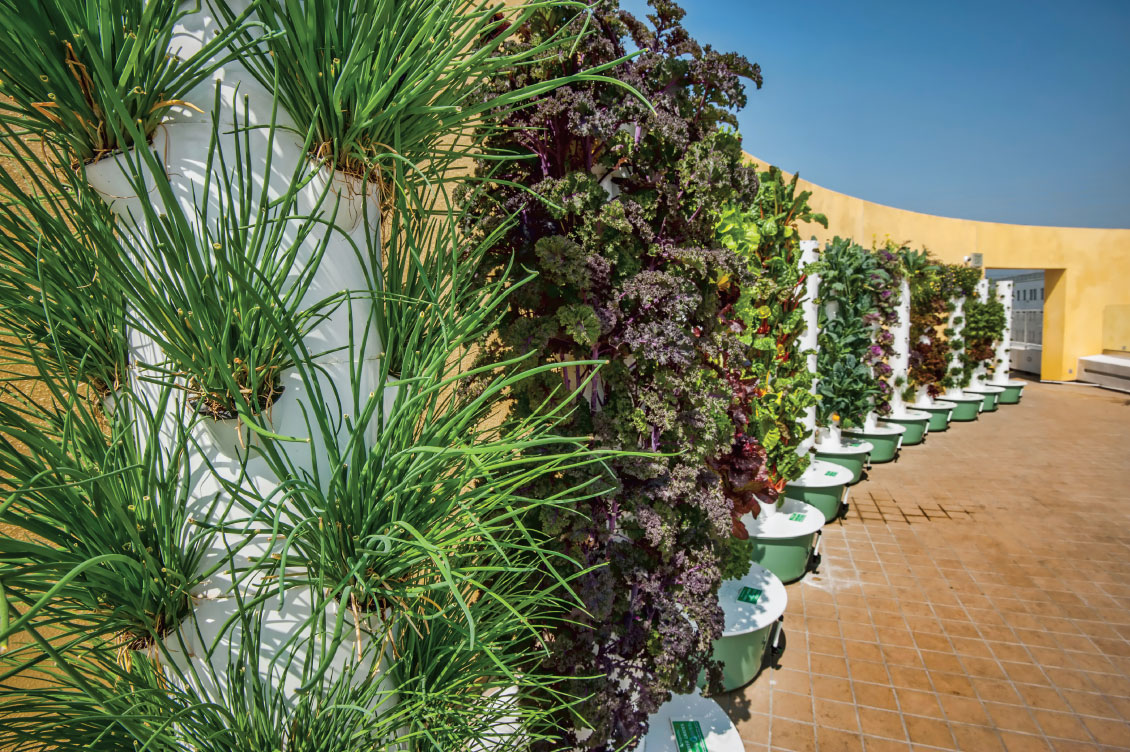
The building’s ground floor serves as a day center and includes a full industrial kitchen, showers, and laundry facilities for the currently homeless, as well as a café that is open to the public and provides a source of “supportive employment” for tenants. Of special note is the aeroponic roof garden (also a source of employment), where all-organic produce is grown and used in meals for tenants. A complete solar array for electricity and water is also among its sustainable features.
Of the value the building has added to the community, Lipka says, “We ended 250 years of cumulative homelessness among the tenants who moved in from the streets of Hollywood. We’ve created an emerald on this street corner that’s a very visible upgrade to what was a downtrodden building. It’s a vast improvement physically and architecturally.”
Lipka notes the Clinton Global Initiative and Kobe Bryant family foundation were major supporters of the project, which he says has “raised the awareness not only of homelessness but also sustainability in design and LEED certification, and how you can really have great synergy between the sustainability component of housing with interactive service support.” He wants it known that both he and the staff feel very honored, as a nonprofit, to have been able to partner with USGBC. “We think that LEED certification and green buildings are really critical not only for the future of the community but as an integral part of solving homelessness.”
Andrew H. Wilson Charter School
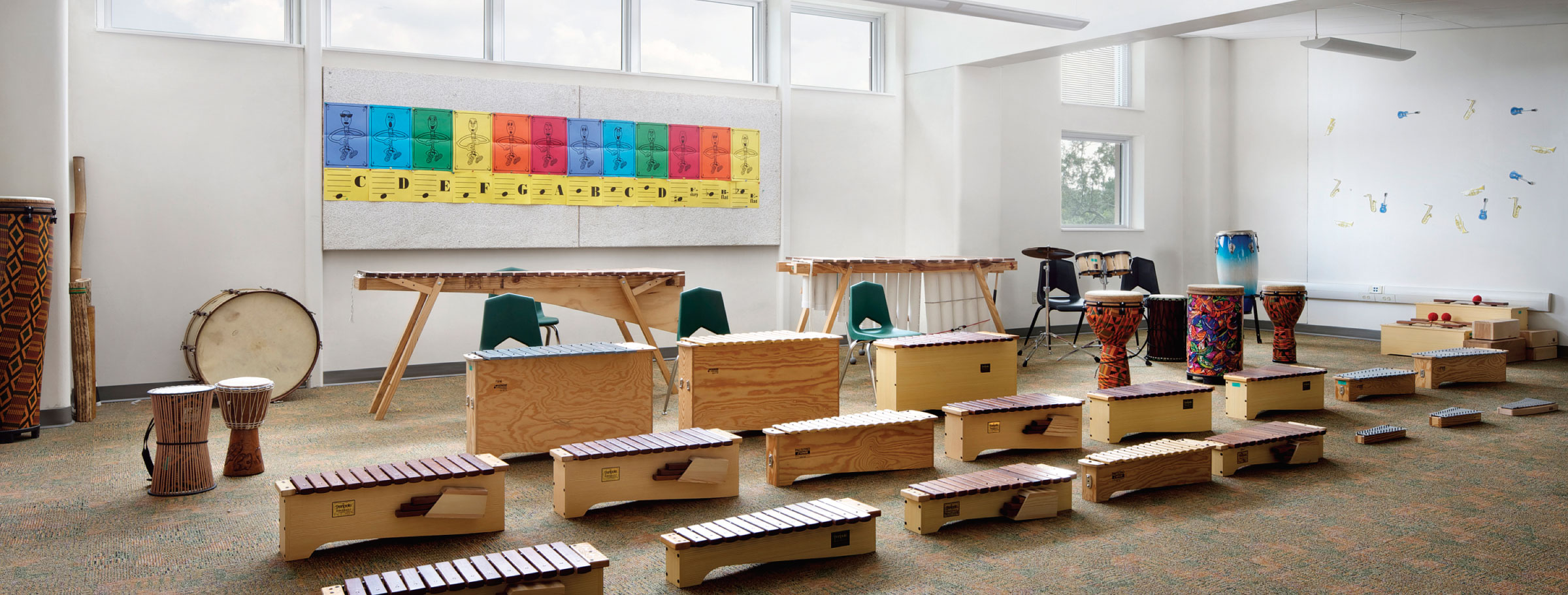
Andrew H. Wilson Charter School in New Orleans was one of the first five Quick Start schools to be rebuilt after Hurricane Katrina. It received LEED for Schools Gold certification in 2010, and is the result of a joint effort on the part of the Recovery School District (RSD) and the New Orleans Parish School Board.
RSD required that local architects team up with nationally well-known green architects so they could learn from sustainability experts. New Orleans–based HMS Architects teamed with North Carolina–based Innovative Design to co-design the school, which was one part new construction, one part historic adaptation. “They wanted to build them very quickly and showcase sustainability,” notes Bae-Won Koh, principal of Innovative Design. “They wanted to exemplify these five schools first.”
The team was given a very short period of time to earn LEED Silver certification and achieve 30 percent energy efficiency—the goal set by RSD. But Andrew H. Wilson achieved LEED Gold certification—the only one of the five to do so. Koh attributes that success to their method of utilizing energy modeling and daylighting analysis as a design tool rather than an analytical tool employed after project completion, as is typical of many architecture firms. “A lot of companies do the modeling at the end of the project to show the energy numbers and to submit for certification, but our company utilizes those in the schematic design and design development to choose the most energy-efficient strategies.”
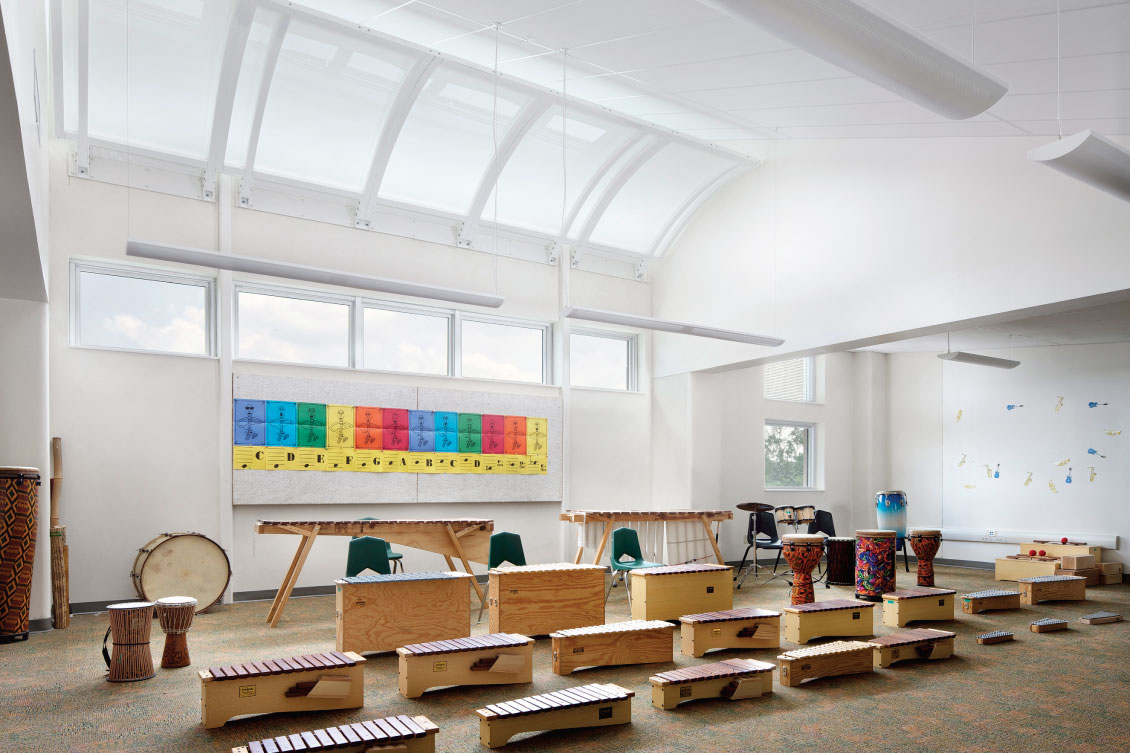
This project is also unique in terms of its site. “It is not a totally new project,” explains Koh. “It is a renovation of a 100-year-old historic building plus a new addition.” It was a bare bones building without insulation. “The thermal envelope was challenging for us because we could not add anything to the exterior of the historic building. We had to do everything to the interior,” says Koh. They used high-thermal value insulation and different glasses were chosen not only in terms of orientation but also with respect to function. The historic portion of the building faces east and west, which makes controlling low-angled sunlight difficult. “We came up with a very unique vertical baffle design on east and west classroom walls,” notes Koh, who explains that daylight controls are typically placed on a building’s exterior. Their solution diffuses the light into the classroom so there is no direct sunlight, which often causes physical discomfort and glare. Depending on the room’s function and orientation, they adopted four different daylighting strategies throughout the school, all of which provide diffused lighting. (Koh’s firm is made up of daylighting specialists, which explains the emphasis on natural lighting throughout.)
LEED for Schools certification, unlike commercial certification, includes a prerequisite that calls for high acoustic performance. “Our project went above and beyond,” says Koh of its approach to the acoustics requirement. “There is a credit, which achieves a little more stringent requirement than the prerequisite, and our project achieved that credit as well.” As an example of how they earned that credit, Koh describes intentionally situating storage rooms as buffers between regular classrooms and music classrooms, and using high-level acoustical insulation for the partition walls between classrooms.
Experiential learning elements play a large role in the design and use of the building, too. Interpretive signage throughout the school allows students to learn about its green features. They are in locations like the aboveground rainwater cistern, where they learn how water is collected from the roof and used for irrigation. There is a sundial on the south exterior wall where kids are taught to tell time by the sun. In the media center, they created a small hole on the exterior wall with a Plexiglass cover so students can see inside the wall and learn about the insulation materials—signage explains how the architects achieved the thermal envelope. Signs also explain how daylighting works and the green materials that were used. The team even put together a brochure for educators to use as a teaching tool with both students and the greater community.
The school has had a major impact on the Broadmoor neighborhood in which it is located. It is the epicenter of that community, and has been for many years. After Katrina, many people left. Once the school was rebuilt, many returned. It is a space that is shared with the public. Koh’s team designed the gymnasium, cafeteria, media center, and courtyard to support community activities held outside of school hours; the Broadmoor Community Association uses it regularly for their general meetings. The return rate for the Broadmoor community after Katrina was much higher than the rest of the city—a fact Koh contributes to the new school. “A lot of people have had an attachment to that school for years and years. I believe this school’s restoration gave them their attachment back to the community again.”
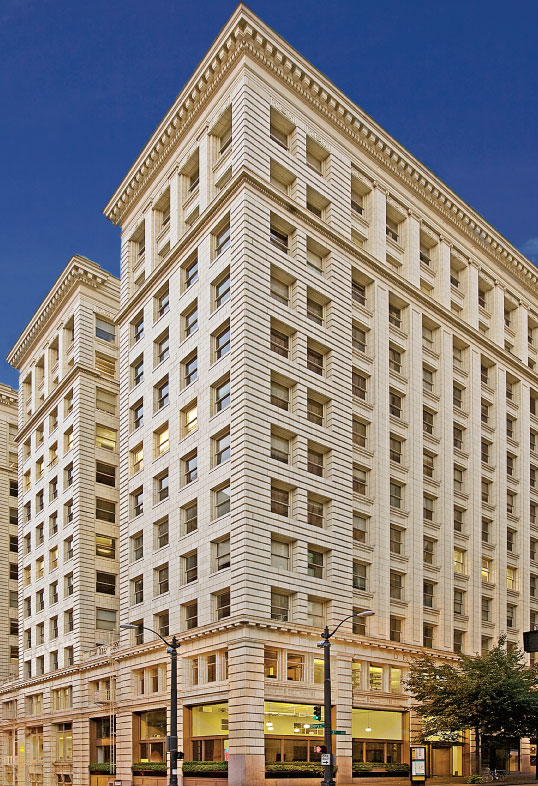
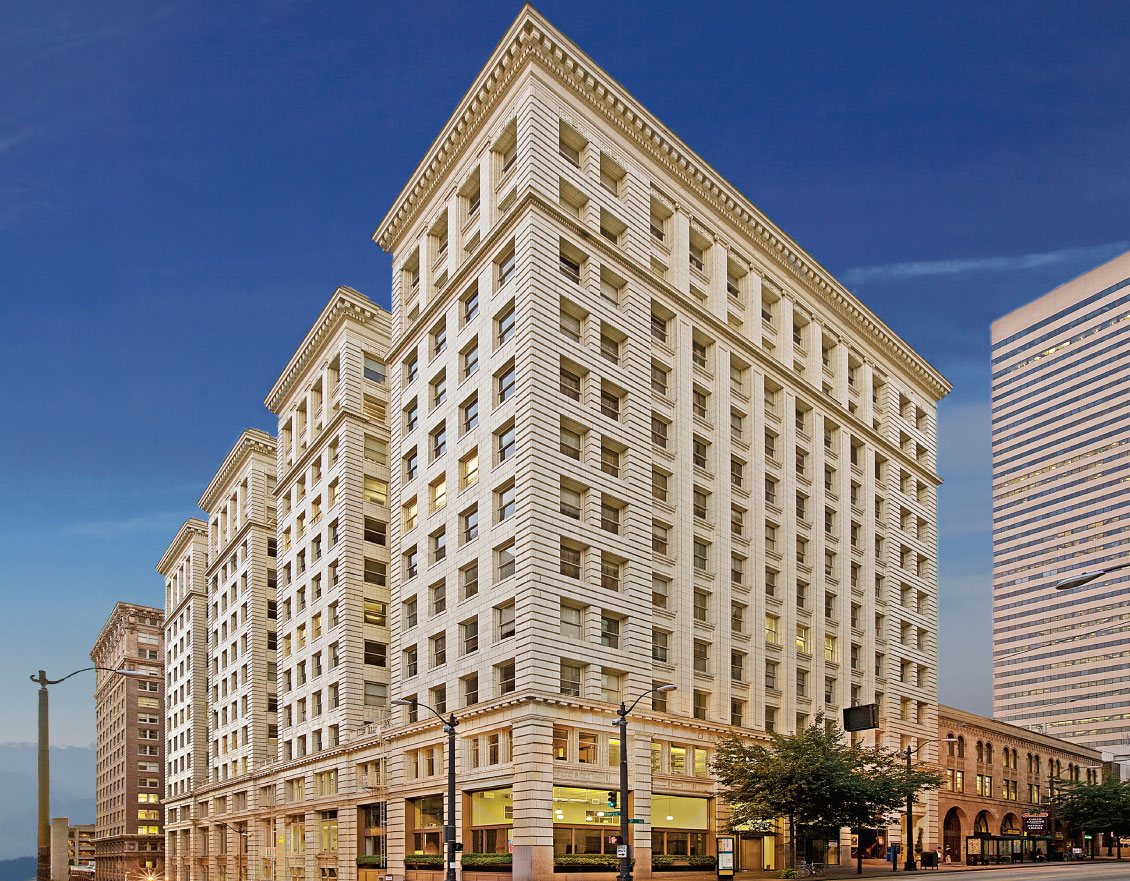
The Dexter Horton Building has a LEED Dynamic Plaque.
The Dexter Horton Building
The historic Dexter Horton building in downtown Seattle is the first project to use the LEED Dynamic Plaque to keep its LEED certification up to date. The plaque is a faster means by which to assess a structure’s environmental sustainability (versus the full LEED for Existing Buildings recertification process), and allows real-time readings for measuring performance.
According to Renee Loveland, the sustainability manager for Portland, Oregon–based Gerding Edlen, which specializes in real estate investment and development and has as part of its portfolio the Dexter Horton building, the plaque turns a building’s performance into a conversation. “It doesn’t consist of a lot of paperwork,” she notes. “It’s more focused on the results you’re getting.”
In just a year’s time, the Dexter Horton building jumped from an energy rating of 60 to 78, and has maintained its original LEED Gold certification with a total of 70 points; its current ENERGY STAR rating is 79. Since 2007, per tenant electric consumption has been reduced by 34 percent. Energy-saving measures include retrofitted stairwell lighting and elevator cabs, and the installation of a cooling tower with variable frequency drive.
Value-added improvements to the former commercial office building include: the conversion of ground-floor retail space into a bike room with lockers and showers; the addition of an indoor/outdoor rooftop amenity space; the creation of an indoor canine relief area; and the removal of drop ceilings and exposure of original concrete columns and metal lattice, among other details. Of those changes, Loveland says, “The renovations performed at the building have provided tenants with more amenities and more opportunities to connect with one another. The work created 21 full-time jobs and resulted in $3.5 million in fiscal impacts to the local community.”
Being so accessible, the LEED Dynamic Plaque enables building occupants to use smartphones to track the performance data. “It can be onerous to track and gather all the data,” says Loveland. This is an alternative shortcut of sorts. “We’re excited the LEED Dynamic Plaque allows us to show our tenants that their daily actions really do affect building performance and that they have a direct role in the certification outcome.”
King Abdullah University of Science and Technology
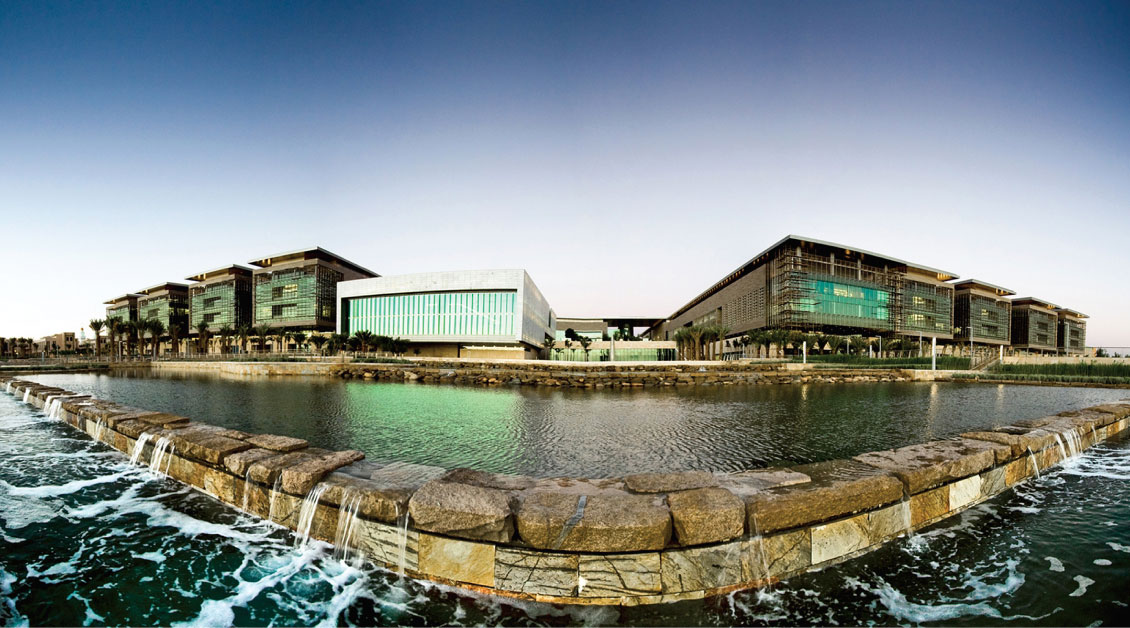
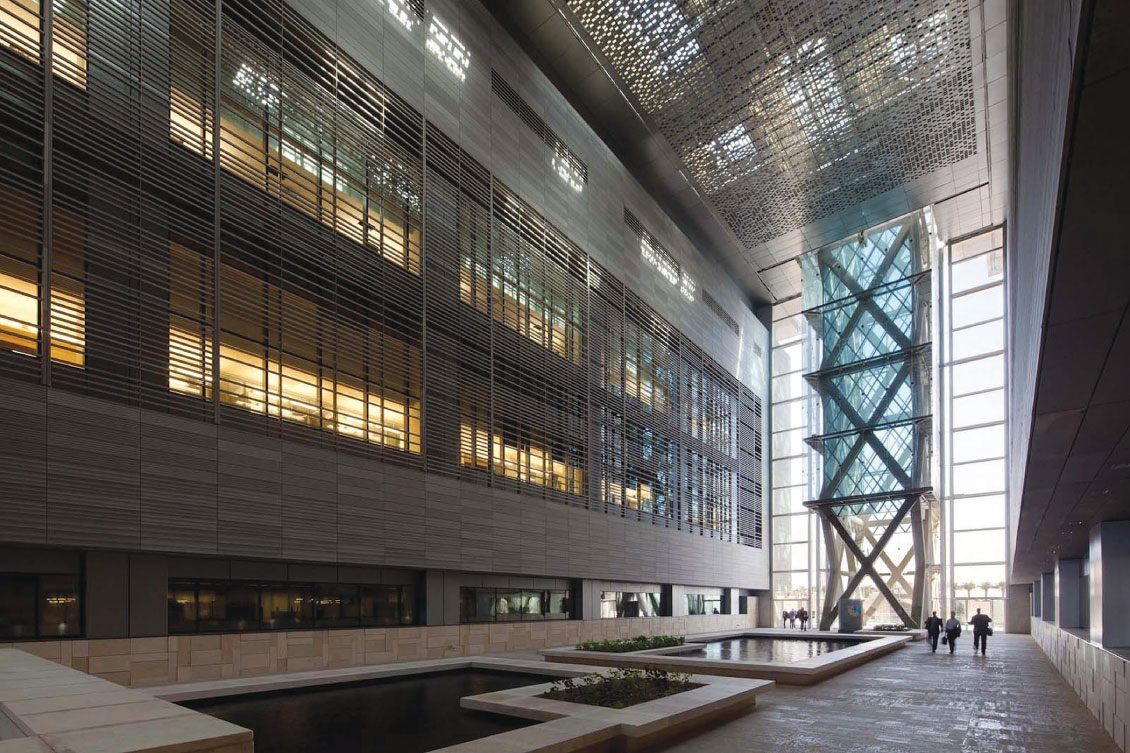
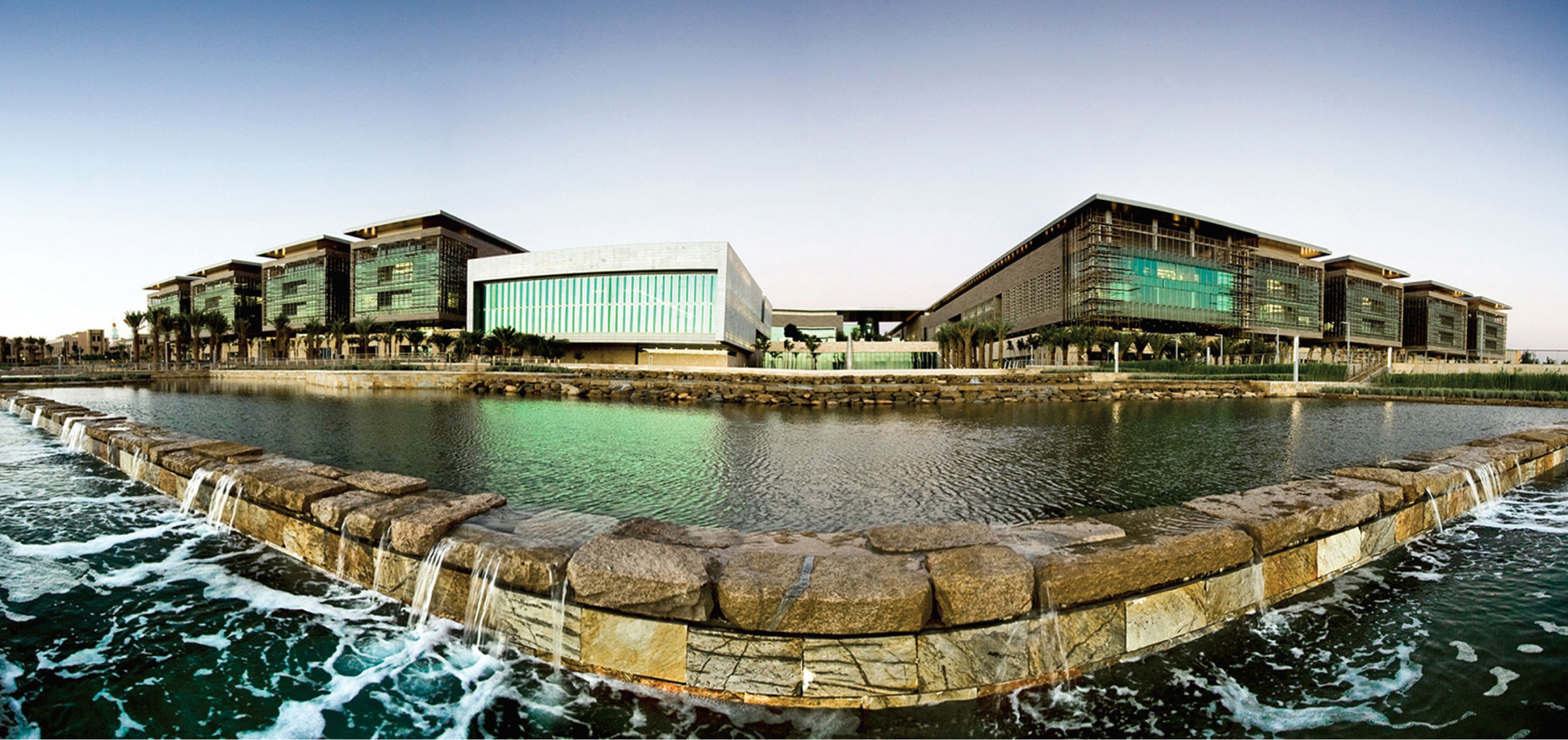
King Abdullah University of Science and Technology (KAUST) is the largest LEED Platinum project in Saudi Arabia; the campus comprises 26 separate buildings. Certified in 2010, KAUST’s sustainable development is integral to its overall mission “to nurture innovation in science and technology, and support research in areas such as energy and the environment.”
The end of 2006 saw the beginnings of KAUST, which was built from the ground up. Aramco, the largest oil company in Saudi Arabia, was tapped to manage the project because they were accustomed to working on such a large scale. In 2007, the very first person to be named a KAUST affiliate was put into position and became part of KAUST’s leadership team. The design process began in April 2007, they broke ground at the end of July 2007, and it opened in September 2009—an extremely fast trajectory from conception to completion.
The purpose of the entire facility was to move Saudi Arabia away from an oil-based economy. It was government mandated, as were a number of other similar projects. “It was intended as a means for finding a different economic future,” says Bill Odell, director of science and technology at HOK—the design firm responsible for KAUST. The project proper consists of 5.5 million square feet, 2.5 million of which is devoted to laboratories; the rest comprise support facilities. (It’s called a university but it’s a graduate level research institute.)
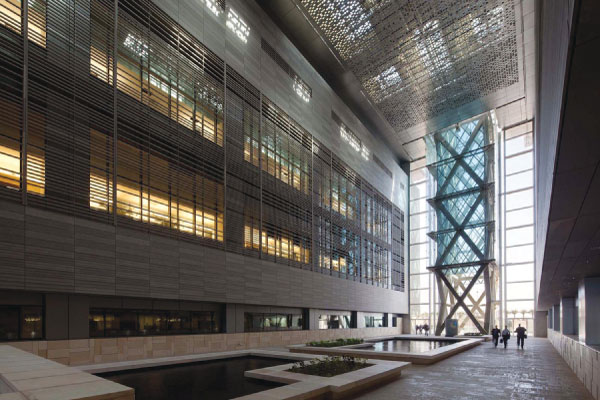
KAUST’s university buildings have been specifically constructed to utilize natural light and ventilation. They support a roof capable of carrying 12,000 square meters of solar thermal and photovoltaic arrays that can use the sun to produce 3,300 megawatt hours of clean energy every year.
As the building design was evolving, so too was the research direction for the institute. The government issued a “very broad mandate” from the king in 2006 to put forth a new beacon of learning—to move the country away from using oil as a fuel, and look for ways to use it as other materials by altering its chemistry (e.g., surgical instruments). “The goal is to develop high-value, non-toxic products to be used for good over and over again,” explains Odell.
“What was important to the process was also important to the success of LEED,” notes Odell. The project’s key players included: Aramco, the client (eventually became KAUST); Aramco project managers; OGER International of Paris; and their sister company, Saudi OGER, the builders. “The dynamic between all of those parties was a very, very good relationship that allowed the project to get done on time and produce the LEED Platinum project that it became,” says Odell. The decision making for everything happened very quickly. While Aramco was supportive of LEED, they didn’t know a lot about it. They put their trust in HOK, which moved things along. “It was their faith in our direction that helped a lot,” he notes.
The design was put together with input from five different institutes, each of which focused on one of the following areas: alternative energy; water and desolvation; bioremediation; sustainable agriculture; and materials and membranes. The sheer speed with which it was put together is something Odell feels distinguishes the project. “And the cost was a bargain; it was not throwing money at this problem. It cost much less than similar facilities. Part of the reason for that is because it did so well with LEED and sustainable strategies. “Because of the time restraints, suppliers gave the very best price, the very first time they bid. There was a lot of, in a sense, customization around the environmental issues that we were concerned about.”
The original site plan had the new facility sitting right on the edge of some of the world’s most pristine coral reefs—a major design consideration. So they moved the site slightly, pulling back from the edge, and built a harbor to avoid impacting the coral, as well as a waterway that constantly flushes the water to keep it clean. Also, they sought to protect the mangroves that grow along the perimeter. The bay they created was to be part of the marine biology research center. (KAUST partners with Woods Hole Marine Biological Laboratory to help preserve the Red Sea ecology.)
According to Odell, the campus itself has become a major recruiting tool when trying to get talent to do their research in Saudi Arabia. Most of the research being conducted there is around sustainability issues. “You have people who are predisposed to value the campus in that way,” he says. The project has raised awareness in all of Saudi Arabia. “It’s given visibility to not only the problems they face, but also the solutions that can be had out there,” notes Odell. Since the building of KAUST, many Saudi-based projects are framed in terms of it. Clients are generally well educated around its value in fostering sustainable strategies, says Odell. “They are looking to incorporate those things into their projects and take it all a step further.”
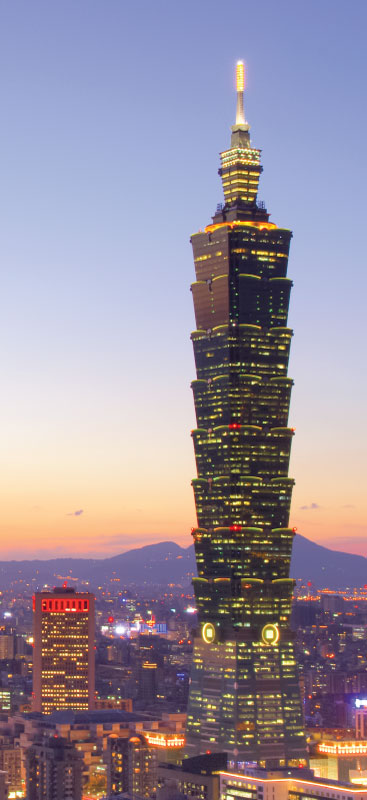
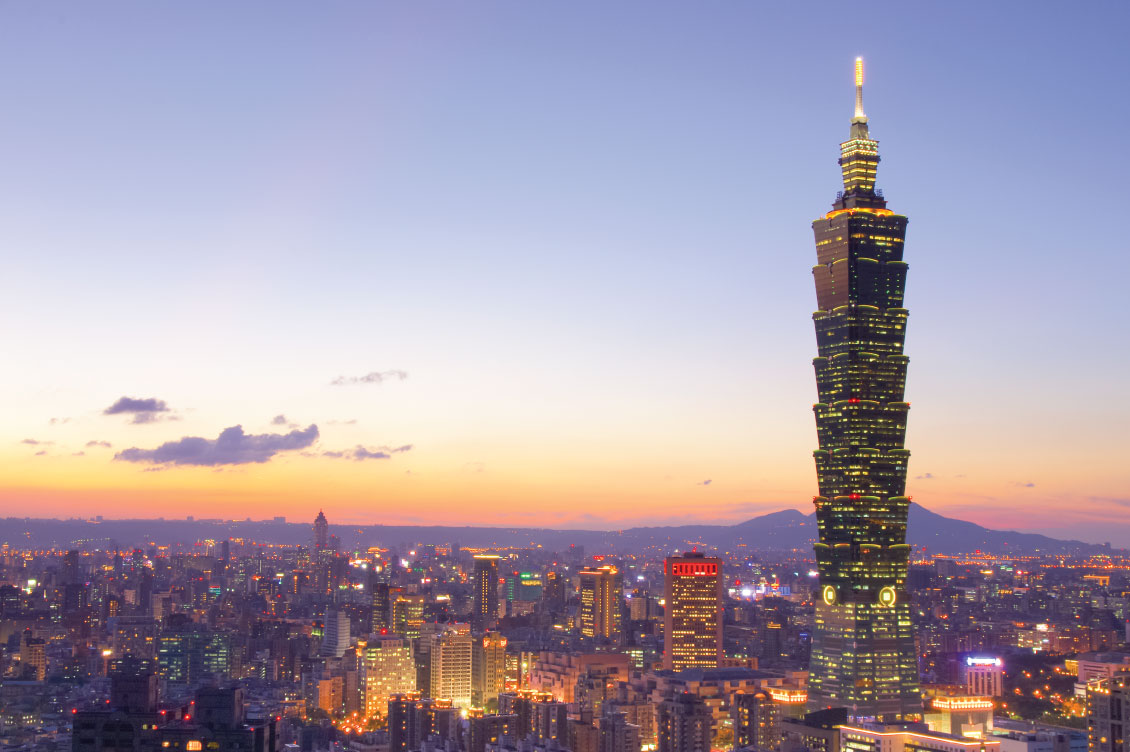
Taipei 101 is a landmark supertall skyscraper in Xinyi District, Taipei, Taiwan.Photo: Henry Tsui
TAIPEI 101
Taiwan’s TAIPEI 101 is an iconic building currently pursuing LEED v4, USGBC’s latest version of the rating system. With 101 floors occupying over 2 million square feet of space, it is one of the world’s tallest buildings. “TAIPEI 101 is the first super-tall building in the world to attempt recertification while upgrading to the new LEED v4 standard,” explains Tim Shen, director of sustainability for Asia at CBRE. “In choosing to certify up to the new v4 system, not only has the team been encouraged to raise their game on several existing performance factors, but we’ve also been presented with totally new ideas to investigate and new challenges around innovation to explore. All of this emphasizes the fact that the pursuit of sustainability in commercial real estate is very much a constant journey.”
Completed in 2004, TAIPEI 101’s Shen’s team sought and earned LEED for Existing Buildings: Operations & Maintenance certification in hopes of demonstrating the relationships between individuals, buildings, and the environment, thereby getting people to think about those relationships. The new certification, says Shen, “provides a good opportunity for the team to refocus their green operations programs to find new efficiencies, higher levels of performance, as well as reengage with tenants, vendors, and other stakeholders on environmental issues.”
From 2008 to 2010, the team concentrated on retrofitting the building to save energy and water. Today, using Energy Management and Control Systems (EMCS), building managers are able to adjust temperatures, modify chiller plant operating schedules, as well as monitor water distribution according to tenant demand. At that time, the team also reviewed public lighting, which was ultimately converted to more energy-efficient luminaires and lighting controls. (The reduction in energy consumption is anticipated to be 33.41 million kilowatt hours per year, and they are expected to save more than 2 million dollars in operating expenses per year.) Furthermore, low-mercury and no-mercury lamp fixtures were installed throughout the building to reduce exposure levels and potential pollution.
The introduction of low-flow water fixtures together with dedicated water management systems decreased potable water usage by approximately 30 percent (about 28 million liters of potable water annually)—significantly less than the average tenant high-rise building. They were able to do so without sacrificing tenant satisfaction.
TAIPEI 101 is currently working with the national utility company on becoming the first commercial building in Taiwan to sign up for a demand-response program. “This could be a potential game changer for the industry, with ramifications for the citizens of Taipei,” says Shen. If TAIPEI 101, with such a large number of the highest caliber tenants, can make a demand-response program work, it opens the way for a great many other office buildings to do the same.”
As a result of these efforts and based on the U.S. Environmental Protection Agency’s ENERGY STAR system, TAIPEI 101 ranks in the top 30 percent of high-rise office buildings.
Of special note is the way in which the team approached the landscape. In response to limited onsite green space, they implemented sustainable landscaping practices in the city—the idea being that by doing so, they would achieve the overall sustainability goal of the project, as well as highlight their efforts citywide. As part of its building management initiatives, it adopted part of the Zhong Qiang Park to restore and protect habitats that support native flora and fauna. “The land trust has gained a lot of publicity, which has helped to raise the trust’s profile in Taiwan, and that of preserving natural habitats in general,” says Shen.
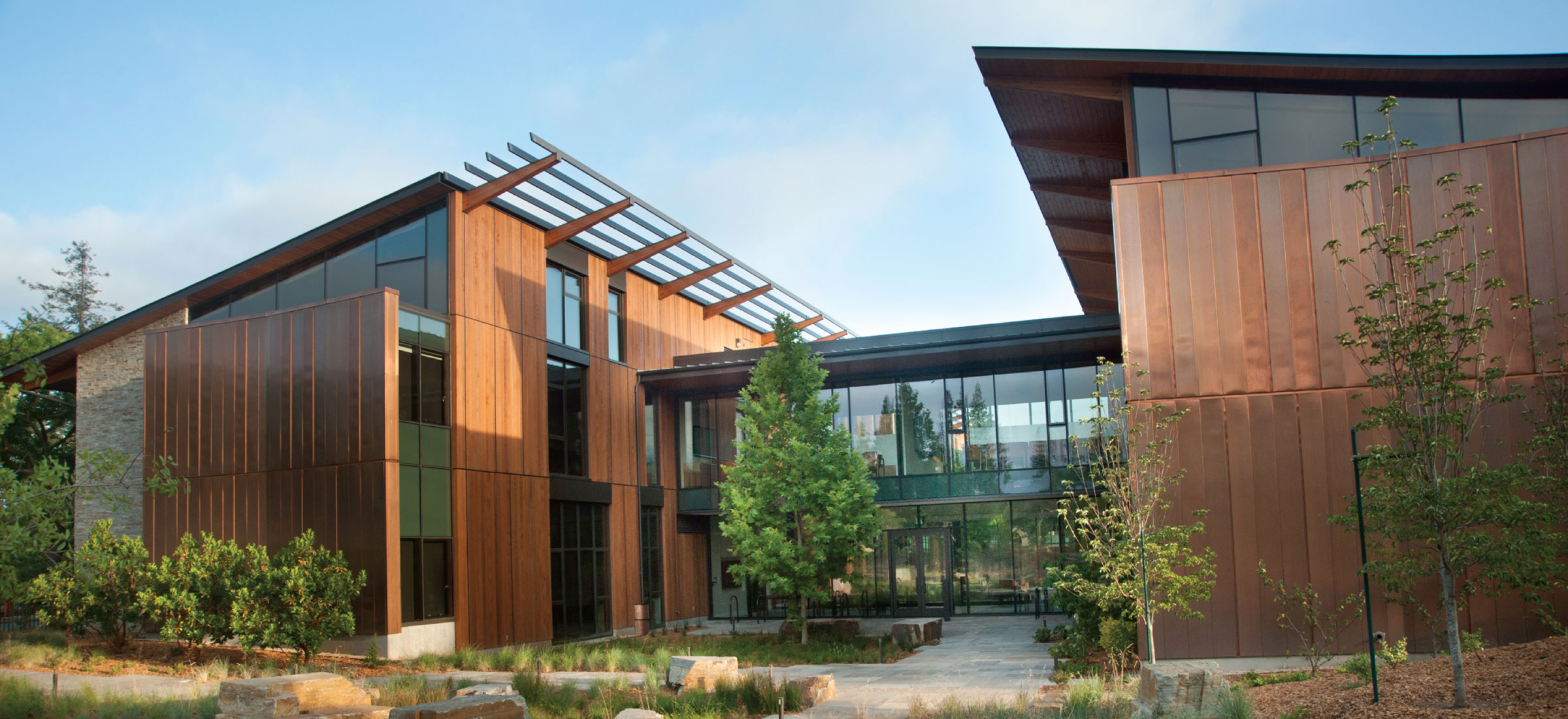
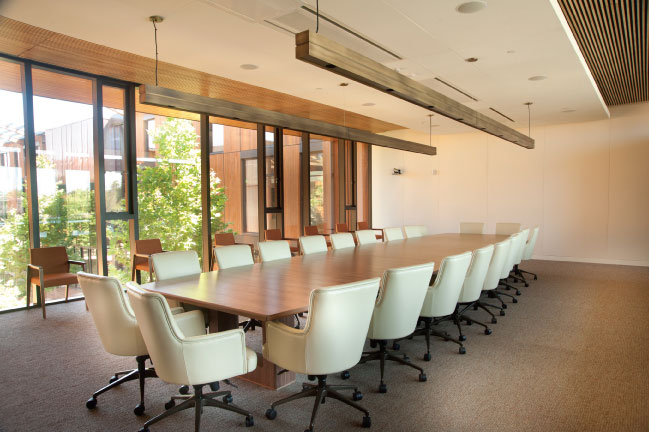
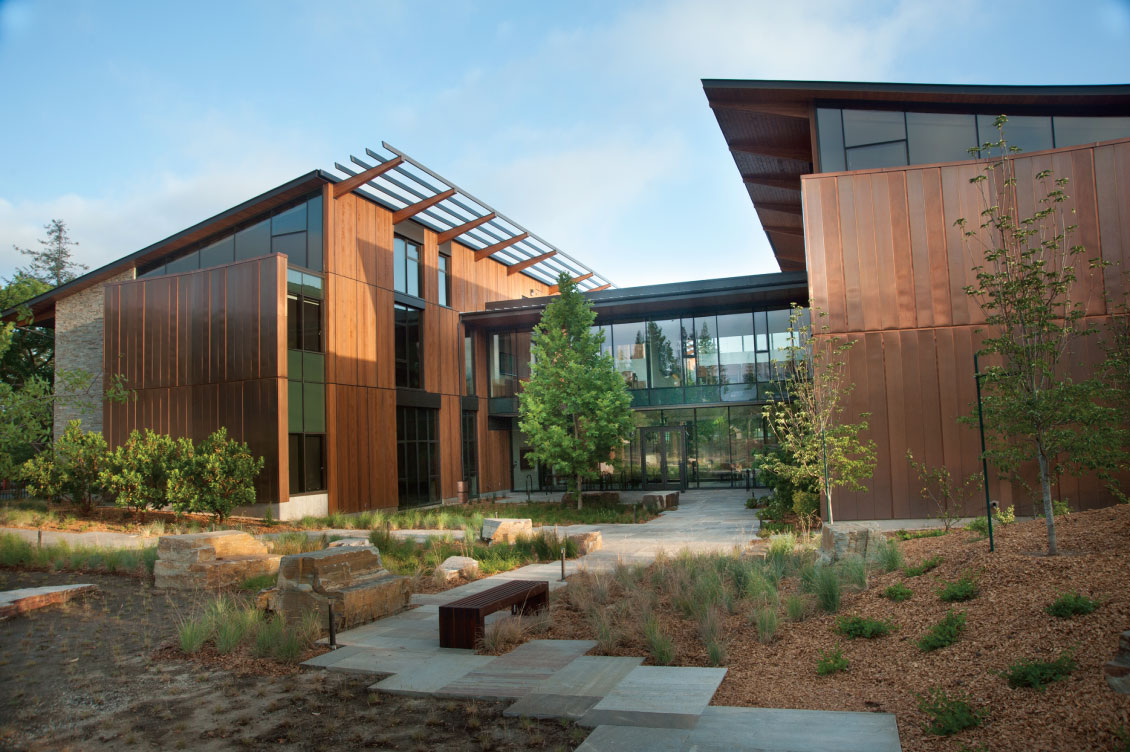
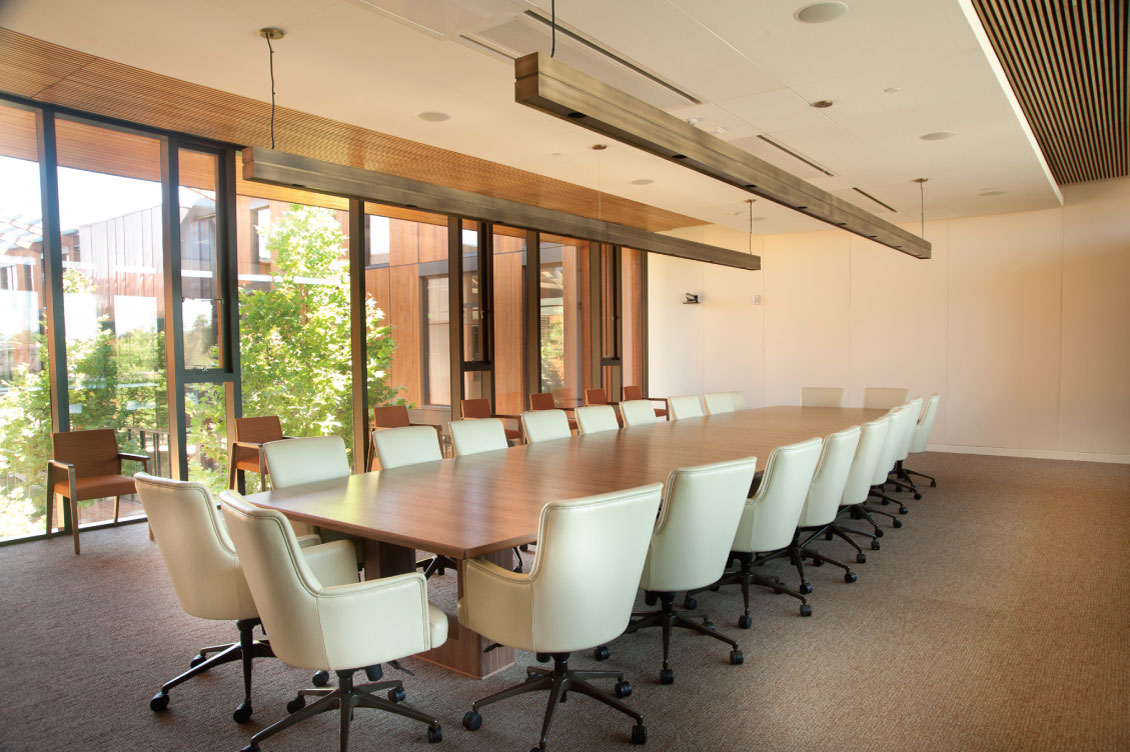
Top Photo: The David and Lucile Packard Foundation features 90 percent California native plants to eliminate pesticides needed by foreign plants; the landscape also uses rain gardens and permeable paving to reduce runoff and to filter pollutants. This Photo: The David and Lucile Packard Foundation provides a comfortable, healthful environment for employees by using 100 percent outside air for ventilation and desktop alerts to indicate when doors and windows can be opened.
The David and Lucile Packard Foundation
For nearly 50 years, the David and Lucile Packard Foundation has supported organizations and individuals working to protect and restore natural ecosystems. So it only makes sense that their Los Altos headquarters are “green.” The 49,000-square-foot Packard Foundation is the largest building, to date, to receive Net Zero Energy Building certification. The LEED Platinum structure, designed by EHDD Architecture, was meant to produce at least as much power as it consumes annually. Today, 100 percent of the building’s energy needs are met by electricity produced from 915 rooftop solar panels, and heating and cooling systems are made efficient using chilled-beam technology. “In each of its first three years of existence, our building has demonstrated that Zero Net Energy can be readily achieved while providing a beautiful, comfortable, and functional headquarters facility,” says CFO Craig Neyman.
Further efforts toward sustainability include: the storing of 20,000 gallons of rainwater onsite for irrigation and toilet flushing; a living green roof and rooftop gutters for rainwater collection; smart controls and drip irrigation for targeted, as-needed watering; rain gardens and permeable paving that reduce runoff and filter pollutants; and the use of recycled materials from preexisting buildings, as well as Forest Stewardship Council–certified wood from Oregon. Additionally, all interior doors are constructed of locally salvaged eucalyptus trees and all finishes are low in VOC emissions, which in combination with a natural air ventilation system, makes for an optimally healthy space for occupants. (Desktop alerts even indicate when doors and windows can be opened for ventilation.) Of the landscape, it can be said that California native plants comprise 90 percent, making it possible to be pesticide-free.
“The new building is a physical manifestation of our long-term commitment to reduce greenhouse gas emissions around the world, and aligns us even more closely with the important work our grantees do every day,” says a Foundation spokesperson.
This cross section of LEED projects makes evident the seemingly boundless scope of the certification’s applicability. All manner of enterprises not only benefit from but also thrive as a result of following its forward-thinking philosophy. LEED’s suitability for diverse situations begs the question: Where will the innovation demonstrated here lead? In what ways will LEED push on? If the last 15 years are any indication, we can expect its continued success in transforming not just buildings and environments, but mindsets. In fact, LEED certification’s physical manifestations are a kind of enlightenment—the understanding that sustainability is so vital it demands changes in the ways we think, design, build, work, and live. It’s time to think of a future in which LEED is the standard. It’s time to think of LEED leading on every front.