Minnesota Wild and Edmonton Oilers/Hockey
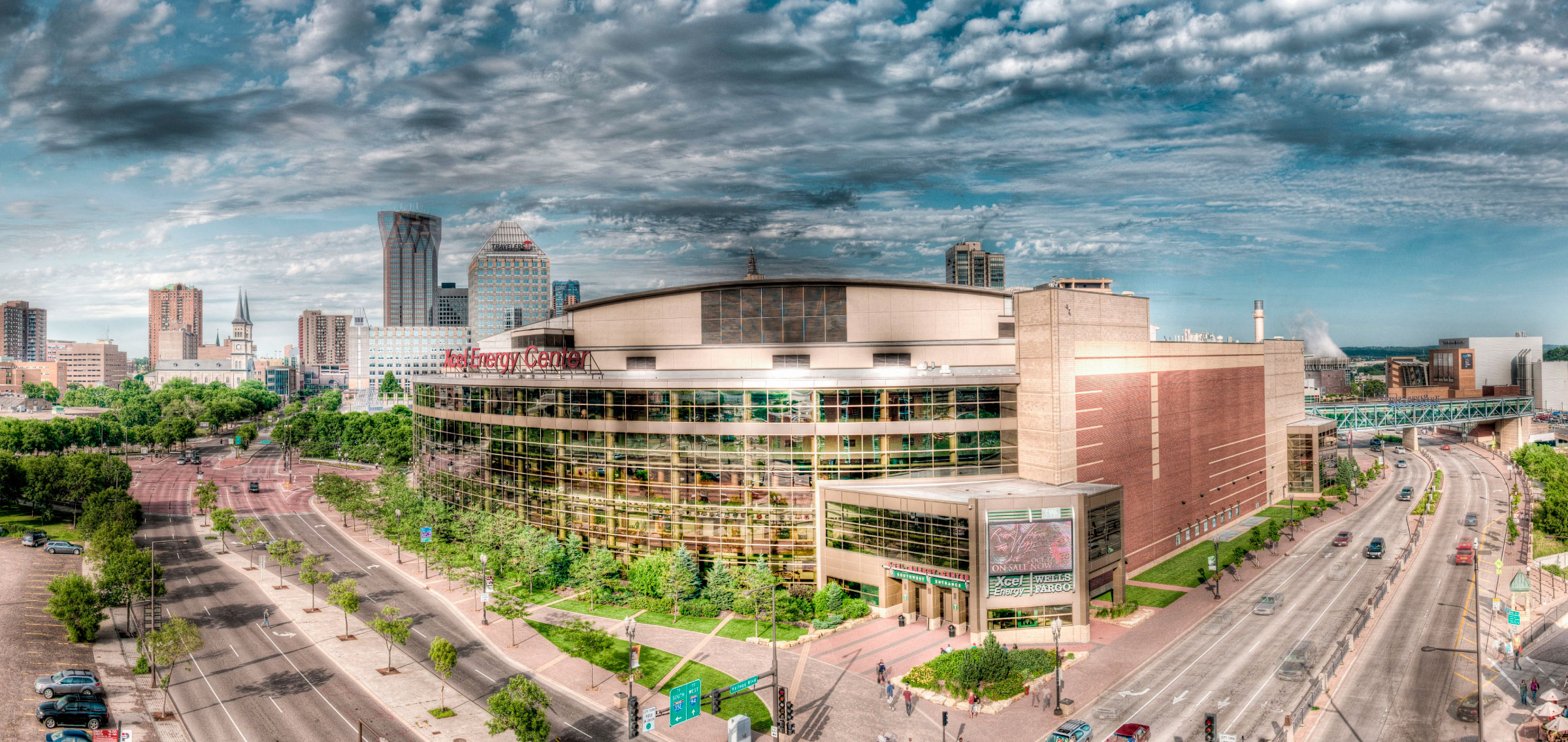
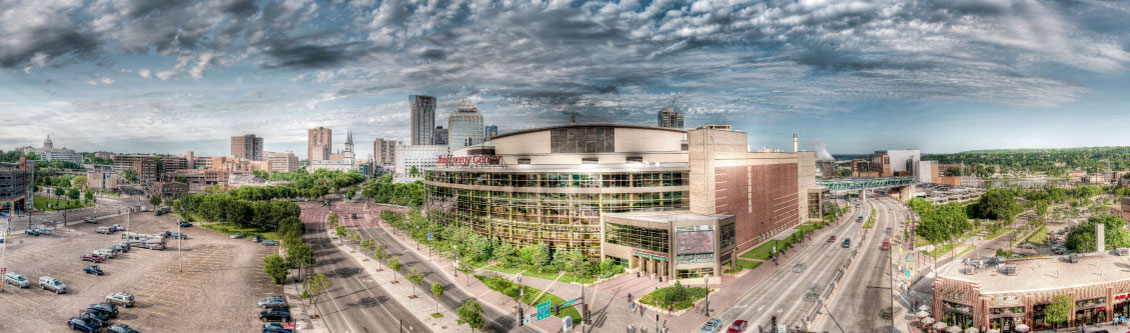
The Xcel Energy Center’s path to becoming the first NHL arena in the country to earn LEED for Existing Buildings certification started with its next-door neighbor: the Saint Paul RiverCentre, a convention center on the same Minnesota campus, operated by the same management that oversees the St. Paul-based Minnesota Wild NHL team. After benchmarking energy use and waste production at the convention center, the team behind the scenes realized more than geography linked the two properties.
“We quickly realized that any programs we implemented had to be campus-wide: All the trash from the Xcel Energy Center and the convention center ends up in the same place,” says Kathy Ross, senior director of strategic communications for the Minnesota Wild. “From there, we looked for the best place to start.” That included reducing the arena’s waste by half and increasing recycling by the same amount within two years. “It was simple to understand, but it was challenging in that it involved changing all of our behind-the-scenes processes,” Ross says.
Now, the Wild’s commitment to sustainability is visible to its more than 3 million annual visitors as soon as they set eyes on the solar photovoltaic array on the outside of the parking garage. A solar thermal array on the roof of the RiverCentre feeds clean energy into downtown St. Paul’s electric grid. The center offsets its energy usage with wind energy purchased from its parent Xcel Energy.
Elsewhere, along with boosting its annual recycling rate to 60 percent and engaging in a slew of sustainability-minded community outreach programs, the Wild’s organization-wide embrace of sustainability has resulted in more than 40 percent of employees taking some alternative form of transportation to work every day, while Wild players purchase their own offsets for the energy used at home games. “For us, it’s changed the culture of our organization,” Ross says of the effects of LEED pursuit. “It’s had a real, positive financial impact on our business, and it’s having a positive impact in our community. Those are the things that every sports organization strives to do.”
North of the border, the Edmonton Oilers are eyeing their first season on the ice at Rogers Place, their forthcoming LEED Silver-certified arena. Slated to open in time for the 2016-17 NHL season, the arena is a natural next step for a team that’s embraced sustainability as a practical key to success.
After winding down their tenure at Rexall Place, the Oilers looked to site Rogers Place within a vibrant entertainment district in downtown Edmonton, with retail, commercial, and residential spaces sprouting from what was once a largely derelict area of the city. So far, more than 3,400 tons of waste—about 90 percent of the total—has been diverted from landfill during construction.
When the arena is finished, Rogers Place will be plugged into the city’s pedestrian corridor and walking distance to seven light rail stops. At every turn, the arena optimizes energy performance: Design of the arena allows in the natural light, while heat recovery ventilation and a highly insulated building envelope keep occupants comfortable on the coldest winter nights.
“The beauty of green building, in my mind, is its simplicity of design and operation,” says Tim Shipton, vice president of communications for the Oilers Entertainment Group. In the lead-up to 2016, the Oilers are also figuring out ways to further green their food and beverage operations. “We’re not going to do a lot of things that are way out there, things that would cause our business to do things we otherwise might not do. Instead, it’s just about being smart with our business practices.”
Edmonton is an especially progressive city when it comes to sustainability, Shipton says. And in a sense, the Oilers’ adoption of green building principles just comes with the territory. “Focusing on sustainability doesn’t just make sense from a business perspective: I think there are expectations in the city and amongst our fans that we do it,” Shipton says. “And when the building opens up, I believe we’ll have exceeded their expectations.”